
Bespoke accessible raised beds for easier access
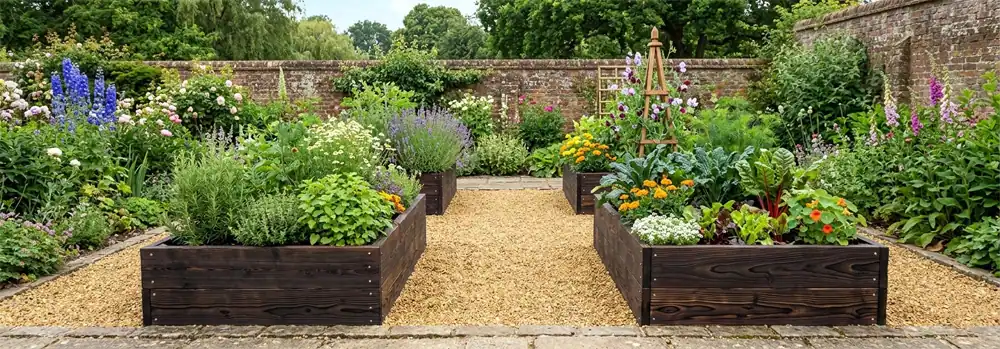
Accessible raised beds should bring planting closer to the person enjoying them. We design and build bespoke timber raised beds around height, width, reach, layout and approach, so the bed suits the person, the garden and the way it will be used.
They can be designed for:
- Seated gardening, where reach and working height need careful balance
- Wheelchair access, where path space, approach and bed width are just as important as height
- Standing-height use, where the aim is to reduce bending without making the bed too wide to manage
- Care, community and family gardens, where different people may need different levels of access
Our premium raised beds are built as proper garden structures, not adapted boxes. Taller accessible beds hold more soil, more water and more weight, so strength and long-term stability must be designed in from the start.
Key takeaway: An accessible raised bed should not simply be taller. It should be designed around the person, the space and the way the bed will be reached, enjoyed and maintained.
What size should an accessible raised bed be?
Accessible raised bed size should start with the person and the setting, not a fixed standard measurement. The right height and width depend on whether the bed will be used standing, seated, from a wheelchair, from one side, or by several people with different levels of mobility.
The table below gives sensible starting points. Every accessible raised bed should still be checked against reach, path space and how the bed will actually be approached.
| Access need | Typical height range | Width and reach | Design priority |
|---|---|---|---|
| Reduced bending | 45cm to 60cm | Standard width can work if the bed is reached from both sides. | Improve comfort without making the bed unnecessarily tall or difficult to fill. |
| Seated gardening | 60cm to 75cm | Narrower beds usually work better, especially if reached from one side. | Match the bed to seat height, arm reach and the person’s working position. |
| Wheelchair access | Usually around 60cm, depending on chair and approach. | Reach, turning space and path width are as important as bed height. | Design around the chair, the user and whether the bed is approached from the front or side. |
| Standing-height access | 75cm to 90cm | Width should be limited if the bed is only reached from one side. | Reduce stooping while keeping planting within comfortable reach. |
| Shared or care settings | Custom | Often needs varied heights, clear paths and simple access from more than one position. | Support different users safely without relying on one standard dimension. |
A raised bed can be tall enough and still be difficult to use if it is too wide, placed too close to a wall or surrounded by soft ground. For accessible raised beds, the space around the bed is part of the design.
Designed around the person, not a standard size
An accessible raised bed should start with a simple question: who needs to reach it, and how will they approach it?
That answer changes the design:
- Standing use: May need a higher working level to reduce bending, without making the bed too wide to reach comfortably.
- Seated use: Often needs a lower working height, narrower width and a shorter arm reach.
- Wheelchair access: Depends on chair height, side or front approach, path space and turning room.
- Care and community settings: May need to work for several people, so the overall layout matters more than any single measurement.
This is where bespoke design becomes important. Height, width, path space and planting depth can be adjusted together, rather than forcing someone to adapt to a standard raised bed. The result should feel natural in the garden while making planting easier to see, reach, touch and enjoy.
Do taller accessible raised beds need stronger construction?
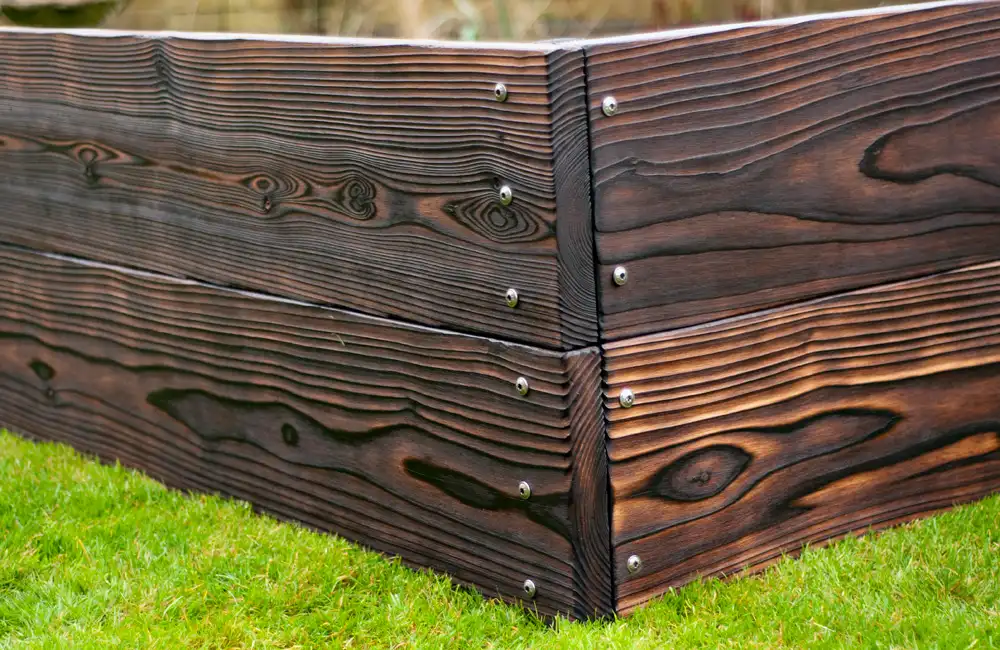
Yes. Taller accessible raised beds hold more soil, more water and more weight than low garden beds. Once full, they are not just planting containers. They have to resist wet soil pressing down and out against the timber.
That is why we look at the structure before the bed is built:
- Load testing: Proposed dimensions can be checked using advanced beam deflection physics, helping us understand how the timber is likely to behave under saturated soil load.
- Design variables: Height, width, span, timber thickness and saturated soil weight all affect the final specification.
- Rigid construction: Thick boards, strong corners, proper fixings and stable proportions help the bed resist bowing and remain solid over time.
- Durable finish: Naturally durable timber, the full Yakisugi process and breathable exterior oil help the bed cope with real outdoor conditions.
The aim is simple: an accessible raised bed should feel comfortable to use, beautiful in the garden and strong enough for the height, soil volume and setting it has been designed for.
Plan a bespoke accessible raised bed
You do not need to know the exact height, width or layout before getting in touch. Start with the person, the garden and what you would like the raised bed to make easier.
From there, we can help shape the design in consultation with you. We will look at access, reach, working height, available space, planting use, timber choice and structural strength, then bring those details together into a raised bed that fits the setting properly.
The aim is simple: make planting easier to reach, enjoy and maintain, without asking the person or the garden to adapt to a standard raised bed.