
Raised beds designed for garden schemes
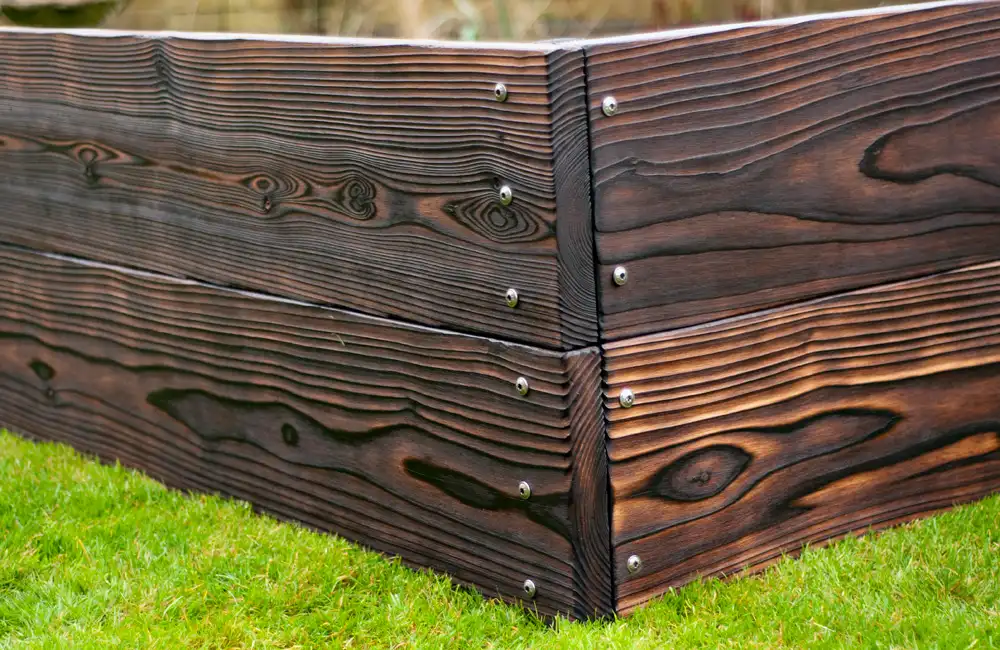
Designers specify elements that must hold their shape, tone, and intent long after installation. Our raised beds are built to support that kind of work, with restrained detailing, consistent quality, and a finish that is recognised as much by feel as by appearance.
We work best when we are brought in early. Dimensions and layouts can be explored, refined, and adjusted to suit the wider scheme, whether you are developing a single focal element or a coherent arrangement of beds across a garden. The goal is always the same: raised beds that read as part of the design, not an item added afterward.
Reliable delivery and professional partnership
Design work depends on reliable partners. We understand that our raised beds become part of a wider programme involving planting, groundworks, and multiple trades. For that reason, every bed is built to a consistent standard, with clear communication throughout and realistic lead times agreed upfront.
While lead times can vary with timber availability and seasonal conditions, quality does not. We approach correspondence, scheduling, and revisions with the same care as the making itself, so you always know where your order stands and how it integrates with the rest of your project.
Sustainability and local craft
Designers who prioritise sustainability will find our approach grounded in how work is actually delivered. Every raised bed is built in Dorset using locally sourced timber, finished with zero-VOC oils and assembled without chemical treatments or hidden preservatives.
Working at a small scale allows us to remain accountable at every stage, from timber selection through to final delivery. Local sourcing shortens supply chains, reduces variability, and ensures we can stand behind both the material and the process, not just the finished object. For designers, this means fewer unknowns and a clearer understanding of how each element of the build performs over time.
For projects where sustainability targets are assessed rigorously, timber also offers a meaningful advantage in embodied energy. Compared to commonly specified alternatives such as Corten steel, our raised beds carry a significantly lower embodied energy cost while still being designed for long service life. This allows designers to specify a solution that performs structurally and visually over time without relying on high-energy materials to achieve durability. For designers working to formal sustainability targets, we have explored this comparison in more detail, including embodied energy considerations, in our article on timber raised beds versus Corten steel.
What we can do for designers
We work with designers at different stages of a project, from early concept discussions through to final dimensions and detailing. Raised beds can be developed as individual focal elements or as coordinated groups across a scheme, with proportions, heights, and layouts refined to suit the surrounding space and planting.
Design flexibility sits within a clear material vocabulary. We work with a small number of timbers and thicknesses chosen for predictable long-term behaviour, allowing bespoke dimensions and arrangements without introducing unnecessary variability. This approach ensures that customisation strengthens the overall scheme rather than complicating delivery or future performance.
Let’s collaborate
If you are developing a project and considering raised beds as part of the scheme, we are happy to discuss options, constraints, and timing. Early conversations often help clarify proportions, layouts, and material choices before details are fixed.
There is no obligation at this stage. The aim is simply to understand the project and whether our approach is the right fit.
Where craftsmanship meets considered design.