Wooden raised beds vs Corten steel: which is actually better?
Choosing between wooden raised beds and Corten steel is no longer a simple choice between weak timber and durable metal. When timber is properly specified, the comparison completely changes.
A Yakisugi Western Red Cedar raised bed offers long-term durability with a fraction of the production and processing energy. In the model used here, the timber bed requires just 90 MJ of energy, compared with 1,800 MJ for a designer-grade Corten steel bed. That makes properly prepared timber roughly 20 times lower in energy cost, while remaining lighter to install, better insulated around soil and softer alongside planting.
Corten steel still suits hard architectural schemes, but it is no longer the only serious long-term option. The better question is not which material sounds more durable, but which one fits the brief with the least compromise.
Key takeaway: Corten steel and wooden raised beds can both be durable, but they are not equal in energy use, handling, soil behaviour or garden character. Corten steel gives a hard architectural finish. Yakisugi Western Red Cedar gives a lower-energy, lighter and more planting-friendly alternative.
Corten steel often feels like the safe long-term choice when durability and a clean architectural look matter. The comparison changes when timber is specified as air-dried Western Red Cedar, charred using Yakisugi and finished with breathable oil. The table below shows where Yakisugi Western Red Cedar now challenges Corten steel across energy use, installation, soil behaviour and garden character.
| Design question | Yakisugi wooden raised beds | Corten steel raised beds | What this means in practice |
|---|---|---|---|
| Can it work as a long-term garden feature? | Yes, when made from air-dried Western Red Cedar, charred using Yakisugi, finished with breathable oil and properly detailed. | Yes, when correctly fabricated, detailed and allowed to weather properly. | Gardeners and designers now have a serious timber option where steel was often the default long-term choice. |
| What is the energy cost before installation? | 90 MJ for the modelled 2.4 m × 1.2 m Yakisugi timber bed. | 1,800 MJ for the comparable designer-grade Corten steel bed. | The timber option uses one twentieth of the modelled energy of the Corten steel option. |
| How does it behave around planting? | Timber is naturally more insulating, helping reduce sharper soil-temperature swings around roots. | Steel heats and cools quickly, creating a harder thermal edge around the soil. | Where soil temperature matters, timber has a functional advantage over steel, not just a softer appearance. |
| How does it affect installation? | Lighter, easier to carry, and able to be moved in sections before final assembly. | Heavier, more industrial to transport, handle and reposition once fabricated. | Timber is easier to move through tight access and can be assembled after the sections reach position. |
| What visual language does it create? | Warm, tactile, textured and closely connected to planting and natural materials. | Sharper, harder, more industrial and deliberately architectural. | The choice is not just material performance. It changes the whole character of the garden. |
| Which brief does it suit best? | Long-term raised bed projects where sustainability, planting relationship, texture and lower embodied energy matter. | Projects that want a bold industrial edge and accept the material and fabrication burden. | Corten steel is no longer the only credible long-term raised bed specification. |
How to compare wooden raised beds vs Corten steel
Most comparisons between wood and Corten steel raised beds contain a basic flaw: they compare premium steel with cheap, fast-grown softwood, then treat the result as a judgement on all wooden raised beds.

That is an uneven comparison. A premium raised bed is more than a simple soil container. It is a structural planting element that influences lifespan, soil temperature, site handling, maintenance and long-term visual character.
Standard softwood often fails because the timber, detailing and finish are not strong enough for long-term ground-level exposure.
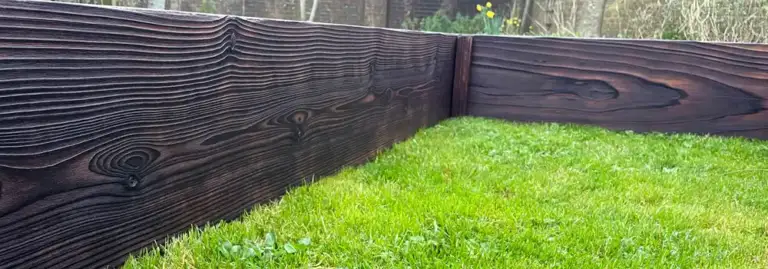
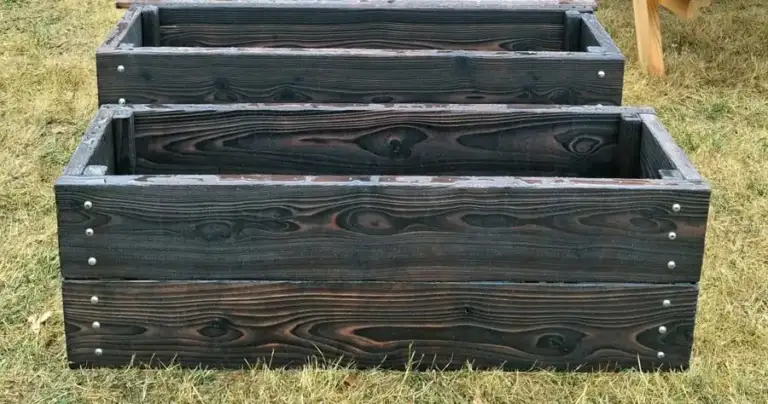
Air-dried Western Red Cedar, prepared using Yakisugi charring and breathable zero-VOC oil, is a different material system. It pairs naturally durable timber with surface preparation that improves how the wood behaves outdoors.

Once timber is evaluated through that specification lens, the comparison with Corten steel shifts. The question is no longer whether wood can compete with metal, but whether the brief genuinely requires steel, or whether a properly prepared wooden raised bed does the job with fewer overall compromises.
Why wooden raised beds can now compete with Corten steel
For many years, wooden raised beds struggled to compete with Corten steel in long-term garden projects. The issue was not that timber could never work outdoors. It was that many wooden beds were made from fast-grown softwood, thin boards, weak detailing, and basic finishes that were never suited to long-term soil contact and weather exposure.
Corten steel naturally filled that gap. It gave gardeners and designers clean lines, a bold architectural profile, and a material that looked serious from day one. For projects where durability mattered, steel often felt like the safer specification.
Yakisugi Western Red Cedar changes that choice. It gives wooden raised beds the structural durability, surface depth, and material confidence that standard softwood lacks, while also offering lower energy use, lighter handling, and better soil insulation than steel.
That restores timber as a premium, credible alternative. It does not try to mimic Corten steel. It answers the raised bed brief in a different way: long-lasting without feeling industrial, structured without feeling hard, and refined without losing its connection to planting.
Corten steel vs timber: the energy gap behind the material choice
The important difference is not just the final total on the chart. It is where the energy sits. In the timber system, the total includes the wood itself, propane for charring, zero-VOC oil, screws and transport.
Corten steel starts from a much heavier upstream manufacturing burden. Most of its energy cost is already built into the material before the raised bed has been shaped. Cutting, folding, welding, finishing and weathering then add further processing before the finished bed reaches site.
Energy required to produce a 2.4 m × 1.2 m raised bed, shown by process stage.
The chart matters because it separates those stages instead of hiding them inside one flat total. The timber option is not being compared as raw wood alone. It includes the preparation that turns Western Red Cedar into a Yakisugi raised bed material.
That is why the energy gap matters for specification. If a project needs the hard industrial look of Corten steel, that cost may be acceptable. But if the brief is long-term durability with much lower production and processing energy, properly prepared timber starts from a very different position.
Are wooden raised beds better than Corten steel in real gardens?
The energy chart explains the upstream cost of each material, but it does not show how the finished raised bed behaves once it reaches the garden. That is where the practical differences between timber and Corten steel become more visible.
Site logistics are one of the clearest differences. A Yakisugi Western Red Cedar raised bed can be moved in sections before final assembly, which makes it easier to carry through side gates, across lawns, into walled gardens or through sites where machine access is limited. Corten steel can be strong and precise, but once fabricated it is heavier, harder to reposition and more demanding to handle on site.

The materials also behave differently around soil. Steel heats and cools quickly, creating a harder thermal edge around the growing medium. Timber is naturally more insulating, helping to moderate root-zone temperature and reduce sharper swings around the soil. That matters most in edible beds, exposed gardens and planting-led schemes where soil conditions are part of the design, not an afterthought.
Durability also needs context. Corten steel protects itself through its weathered surface, but early rust-coloured runoff can stain pale paving, stone or surrounding hard landscaping. Timber depends more on species, preparation and detailing. Standard softwood is often the weak point in the comparison, but air-dried Western Red Cedar, Yakisugi charring and breathable oil create a much more serious outdoor material system.
The final difference is character. Corten steel brings a hard architectural presence, which can be exactly right where the raised bed is meant to stand out as a metal landscape feature. Yakisugi timber does something different. It gives structure without the same industrial edge, and its grain, texture and warmer surface sit more naturally alongside planting.

So the real choice is not simply which material lasts longest. It is which material gives the garden the right balance of durability, energy cost, handling, soil behaviour and visual presence. Corten steel remains a valid design choice, but properly specified timber now competes on performance, installation and material character, not appearance alone.
What to look for in a wooden raised bed that can compete with Corten steel
Choosing wood over Corten steel only works if the timber bed is properly specified. The comparison is not between steel and any wooden raised bed. It is between steel and a timber system designed for long-term outdoor exposure at soil level.
Start with the timber itself. Western Red Cedar is naturally durable, stable and lightweight, which makes it well suited to raised beds. Air drying improves that foundation by increasing dimensional stability before the timber is built into the finished structure.
Then look at the surface preparation. Yakisugi charring changes the outer face of the wood, creating a more resilient surface with greater resistance to moisture and biological pressure. Breathable zero-VOC oil then supports that surface without sealing the timber under a plastic-like coating.
Finally, look at the construction. Board thickness, corner detailing, fixings, end-grain exposure and overall proportions all shape how the bed performs over time. A serious wooden raised bed is not defined by timber alone. It is defined by the whole system: species, preparation, finish and detailing working together.
That is where properly specified Yakisugi Western Red Cedar becomes a credible alternative to Corten steel. It gives gardeners and designers a lower-energy raised bed material without asking them to accept short-term timber performance or a purely rustic appearance.
When are wooden raised beds better than Corten steel?
Wooden raised beds are the better choice when the brief values lower embodied and processing energy, easier installation, better soil insulation and a closer relationship with planting. Corten steel still suits hard architectural schemes, but it carries a much heavier manufacturing burden and a sharper, more industrial character.
The important distinction is specification. Cheap softwood does not compete with Corten steel. Yakisugi Western Red Cedar does. When the timber is naturally durable, air-dried, charred, oiled and properly detailed, it becomes a serious long-term raised bed material.
So the choice is not simply wood or steel. It is whether the garden needs the visual force of metal, or whether a lower-energy, warmer and more planting-friendly timber system gives the project a better answer.
Planning a long-term raised bed project?
Choose a raised bed that suits the garden before it is built. Our Yakisugi Western Red Cedar beds offer a lower-energy alternative to Corten steel, with durable timber, easier installation and a warmer relationship with planting. Whether you are designing a new garden, upgrading an existing space or planning a bespoke raised bed layout, we can help you get the size, proportions and structure right from the start.