Are premium raised beds worth it?
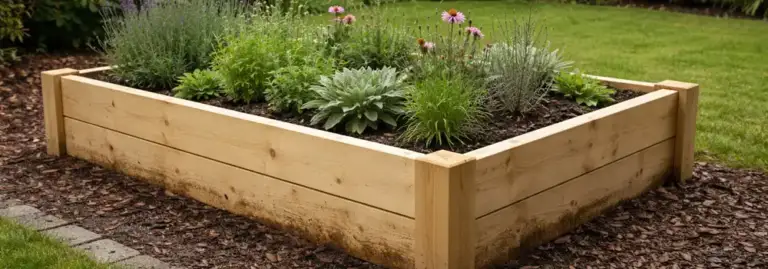
Premium raised beds are worth it when the higher cost reflects real design, material preparation and long-term value, not just a nicer-looking version of the same timber box. The difference should be visible in how the bed is specified, built, finished, installed and expected to age in the garden.
A premium raised bed is not simply an expensive raised bed. It should be a better-considered one. The value is often in work the customer does not see immediately: local timber selection, natural drying time, board thickness matched to span, Yakisugi finishing, zero VOC oil, structural detailing and a design that fits the site rather than a catalogue size.
That matters because raised beds often look similar when they are new. A cheap kit, a premium-looking kit and a bespoke raised bed can all look tidy on day one. The difference appears later, when wet soil pushes outward, timber moves, corners are under load, finishes weather, and the bed either settles into the garden or starts to look temporary.
If you are comparing options, start with our main guide to premium raised beds to see how our bespoke beds are designed, made and installed.
Key takeaway: Premium raised beds are worth it when premium means site-led design, properly prepared timber, structural sizing, durable materials and long-term garden value. They are not worth it if the higher price only buys a more attractive version of the same basic kit.
Are premium raised beds worth the extra cost?
Premium raised beds are worth the extra cost when the bed has to perform as part of the garden, not just sit in it. That usually means one or more of these things matters: long-term appearance, structural strength, bespoke sizing, timber quality, local sourcing, finish durability, or how the bed fits the surrounding design.
They are less likely to be worth it if the bed is temporary, hidden away, used only for a short trial, or needed purely as the cheapest way to hold soil. In those cases, a standard raised bed kit may be the more sensible choice.
Premium should not mean paying more for the same box. It should mean paying for the decisions that stop it behaving like the same box.
The real question is whether the extra cost buys visible styling or genuine substance. A premium raised bed should not simply look better on delivery day. It should be designed to cope with wet soil, weather, movement, exposure and long-term use without quickly losing the qualities that made it worth choosing in the first place.
For our beds, the value sits in the details: locally sourced timber, natural air drying, thickness matched to span, a Yakisugi finish, zero VOC oil, visible grain, careful installation and a design shaped around the customer’s garden. Those details take longer, but they are the difference between buying a raised bed as a product and commissioning one as part of the garden.
Premium raised beds vs cheap raised bed kits
The easiest mistake is to compare raised beds only by size and price. That misses most of the differences that decide how a bed behaves after installation. A cheap kit may be completely reasonable for a short-term or hidden growing area. A premium raised bed should earn its place when the bed is visible, long-term, structurally important, or part of a designed garden.
| What changes | Cheap raised bed kit | Premium bespoke raised bed |
|---|---|---|
| Design | Usually chosen from fixed sizes and standard layouts. | Designed around the site, access, planting, exposure and visual role in the garden. |
| Timber thickness | Often uses the same board thickness across many lengths and heights. | Thickness can be matched to span, height and the load the bed has to hold. |
| Material preparation | Often built quickly from available stock. | Timber is allowed to dry, move and stabilise before charring, finishing and installation. |
| Finish | May rely on a basic treatment, stain or surface coating. | Uses material-led finishing, such as Yakisugi and zero VOC oil, as part of the bed’s long-term surface strategy. |
| Supply chain | Timber may pass through long national or international supply chains. | Local sourcing can improve traceability, timber selection and transport impact. |
| Garden role | Primarily acts as a container for soil. | Acts as a visible garden structure as well as a growing space. |
| Best fit | Short-term growing, trial layouts, allotments, hidden areas or tight budgets. | Designed gardens, visible spaces, long-term planting, bespoke layouts and premium outdoor settings. |
The point is not that every garden needs a premium raised bed. It is that the two products are often solving different problems. A cheap kit answers “how do I hold soil for less?” A premium bespoke raised bed should answer “how do I make this structure work, look right and last as part of the garden?”
When premium only means a nicer raised bed kit
Some raised beds are sold as premium because they look better than the cheapest kit. They may use neater boards, a darker finish, a more attractive shape, or stronger marketing. That can still be useful, but it does not automatically mean the bed has been designed differently.
A nicer kit may still be a kit. It may still use fixed sizes, standard board thicknesses, generic construction details and the same assumptions for every garden. If the buyer has to adapt the garden to the product, rather than the product being designed around the site, the premium value may be mostly visual.
That is why the word “premium” needs testing. Ask what has actually changed beneath the appearance:
- has the timber been selected for the job?
- has the board thickness been matched to the span?
- has the site, exposure and soil load been considered?
- has the finish been chosen as part of a long-term material system?
- has the bed been designed for the garden, or simply bought in a better-looking size?
A premium raised bed should not just arrive looking more polished. It should be better considered before it is made. That is the difference between buying a smarter version of a standard kit and commissioning a bed that has been designed around the place it will stand.
Why cheap raised bed kits often fail sooner than expected
Cheap raised bed kits often fail sooner than expected because they are usually designed around low initial cost, simple packing and quick assembly. That does not make them useless. It means they are often built for convenience rather than long-term structural behaviour.
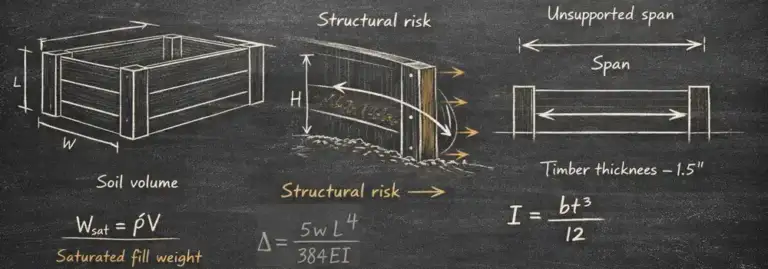
The main issue is load. Once a raised bed is filled with wet soil, it is no longer just a timber box. It has to resist outward pressure, moisture, movement and repeated drying cycles. Thin boards, long unsupported spans, light corner posts and basic fixings can all look fine at first, then slowly begin to bow, spread or loosen.
Common weak points include:
- boards that are too thin for the bed length
- corners that rely on small posts or light fixings
- timber that moves after installation because it was not stabilised first
- finishes that protect the surface briefly but do little for long-term behaviour
- fixed sizes that do not suit the site, exposure or intended planting
- repairs that are added later because the original design was underspecified
This is why premium should not mean “more decorative”. It should mean the bed has been designed with the real loads and conditions in mind. For a deeper look at the structural side, see our guide to why raised beds fail.
Why timber thickness should match the span
Timber thickness matters because soil load is not spread politely across a raised bed. Wet soil pushes outward, especially along longer runs and deeper beds. The longer the span, the more the board has to resist bending between its supports.
A short bed, a long bed, a shallow bed and a deep bed are not asking the timber to do the same job.
This is where many raised bed kits fall short. A single board thickness may be used across several sizes because it keeps production simple. That may suit the catalogue, but it does not always suit the soil load, the span, or the garden.
For a premium bespoke raised bed, timber thickness should be part of the specification, not an afterthought. Span, height, soil volume, board stiffness, fixing layout and corner strength all affect whether the bed stays visually true once it is filled.
That is why we do not treat thickness as a fixed catalogue choice. A modest bed may not need the same board depth as a long, high, exposed bed. For larger spans, increasing timber thickness can be the difference between a bed that stays straight and one that slowly begins to bow under wet soil pressure.
Why our raised beds take around 10 weeks to make
Our raised beds take around 10 weeks to make even if our order book was empty, because time is part of the material preparation. The timber is not rushed into production as soon as it arrives. It is allowed to dry, move and stabilise before it is charred, finished and built into a raised bed.
- Air-dried, not kiln-rushed: We allow our timber to dry naturally using sun, wind and time. That slower process lets moisture reduce at a natural pace before the boards are worked, charred and finished.
- Stability before charring: Timber moves as it dries. By giving that movement time to happen before the Yakisugi process, we reduce the chance of the boards doing their early shifting after installation, once the bed is already filled with soil.
- A better burn: Yakisugi should not be a quick surface scorch on timber that is still holding too much moisture. Properly prepared timber allows the flame to create a more consistent charred surface, rather than wasting heat driving water out of the board.
- Lower energy, better material behaviour: Natural air drying avoids using a kiln as a shortcut. It is slower, but it fits the way we want the timber to behave: settled, prepared and ready for a finish that is part of the material system, not just a cosmetic surface.
This is one of the clearest differences between a bespoke raised bed and a product pulled from stock. The time is not there to make the process sound artisanal. It is there because the timber performs better when it has been allowed to stabilise before it becomes part of the garden.
Is Yakisugi worth it for raised beds?
Yakisugi is worth it for raised beds when it is used as a proper timber process, not just as a blackened decorative finish. The value comes from how the surface is prepared, charred, brushed and finished, and how that surface then behaves outdoors.
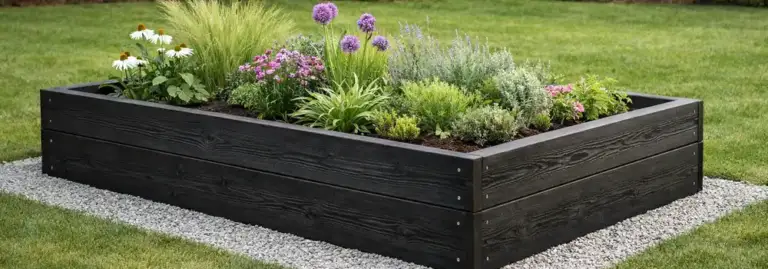
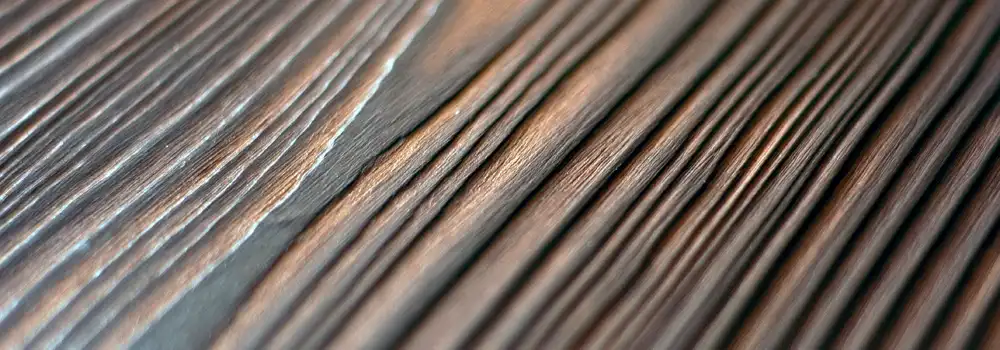
For our raised beds, Yakisugi is part of the protection system. The timber is charred, brushed to reveal the grain, and finished with zero VOC oil. That creates a surface with depth, texture and character, while avoiding the look of a standard stained or painted timber box.

The important distinction is between a controlled char and a quick scorch. A quick surface burn may create colour, but it does not necessarily create the same material depth or consistency. A proper Yakisugi process needs prepared timber, controlled heat, brushing, finishing and enough care to make the surface more than decorative.
Yakisugi also changes the visual role of the bed. Instead of trying to hide the timber, it makes the material part of the design. The charred grain gives the bed a sculptural quality, especially in gardens where the raised bed is visible from the house, terrace, path or seating area.
Why local timber is a premium feature
Local timber changes more than the story behind a raised bed. It changes control. When timber comes from a local yard, the maker can build a relationship, explain what is needed, and choose material with the right stability, thickness and character for the work.
For us, that matters because our closest timber supplier is less than five miles from our base. A customer’s order does not begin with anonymous stock travelling through a long supply chain. It begins with timber we can source locally, prepare locally and build locally in Dorset.
That reduces road miles, improves traceability and keeps more of the value in the local supply chain. It also helps quality. When a timber yard knows what we are trying to achieve, especially for Yakisugi, the timber is not just a commodity. It becomes part of the making process.
When premium raised beds are not worth it
Premium raised beds are not always the right choice. If you need a temporary growing box, a trial layout, an allotment bed, or a low-cost solution for a rented garden, a cheaper raised bed kit may be perfectly sensible.
They are also less important where the bed will be hidden, replaced soon, or used purely for short-term vegetable production. In those cases, the extra work behind bespoke design, local timber, slow preparation and Yakisugi finishing may not repay the investment.
Premium raised beds make most sense when the bed will be visible, long-term and part of the garden’s design. That is where structure, finish, proportion and ageing matter.
What makes The Raised Bed Company’s beds different?
The Raised Bed Company does not treat a raised bed as a standard box with better timber. Each bed is made around the garden it will stand in, the span it has to hold, and the role it needs to play over time.
The main differences are:
- bespoke sizing rather than fixed catalogue dimensions
- timber thickness matched to span, height and soil load
- local Dorset timber sourcing
- natural air drying using sun, wind and time
- Yakisugi charring as a material process, not just a dark finish
- Zero-VOC oil chosen as part of the finishing system
- visible grain and texture designed to age with the garden
- installation considered as part of the whole structure
Premium is not the price of the raised bed. It is the number of decisions made properly before the bed reaches the garden.
That is what premium should mean: not simply more expensive, but more considered before the bed is ever installed.
Are premium raised beds worth it: the honest answer
Premium raised beds are worth it when they solve the right problem. They are not just about holding soil. They are about structure, appearance, material behaviour, long-term use and how the bed belongs in the garden.
A cheaper raised bed kit can be the right choice for short-term or purely practical growing. But when the bed needs to stay visible, straight, well finished and integrated into the garden, premium means more than style. It means better decisions made earlier.
The real question is not whether premium raised beds cost more. It is whether the extra cost buys design, preparation and longevity that matter in your garden.
Explore premium raised beds made for your garden
If you are considering a raised bed that needs to look right, last well and feel like part of the garden rather than a temporary timber box, the next step is to look at what a bespoke bed could become in your space.
Our beds are designed around the garden, the span, the timber and the finish, not a fixed catalogue size. You can explore our bespoke raised beds, learn why we use Western Red Cedar raised beds, or contact The Raised Bed Company to discuss a bed designed for your garden.