Do raised beds dry out faster?
Raised beds can dry out faster than in-ground gardens, especially in warm, windy weather. If you find yourself watering your raised beds every evening only to see dry soil again by morning, you are not necessarily doing anything wrong. Raised beds behave differently because they drain freely, sit above ground level, and expose more soil to sun and airflow.
The real question is not simply whether raised beds dry out faster. The useful question is whether the bed dries so quickly that plants struggle between watering. If that is happening, the answer is rarely just to water more often. The better fix is usually to improve how the bed stores moisture, protect the soil surface, and water deeply enough to reach the active root zone.
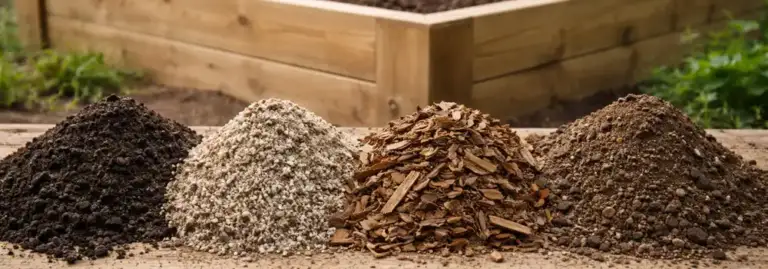
This is also why the fill matters. A very light, open mix may drain well but struggle to hold moisture through dry spells. If you are still choosing or improving your growing medium, our guide to soil mix for raised beds explains how to balance drainage, structure and moisture holding.
Key takeaway: Raised beds can dry out faster because they drain freely, sit above ground level, and expose more soil to sun, wind and evaporation. The fix is not simply watering more often. The three things that make the biggest difference are better soil structure, a covered soil surface, and watering deeply enough to keep moisture available below the dry top layer.
Do raised beds dry out faster than in-ground gardens?
Yes, raised beds often dry out faster than in-ground gardens, but that is not always a weakness. A raised bed usually drains more freely than surrounding ground, warms sooner in spring, and has more exposed edges where air can move around the soil. In wet weather, those same qualities can be useful because they reduce the risk of waterlogged roots.
The problem starts when the bed loses usable moisture faster than plants can comfortably replace it through their roots. That is most likely in a shallow bed, a narrow bed, a windy position, or a bed filled with a very light mix that lets water pass through quickly.
A better way to think about it is moisture stability. A good raised bed should drain after heavy rain, but it should not swing from wet to dry so quickly that plants are repeatedly stressed. If the surface looks dry but the soil below still feels cool and moist, the bed may be behaving normally. If the root zone is dry soon after watering, the bed needs fixing.
Why do raised beds dry out so fast?
Raised beds dry out quickly because water, heat and airflow behave differently above ground level. A raised bed usually sheds excess water well, but the same free drainage can shorten the time moisture stays available near plant roots.
The surface also matters. Bare soil exposed to sun and wind loses moisture through evaporation, while the sides and corners of the bed can warm and dry before the centre does. That is why one part of a raised bed may look dusty while another part still holds moisture below the surface.
| Cause | What happens | Why it matters |
|---|---|---|
| Free drainage | Water leaves the bed more easily than it would in heavier ground. | This helps prevent waterlogging, but it can reduce how long moisture stays available. |
| Bare soil surface | Sun and moving air dry the exposed top layer. | Seedlings, shallow roots and newly planted crops feel this first. |
| Wind and airflow | Air movement strips moisture from soil and plant leaves. | A windy bed can dry quickly even when the weather does not feel especially hot. |
| Exposed sides and corners | The outer soil warms and dries before the centre of the bed. | The bed does not dry evenly, so edges and corners may need closer attention. |
| Light or open soil mix | Water passes through quickly and the mix holds less reserve moisture. | Good drainage becomes a problem if the soil cannot buffer dry spells. |
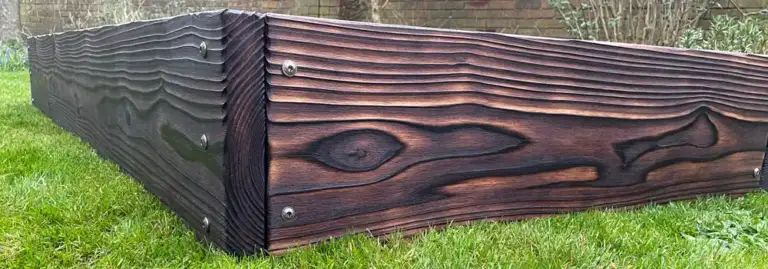
| Heat-absorbing materials | Dark or hot sides can warm the outer soil zone. | Material can affect edge drying, although soil volume usually matters more than the bed material alone. |
A raised bed does not dry as one uniform block. The top, edges and corners usually dry first, while the centre and lower soil can stay moist for longer.
How to test soil moisture in a raised bed
The surface of a raised bed can look dry before the root zone is dry. That is why watering by appearance alone often leads to shallow, repeated watering that wets the top layer but does not solve the problem below.
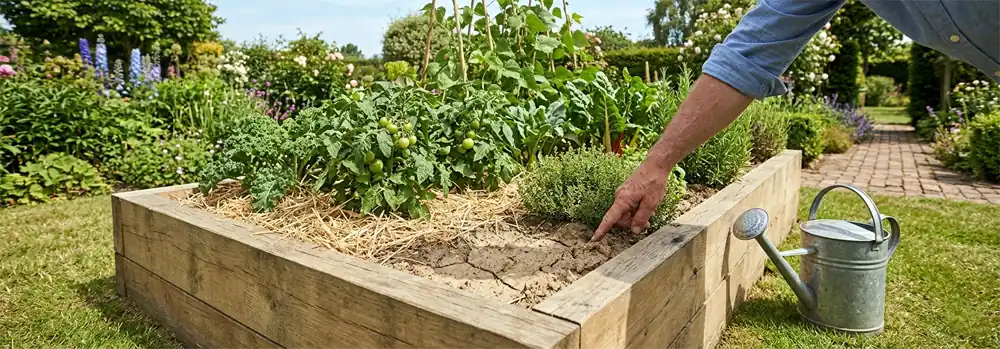
The useful test is simple: check below the surface. Push a finger into the soil, or use a small trowel to look a few centimetres down. If the top is dry but the soil below is cool and slightly damp, the bed may not need water yet. If the soil is dry where the roots are active, it needs a deeper soak.
| Check | What it tells you | What to watch for |
|---|---|---|
| Finger test | Shows whether the upper soil is dry or still damp below the surface. | The top layer can dry quickly even when the root zone still has moisture. |
| Trowel check | Lets you see and feel what is happening a little deeper in the bed. | This is more reliable than judging by colour or surface cracking alone. |
| Plant behaviour | Shows whether plants may be under stress. | Afternoon wilting can be heat or wind stress. Morning wilting is more concerning. |
| Moisture meter | Can help compare the middle, edges and corners of the bed. | Cheap meters vary, so use them as a guide rather than a final answer. |
The aim is not to keep the surface constantly damp. It is to know whether moisture is still available where the roots need it.
Do taller raised beds dry out faster?
Taller raised beds can dry faster around the edges because they have more exposed side area. Sun and wind can warm the outer soil zone, especially in narrow beds where more of the growing area sits close to a side or corner.
But height works both ways. A taller bed also holds more soil, and that extra volume can act as a moisture reserve if the bed is filled well and watered deeply enough. A shallow raised bed may dry quickly because there is very little root-zone depth. A taller bed may have drier edges but a more stable centre.
A taller raised bed may dry faster around the edges, but it can still hold a deeper moisture reserve in the centre if the soil structure and watering depth are right.
The better question is not simply whether the bed is tall. It is whether the bed is exposed, narrow, lightly filled, bare on top, or watered only at the surface. Those details usually matter more than height alone.
How to stop raised beds drying out: 3 fixes that actually help
The best way to stop raised beds drying out too quickly is to work on moisture stability, not just watering frequency. If the soil cannot hold enough water, if the surface is bare, or if watering only wets the top layer, the bed will keep drying quickly no matter how often you visit it with a watering can.
These three fixes deal with the problem at source.
| Fix | What it solves | Why it works |
|---|---|---|
| Improve soil structure | Raised bed soil that dries out soon after watering. | Organic matter and good structure help the soil hold moisture without becoming waterlogged. |
| Cover the soil with mulch | Fast surface drying in sun and wind. | Mulch slows evaporation and protects the upper root zone from heat and airflow. |
| Water deeply enough | Beds that look watered but dry again quickly. | Deep watering reaches the active root zone instead of only darkening the surface. |
The aim is not to make a raised bed stay wet. It is to stop it swinging too quickly from watered to dry.
What is the best soil mix for raised beds that dry out quickly?
Raised beds dry out faster when the soil mix is too open, too light, or too low in organic matter. This is common in beds filled mainly with loose compost, very sandy material, or bagged mixes that drain well at first but do not build much lasting body.
The aim is not to make the soil heavy or wet. It is to create a mix that holds useful moisture while still letting excess water drain away. Adding compost, leaf mould, well-rotted organic matter, or a more soil-based component can help the bed keep moisture available for longer between watering.
What is the best mulch for raised beds that dry out?
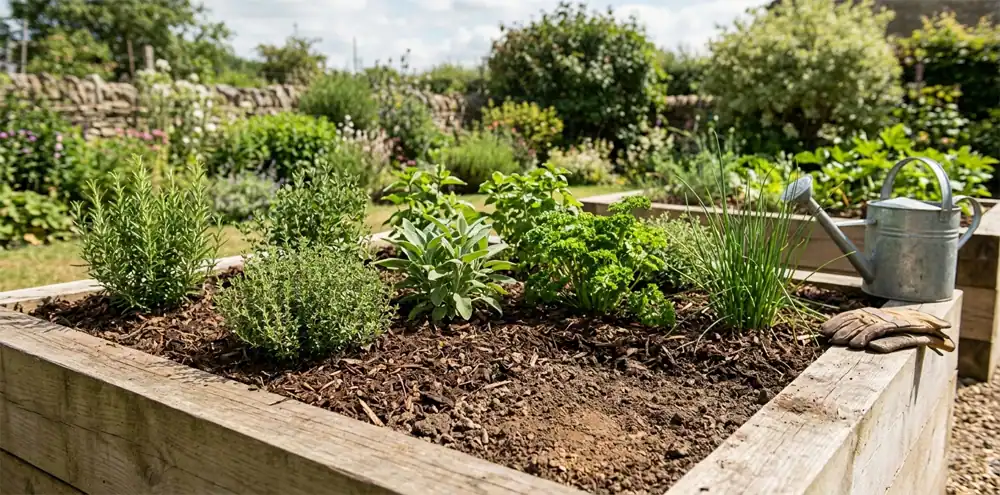
Bare soil loses moisture quickly. A mulch layer reduces direct sun and wind on the surface, which slows evaporation and helps keep the upper root zone more stable.
For vegetable beds, compost mulch, leaf mould or straw can work well where they suit the crop and garden style. For longer-term planting, bark, composted wood fibre or a planted ground layer can help protect the soil. The material matters less than the principle: covered soil dries more slowly than exposed soil.
How should you water a raised bed that dries out quickly?
Frequent shallow watering can make raised bed soil drying out feel worse because it only wets the surface. The top looks refreshed for a while, but the root zone may still be dry underneath.
A deeper soak is usually more useful. Water slowly enough that moisture can move down into the bed rather than running across the surface or straight through dry cracks. This encourages plants to root deeper, where the soil is less exposed to sun and wind. Drip irrigation can help with this, but the method matters less than the result: water needs to reach the roots, not just the top few centimetres.
If the soil has become very dry, water may run across the surface or disappear down cracks before it soaks evenly into the root zone. In that situation, water lightly first, wait a few minutes, then water again more deeply. The first pass helps re-wet the surface, and the second has a better chance of moving down through the bed.
Should you water raised beds every day in summer?
Do raised beds dry out faster enough to need daily watering in summer? Sometimes, but not automatically. The better habit is daily checking during hot, dry or windy spells, then watering only when the root zone needs it.
Check daily when:
- seedlings or new plants are establishing
- the weather is hot, dry or windy
- the soil surface is bare
- the bed is narrow, shallow or exposed
- plants are in active growth and the soil below the surface is drying
You may be able to wait when:
- only the top layer is dry
- the soil below the surface still feels cool and slightly damp
- established plants are not showing morning stress
- mulch is keeping the root zone stable
- recent rain has wetted the bed below the surface
Daily shallow watering can make raised beds harder to manage. It encourages roots to stay near the surface, where soil dries first. A slower, deeper soak is usually better than a quick sprinkle every evening.
Is it better to water raised beds in the morning or evening?
Morning is usually the best time to water raised beds. The soil starts the day with moisture available, and any wet foliage has time to dry before night. Evening watering can reduce immediate evaporation, but it may leave leaves and the soil surface damp overnight, which can increase disease pressure around some crops.
In a hot spell, do not let the perfect time become the enemy of useful watering. If plants are genuinely stressed and the root zone is dry, water them. Just aim the water at the soil, not the leaves, and water slowly enough for it to soak in.
What is the best way to keep raised bed soil moist for longer?
The best way to keep raised bed soil moist for longer is to make moisture more stable, not to keep the bed constantly wet. Raised beds need to drain, but they should also hold enough water below the surface for plants to use between watering.
That means checking below the dry top layer before reacting, improving the soil if water disappears too quickly, covering bare soil with mulch, and watering deeply enough to reach the roots. Wind exposure also matters. If a bed sits in a hot, open position, even good soil will dry faster than the same bed in a more sheltered spot.
So, do raised beds dry out faster? Often, yes. But that does not have to become a watering problem. A well-filled, mulched and properly watered raised bed should drain freely after rain while still holding enough moisture to keep plants growing steadily through dry spells.