Raised bed vs planter: the real difference is the bottom
A raised bed and a planter are not the same thing. A true raised bed is open to the ground beneath it. A planter has a base, even if it is large, deep, or built from the same materials. That one difference changes how roots grow, how water drains, how often the growing space dries out, and where each structure works best.
This matters because raised beds are often described in the same language as planters, troughs, containers and patio boxes. From above, they can look very similar. Timber, metal, size and height do not decide the category. A bottomless raised bed works with the soil below. A planter holds a limited volume of compost or soil inside a contained vessel.
If you are choosing between a raised bed and a planter, do not start with shape, height or finish. Start with the bottom. If the structure is open to the ground, think raised bed. If it has a base, think planter.
Key takeaway: In a raised bed vs planter comparison, the deciding feature is the bottom. A raised bed stays open to the ground. A planter has a base. That changes root space, drainage, watering, soil stability and where each one should be used.
Raised bed vs planter: what is the difference?
The difference between a raised bed and a planter is not the material, shape or height. It is whether the growing space is open to the ground below.
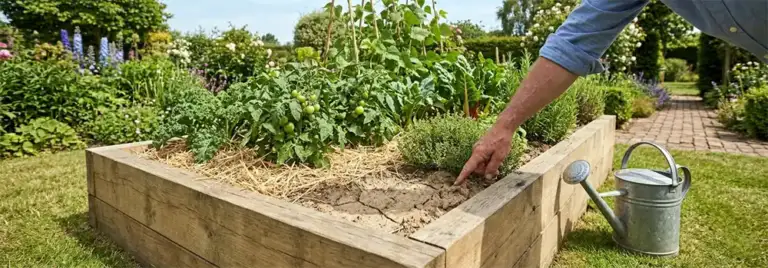
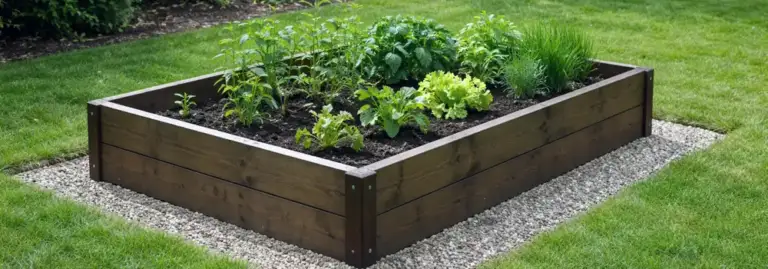
A raised bed is a bottomless frame filled with soil. It raises and defines a growing area while still allowing roots, water and soil life to connect with the ground beneath.
A planter is a contained vessel. It may be deep, wide and permanent-looking, but if it has a base, the growing space is limited to the volume inside it.
| Feature | Raised bed | Planter |
|---|---|---|
| Bottom | Open to the ground | Has a base or floor |
| Root space | Can extend into the soil below if conditions allow | Restricted to the container volume |
| Drainage | Water can move into the ground beneath | Water must escape through drainage holes or gaps |
| Moisture behaviour | Usually more buffered by the connected soil mass | Often dries faster and needs closer management |
| Best location | Soil, grass or prepared garden ground | Patios, balconies, terraces and hard surfaces |
| Best use | Longer-term growing where ground connection is useful | Contained planting where ground contact is not possible |
The simple test is this: if the structure is open to the soil below, it is functioning as a raised bed. If the planting area is held above a base, it is functioning as a planter, even if it looks like a raised bed from above.
Do raised beds need a bottom?
Most raised beds do not need a bottom. In fact, a true raised bed is usually better without one because the open base is what connects the growing space to the soil below.
A bottomless raised bed allows:
- Roots to move beyond the visible frame if the ground beneath is suitable, especially for deeper-rooted crops such as tomatoes or carrots
- Water to drain down into the soil rather than relying only on holes in a base
- Soil organisms and biological processes to remain partly connected with the wider ground
- Moisture to behave more steadily than it would in a fully contained vessel
That does not mean every raised bed can simply be placed anywhere and left alone. The ground beneath still matters. Compacted soil, heavy clay, poor drainage or a hard surface can all change how the bed performs. If the ground underneath cannot accept water properly, the bed may still become wet, stagnant or difficult to manage.

This is why the bottom question matters so much. A base does not automatically make growing easier. It changes the structure from open-ground behaviour towards container behaviour, where drainage, depth, watering and fill quality all need closer control.
Is a planter the same as a raised bed?
No. A planter is not the same as a raised bed, even when the two look similar. A planter is a contained growing vessel. A raised bed is a bottomless growing area connected to the ground below.
The confusion usually comes from appearance and retail language. A timber box filled with soil may be called a raised bed, planter, trough, planter box or raised bed planter depending on where it is sold. But the name is less important than the structure. If it has a base, it behaves like a planter. If it is open to the ground, it behaves like a raised bed.
This matters because advice written for one system may not transfer cleanly to the other. A planter usually needs closer control of watering, drainage and feeding because the growing volume is fixed. A raised bed can be more forgiving because roots, water and soil processes are not limited in the same way.

The simplest rule is this: similar shape does not mean similar behaviour. A planter can be an excellent choice in the right place, but it should not be expected to perform exactly like a true raised bed.
Raised bed or planter: which should you choose?
Choose a raised bed when you have soil, grass or prepared garden ground beneath the structure. Choose a planter when you need contained planting on a hard surface, balcony, terrace or courtyard.
Neither option is automatically better. The right choice depends on where the growing space will sit and how much control you want over the soil, drainage and watering.
| Situation | Better choice | Why | Watch out for |
|---|---|---|---|
| Growing on soil or grass | Raised bed | The bed can stay open to the ground, giving roots and water somewhere to move beyond the visible frame. | Poor ground preparation can still cause drainage problems. |
| Growing on a patio or paving | Planter | A contained vessel protects the hard surface better and makes drainage easier to control. | It may dry faster and need more active watering. |
| Growing on a balcony or terrace | Planter | The growing space needs to be contained, movable or designed for a surface where ground connection is impossible. | Check weight, drainage and building limits before filling. |
| Moveable or seasonal planting | Planter | A planter can sometimes be moved, refreshed or replaced more easily than a soil-filled raised bed. | Large planters can still become very heavy once filled. |
| Long-term vegetable growing | Raised bed | A bottomless bed gives more root freedom and usually creates a more stable growing environment. | The soil below still needs to accept water properly. |
| Flowers or ornamental planting in a garden area | Raised bed | A raised bed can create a defined planting area while still keeping roots connected to the soil below. | It still needs suitable ground preparation and enough depth for the planting style. |
A raised bed is usually the better choice when you are improving a growing area that already has soil beneath it. A planter is usually the better choice when the surface cannot become part of the growing system.
The decision becomes much easier once you stop asking which one looks better and start asking what the structure needs to do.
Can you put a raised bed on concrete?
You can put a raised bed on concrete, paving or a patio, but it will not behave like a true open-ground raised bed. Once the growing area is separated from the soil below, it starts to behave more like a large planter.
That does not make it wrong. It just changes the design problem. On a hard surface, the structure needs enough depth, controlled drainage, and a sensible way for excess water to leave without sitting against paving, staining the surface, or leaving the root zone wet for too long.
If you are placing a growing structure on concrete, check:
- Whether the base is open, lined, raised slightly, or fully contained
- Where excess water will go after heavy rain
- Whether the soil depth is enough for the plants you want to grow, especially without access to the ground below
- Whether the filled structure will be too heavy for the surface
- Whether you are prepared for more planter-like watering behaviour
This is where the language can become confusing. A bottomless frame placed directly on concrete may look like a raised bed, but it cannot connect with the soil beneath because there is no soil beneath it. In practical terms, it has moved closer to planter behaviour, even if it still uses raised bed materials and proportions.
What is a raised bed planter?
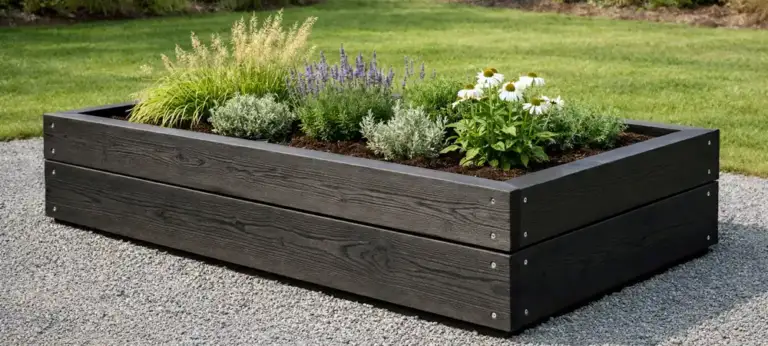
A raised bed planter is usually a hybrid term, not a precise category. It often describes a structure that borrows the shape, height, legs or timber style of a raised bed but behaves more like a planter because the growing space is contained.
That does not make the product useless. It may be exactly right for a patio, courtyard, balcony or rented garden where open-ground planting is not possible. The problem is the expectation created by the name. If a raised bed planter has a base, it should be judged as a planter, not as a true raised bed.
Before buying one, ask:
- Does it have a base?
- Where does excess water go?
- How deep is the usable growing space, not just the overall height?
- Will the plants rely entirely on the soil or compost inside the container?
- Can it realistically be moved once filled?
The phrase “raised bed planter” can be useful as a shopping label, but it should not hide the growing reality. The structure may look like a raised bed, but if roots and water are confined inside a vessel, it will need planter-style care.
Are raised beds better than planters?
Raised beds are not automatically better than planters. They are better when ground connection matters. Planters are better when containment matters.
In a raised bed vs planter decision, the stronger choice depends on the place. If you have soil below, a bottomless raised bed usually gives plants more root freedom, steadier moisture behaviour and a more natural growing environment. If you are planting on a patio, balcony or paved courtyard, a planter is often the more honest solution because the growing space needs to be contained.
A raised bed is better when you want to improve the ground. A planter is better when the ground cannot be part of the system.
The mistake is expecting one to do the other’s job. A planter can be beautiful, practical and highly useful, but it still needs planter-style care. A raised bed can be deeper, more stable and more forgiving, but only when the ground beneath it can support that role.
So the answer is not “raised beds are better” or “planters are better”. The better choice is the one that matches the surface, the planting and the level of control the structure needs to provide.