How to fix a waterlogged garden
A waterlogged garden is not always fixed by digging a drain. The right solution depends on why the ground is staying wet. A compacted lawn, heavy clay border, roof runoff, low-lying damp corner and high water table all need different responses.
The first step is to identify whether the problem is surface water, poor soil structure, water arriving from somewhere else, or ground that is saturated from below. Some fixes are simple, such as staying off wet soil, aerating a compacted lawn or redirecting runoff from a shed roof. Others need a bigger change, such as a French drain, soakaway, wet-tolerant planting or a raised growing area.
If the problem is soil structure, this guide to choosing the right soil mix for raised beds explains why drainage, moisture retention and root oxygen need to be balanced rather than treated separately.
Key takeaway: To fix a waterlogged garden, match the solution to the cause. Surface compaction may need aeration, heavy clay may need slow soil improvement, runoff may need redirecting, and saturated ground may need drainage or elevation. When roots are sitting in wet soil for too long, raised beds can solve the growing problem even if the wider garden remains damp.
How to fix a waterlogged garden quickly: 7 practical drainage fixes
A waterlogged garden can usually be improved, but not every fix works for every cause. Use the table below as a quick diagnosis guide before choosing where to put your effort.
| Question | Quick answer | Best for | Not enough when | Next step |
|---|---|---|---|---|
| What should you do first with waterlogged soil? | Stop making it worse. | Recently saturated beds, lawns and paths. | The ground stays wet after dry weather returns. | Keep off wet soil and use boards if access is essential. |
| How do you improve drainage in a wet lawn? | Relieve surface compaction. | Puddling caused by compacted grass or regular foot traffic. | The subsoil or water table is already saturated. | Spike lightly, hollow-tine if needed, and avoid working saturated ground. |
| How do you improve heavy clay soil that stays wet? | Improve structure slowly. | Heavy, tired or clay-heavy borders. | The garden is low-lying or water has nowhere lower to drain. | Add compost, leaf mould or fine bark when the soil is workable. |
| How do you stop rainwater pooling from patios, paths and roofs? | Redirect runoff. | Water from roofs, sheds, patios, paths and slopes. | Water is rising from below or arriving from saturated neighbouring ground. | Use water butts, channels, small falls or safer discharge routes. |
| What can you plant in a garden that stays wet? | Work with the wet area. | Spots that will always stay naturally damp. | You want to grow plants that need free-draining soil. | Use wet-tolerant planting or a rain garden in the wettest area. |
| Do French drains and soakaways fix a waterlogged garden? | Only if water has somewhere to go. | Moving larger volumes of water to a safe lower discharge point. | The surrounding ground is already full or there is no fall. | Check levels, outlet, soil capacity and whether professional advice is needed. |
| Do raised beds help with waterlogged soil? | Yes, when roots need lifting. | Growing in wet, heavy or unreliable ground. | The wider garden has serious flooding or flowing water. | Lift the growing zone and use a free-draining soil structure. |
Each fix works only when it matches the cause. The rest of this guide explains when each drainage fix is worth using, when it is likely to disappoint, and how to avoid making a waterlogged garden worse.
What should you do first with waterlogged soil?
The first thing to do with waterlogged soil is stop making the problem worse. Wet soil is easily damaged because the spaces between soil particles are already full of water. When you walk on it, dig it, wheel over it or repeatedly disturb it, those spaces collapse further, leaving even less room for air and drainage.
This matters because plant roots need oxygen as well as moisture. If the soil is saturated and compacted at the same time, roots are trapped in a cold, airless layer where recovery becomes much harder.

If you need access across a wet lawn, border or vegetable area, use boards, stepping stones or a temporary plank route to spread your weight. Avoid digging heavy soil while it is sticky, because turning wet clay can smear the structure and make it set harder afterwards.
This is not a complete fix for a waterlogged garden, but it is the safest first response. Once the soil begins to dry, you can judge whether the problem was temporary surface saturation, compacted ground, or a deeper drainage issue that needs more action.
How do you improve drainage in a wet lawn?
A wet lawn usually needs drainage improvement only after the surface has had a chance to recover. If the grass is still soft, shiny, spongy or easily marked by footprints, heavy work can cause more compaction. Wait until the lawn is firm enough to walk on without leaving deep impressions.
For minor surface puddling, spiking with a garden fork can help air and water move through the upper layer. Push the fork in, rock it gently, then repeat across the affected area. This is useful where foot traffic has sealed the surface, but it will not solve a lawn sitting above saturated subsoil.
Hollow-tine aeration is stronger because it removes small plugs of soil rather than just pushing compacted soil aside. It is more useful where repeated use has made the lawn dense and airless.
Do not try to fix a wet clay lawn by simply brushing sharp sand into the surface. In the wrong soil, sand can tighten the surface rather than improve it, especially if the real problem is clay, compaction or water that cannot drain away below.
If the lawn improves after aeration and dry weather, the problem was probably surface compaction. If it stays wet, the issue is likely deeper: heavy soil, poor levels, runoff, or a high water table.
How do you improve heavy clay soil that stays wet?
Heavy clay soil stays wet because its fine particles pack closely together. Water enters slowly, drains slowly and can leave the root zone cold and airless for longer than plants want. The aim is not to make clay behave like sand. It is to improve the structure so water and air can move through it more reliably.
The best long-term approach is to add organic matter when the soil is workable, not when it is sticky. Compost, leaf mould and fine composted bark help clay particles form more open crumbs, creating better pore space for air, water movement and root growth.
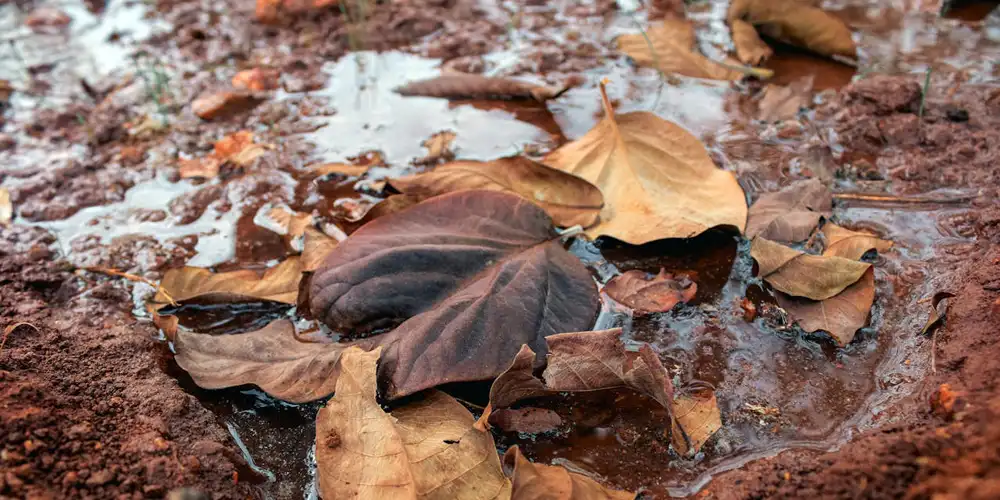
Avoid digging wet clay just because it feels like something needs doing. When clay is worked while saturated, it can smear into dense layers that dry hard and drain badly afterwards. That is why timing matters as much as material.
Organic matter is a slow improvement, not an instant drainage fix. It helps heavy soil recover over seasons, especially in borders where waterlogging is made worse by compaction or tired structure. But if the garden is naturally low-lying, water is arriving from surrounding ground, or the water table is high, soil improvement alone will not fix a waterlogged garden. In that situation, you may need to redirect water, create drainage, change the planting, or lift the growing zone.
How do you stop rainwater pooling from patios, paths and roofs?
Rainwater pooling is not always caused by the soil itself. Sometimes the garden is being overloaded by water arriving from hard surfaces. Roofs, sheds, greenhouses, patios, paths and driveways can all shed water quickly into one small area, especially during heavy rain.
The first job is to watch where the water comes from. If a wet patch sits below a shed roof, beside a patio edge, at the bottom of a slope or where a path meets a border, the cause may be runoff rather than poor soil alone.
Water butts can help where roof water is part of the problem, but they are not a complete drainage solution. Once full, they stop reducing runoff unless they are emptied or connected to a controlled overflow. Slotted drainage channels, shallow swales, small level changes and safer discharge routes may be more useful where water repeatedly moves across a hard surface into a planting area.
This is where small changes can make a large difference. Redirecting water before it reaches a saturated border is usually easier than trying to rescue the soil afterwards. But runoff control only works when the water has somewhere sensible to go. If every lower area is already wet, the problem may be wider saturation rather than a simple surface-flow issue.
What can you plant in a garden that stays wet?
If part of the garden always stays wet, the best fix may not be drainage at all. In a naturally low-lying area, a hollow beside a path or a place where water regularly gathers, wet-tolerant planting can be more realistic than trying to force the ground to behave differently.
This does not mean plants will magically drain a waterlogged garden. That is the common mistake. Trees, shrubs and perennials can use moisture, but they cannot quickly lower a high water table or solve saturated subsoil. Their value is different: they let you plant in a damp area without choosing species that resent wet roots.
| Plant or plant type | Why it suits wet ground | Best use | What to watch for |
|---|---|---|---|
| Iris | Many irises tolerate reliably damp soil better than dry-border plants. | Rain gardens, damp borders and seasonal wet areas. | Choose the right type. Not every iris wants the same level of moisture. |
| Dogwood | Dogwoods can handle heavier, moisture-retentive ground and add winter stem colour. | Low-lying borders where structure is needed after summer growth fades. | They need space and pruning if grown for strong coloured stems. |
| Astilbe | Astilbes prefer soil that does not dry out sharply in summer. | Damp, partly shaded planting where flowers and foliage both matter. | They can struggle if a wet winter is followed by a very dry summer. |
| Primulas | Many primulas suit cool, moist soil and bring colour to damp spring areas. | Seasonal wet pockets, pond edges and shaded damp borders. | They still need soil, not stagnant water around the crown. |
| Sedges and moisture-loving grasses | Grass-like plants can soften wet areas and hold the design together. | Rain gardens, edges and naturalistic damp planting. | Some spread more than expected, so choose carefully for the space. |
| Willow or larger wet-ground shrubs | Some woody plants tolerate wetter soil and can help a damp area feel intentional. | Larger gardens where wet ground is part of the wider design. | They are not suitable for small gardens and should not be planted close to drains, boundaries or buildings because of their vigorous root systems. |
Wet-tolerant planting works best where the wet area is predictable and contained. If you want to grow Mediterranean herbs, many vegetables, lavender, salvias or other plants that need sharper drainage, the better answer may be to move those plants, improve drainage, or raise the growing zone above the wettest ground.
Do French drains and soakaways fix a waterlogged garden?
French drains and soakaways can fix some waterlogged garden problems, but only when water has somewhere useful to go. They are not magic holes in the ground. They depend on fall, soil capacity and a safe discharge route.
A French drain moves water through a gravel trench and perforated pipe. A soakaway stores water underground so it can disperse slowly into the surrounding soil. Both can be useful, but both can fail if the garden is already saturated, the soil is heavy clay, or the water table is too high.
| Drainage option | What it does | Works when | Fails when |
|---|---|---|---|
| French drain | Collects water in a gravel trench and moves it through a perforated pipe. | There is a clear fall and a safe place for the water to discharge. | The surrounding ground is saturated or the pipe has nowhere useful to lead. |
| Soakaway | Stores water below ground so it can disperse slowly into the surrounding soil. | The soil around it can absorb water and the soakaway is correctly sized. | The garden has heavy clay, a high water table or already saturated subsoil. |
| Ditch or swale | Slows and redirects surface water along a shallow route. | Water is moving across the surface from a slope, path or hard edge. | There is no safe route, no fall, or the water problem is rising from below. |
| Professional drainage design | Assesses levels, discharge, soil capacity and legal constraints together. | Flooding is persistent, affects buildings, or crosses boundaries. | The issue is only a small growing-area problem that could be solved more simply. |
The most important question is not whether a drain can collect water. It is whether the water can leave safely afterwards. You cannot simply move a waterlogged garden problem into a neighbour’s land, against a building, or into another part of the garden that is already full.
If the issue is wider flooding, building risk or boundary-to-boundary water movement, professional drainage advice is usually the safest route. If the main issue is that plants are failing in wet soil, the better answer may be to lift the growing zone with a raised bed rather than try to drain the whole garden.
Do raised beds help with waterlogged soil?
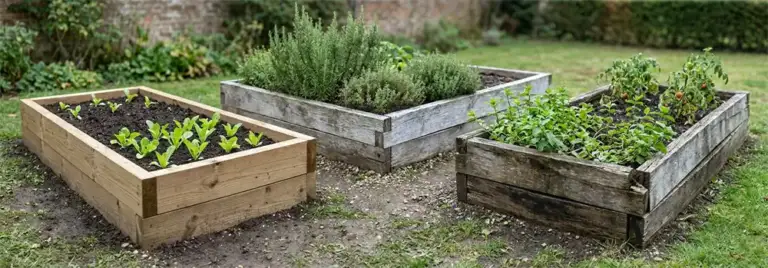
Raised beds help with waterlogged soil when the problem is the root zone rather than the whole garden. They do not remove water from a saturated site, stop runoff from neighbouring ground, or replace proper drainage where flooding is serious. Their value is more specific: they lift plants above the wettest layer and give you control over the soil they grow in.
That matters because many plants fail in a waterlogged garden not simply because there is too much rain, but because their roots sit for too long in cold, airless soil. By raising the growing area, excess water can move down through the bed more freely, while the roots occupy a zone with better structure, oxygen and drainage.
Raised beds are not a universal drainage fix. They are a growing-zone fix.
This is especially useful where ground-level planting keeps disappointing. Mediterranean herbs, many vegetables, lavender, salvias and other plants that prefer sharper drainage may struggle in heavy wet soil, even if they are otherwise hardy. In a raised bed, the growing medium can be chosen and maintained for the plants you actually want to grow rather than inherited from the worst part of the garden.
Difficult wet ground often benefits from a bed designed for the site rather than a standard box placed on top of it. A bespoke raised bed can respond to awkward levels, planting goals, access needs and the visual role the bed needs to play in the garden.
The bed itself still matters. A shallow, weak or poorly filled raised bed may not solve much. Height, timber strength, soil depth and fill all affect how well the bed performs over time. If you are planning one for wet ground, our raised bed soil volume, weight and load calculator can help you estimate soil volume, saturated weight and structural load before you build.
Raised beds work best when they are treated as part of the garden’s drainage logic, not as a shortcut around it. When the aim is to keep roots healthy above unreliable wet soil, lifting the growing zone is often the most practical change you can make.
What is the best way to fix a waterlogged garden?
The best way to fix a waterlogged garden is to match the solution to the cause. If the problem is foot traffic and surface compaction, stay off the soil until it firms up, then aerate carefully. If heavy clay is the issue, improve structure over time with organic matter. If water is arriving from roofs, patios, paths or slopes, deal with the runoff before trying to rescue the border.
French drains and soakaways can help where water has a clear route and somewhere safe to go, but they fail when the surrounding ground is already full. Wet-tolerant planting can make damp areas useful, but it will not turn saturated ground into free-draining soil.
If the real problem is that roots keep sitting in wet, airless soil, the most practical fix may be to lift the growing zone above it.