How long do raised beds last? Real lifespans by material
Most raised beds last somewhere between 5 and 20+ years, but the honest answer depends on what they are made from, how they are built, and where they sit.
A cheap untreated timber bed in a damp, shaded corner may start failing within a few years. A well-built wooden raised bed made from a naturally durable timber can last much longer when soil load, drainage, fixings and ground contact are all handled properly. Metal, stone and brick beds can last longer again, but they bring their own trade-offs in cost, appearance, heat behaviour, weight and permanence.
That is why raised bed lifespan should never be judged by material alone. Timber, metal, stone and composite materials all give different starting points, but the final result is shaped by moisture, soil load, construction quality, airflow, maintenance and site conditions. If you are planning a deeper bed, our raised bed soil volume, weight and load calculator can help you understand how much saturated soil the structure may need to hold.
Key takeaway: Most raised beds last somewhere between 5 and 20+ years, but that range is only a guide. Material sets the baseline, while drainage, soil depth, saturated weight, ground contact, shade, airflow, fixings and maintenance decide whether a bed reaches the top of its expected range or fails early.
Raised bed lifespan by material
A raised bed’s material sets its starting point. It does not decide the final lifespan on its own.
The table below gives realistic working ranges, not guarantees. A well-built timber bed in a free-draining position may outlast a poorly detailed bed made from a longer-lived material. Equally, a material that looks durable on paper can still fail early if water, soil pressure or weak construction work against it.
| Raised bed material | Typical lifespan | What usually affects it | Best way to read the estimate |
|---|---|---|---|
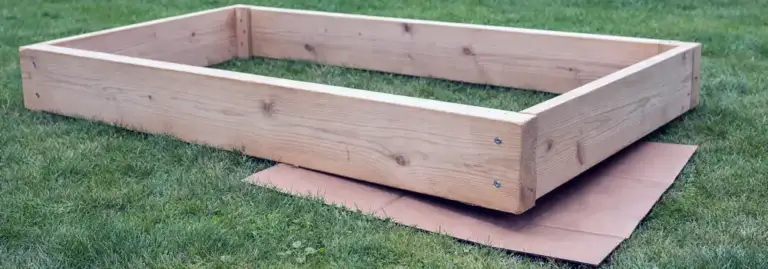
| Untreated pine | 3–7 years | Wet soil contact, shade, poor airflow, thin boards and exposed cut ends. | Useful for low-cost, temporary or short-life beds, but risky where long life matters. |
| Treated pine | 5–10+ years | Cut ends, drilled holes, corner joints, fixings and trapped moisture. | Treatment can help, but it does not overcome poor drainage or weak construction. |
| Cedar or larch | 10–15+ years | Ground contact, joint design, fixings, soil load, drainage and whether water can escape. | A strong choice when the detailing supports the natural durability of the wood. |
| Metal | 15–30+ years | Coating quality, corrosion risk, dents, fixings, heat behaviour and soil contact. | Often long-lasting, but not automatically the best fit for every garden or design style. |
| Stone or brick | 20+ years | Foundations, movement, mortar joints, drainage and settlement. | Very long-lived, but heavy, permanent and less adaptable once built. |
| Composite or plastic | 10–25+ years | UV exposure, brittleness, movement, fixings and product quality. | Can last well, but performance depends heavily on the exact product. |
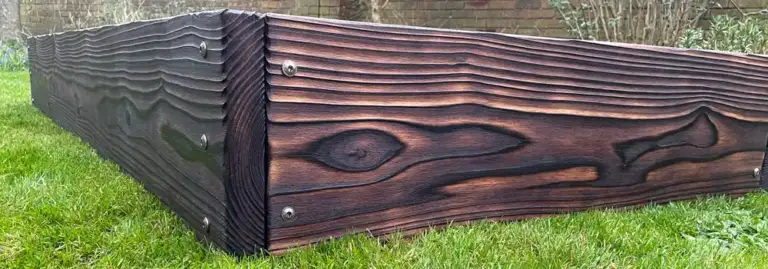
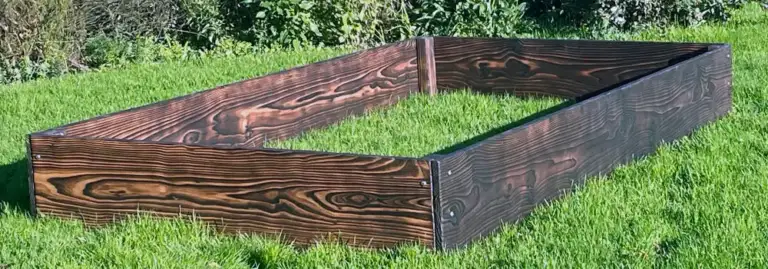
| Premium detailed timber system | 10–20+ years | Material choice, drainage, surface management, structure, load and site exposure. | Best judged as a complete system rather than a single material claim. |
These ranges are enough for a first comparison, but they are not the full answer. Timber, metal and stone do not fail in the same way. Timber needs the closest attention because it is natural, structural, moisture-sensitive and widely used in domestic gardens. Metal and masonry may last longer, but they change the look, feel and permanence of a garden, so lifespan is not the only decision.
How long do metal raised beds last?
Metal raised beds, usually galvanised steel or Aluzinc, often sit in the 15–30+ year range, depending on coating quality, fixings and corrosion risk. They do not rot like timber, which makes them attractive where maximum lifespan is the priority.
The trade-off is that metal changes the bed’s behaviour. In UK conditions, metal beds are unlikely to “cook” plants in a simple sense, but the sides can heat up and dry the soil in contact with them. That can reduce available moisture near the edges, especially in shallow beds, exposed sites or hot spells.
Large steel beds can also be heavy and awkward to install through narrow access, steps or established gardens. Sustainability matters too. Metal can last well, but it usually carries a much higher embedded energy cost than responsibly sourced timber.
Metal may win on lifespan in some situations, but it is not automatically the better raised bed material. The best choice depends on durability, installation, soil moisture, appearance and environmental fit.
The truth about raised bed lifespan estimates
Raised bed lifespan estimates are useful, but they are not guarantees. A number such as 5, 10 or 20 years only makes sense if you also know the conditions the bed will face.
Two beds made from the same material can age very differently. One may sit in full sun with free-draining soil and good airflow. Another may sit against a wall, in shade, with heavy wet soil pressing against the sides for months. On paper, they are the same bed. In real life, they are not exposed to the same forces.
| Factor | Why it changes lifespan | What to watch for |
|---|---|---|
| Drainage | Poor drainage keeps the bed wetter for longer. | Standing water, slow-drying soil or damp lower boards. |
| Ground contact | Constant wet contact increases decay risk in timber and corrosion risk in metal. | Boards sitting directly against wet grass, soil or paving. |
| Shade and airflow | Shaded, still areas dry more slowly after rain. | Green surface growth, persistent dampness or cold corners. |
| Soil depth | Deeper beds hold more soil, more water and more lateral pressure. | Bowing sides, stressed corners, loose fixings or lack of internal bracing. |
| Construction quality | Joints, fixings and corners often fail before the main boards. | Movement, gaps, leaning sides or rust marks. |
| Maintenance | Inspection and surface care can extend useful life, but cannot remove exposure. | Unnoticed damage, worn finishes, or trapped leaves and soil behind boards. |
This is why raised bed lifespan is best treated as a range, not a promise. The material gives the starting point, but drainage, exposure, soil weight and construction decide how that material performs over time.
How long do wooden raised beds last?
Wooden raised beds usually last somewhere between 3 and 15+ years, but “wood” is too broad to judge as one material. Untreated pine, treated pine, cedar and larch all behave differently, and construction can matter as much as species.
A wooden raised bed fails early when moisture, soil pressure and weak details concentrate in the same places. Corners, cut ends, fixings, lower boards and joints usually tell you more about future lifespan than the middle of a clean board.
The important point is that the lifespan of a wooden raised bed is not only about the name of the timber. A cheap bed can last acceptably if it is shallow, free-draining and easy to repair. A better timber can still fail early if it is kept wet, under-built or poorly fixed.
How long do Western Red Cedar raised beds last?
Cedar raised beds commonly sit in the 10–15+ year range, and can last longer when the design supports the timber rather than relying on the species alone. Cedar is valued because it is naturally durable, stable outdoors and well suited to garden structures, but it still needs sensible detailing.
The weak points are the same as with other wooden beds: trapped moisture, poor drainage, exposed end grain, unsuitable fixings and corners that carry too much load. Cedar gives a stronger starting point, not a free pass.
For a deeper look at the material itself, our page on Western Red Cedar raised beds explains why we use cedar for premium timber beds and how its strengths fit into long-term raised bed construction.

Does pressure-treated wood last longer?
Pressure-treated wood usually lasts longer than untreated pine because treatment improves resistance to decay. That makes it a sensible choice for many budget or mid-range raised beds.
The problem is that treatment is not evenly useful once the board is cut, drilled and assembled. Cut ends, screw holes, joints and corners can become the vulnerable points, especially if water sits there. Treated wood can improve lifespan, but it does not replace drainage, good fixings or sound construction.
Can cheap wooden raised beds last well?
Cheap wooden raised beds can last well enough when expectations match the job. A shallow, low-cost bed used for a few seasons is very different from a deep permanent bed expected to look good and stay square for many years.
Problems start when thin, low-cost timber is used for deep beds, wet sites or long unsupported spans. In those conditions, the bed is not just resisting weather. It is resisting soil weight, wet contact, movement and pressure at the same time.
What makes raised beds fail early?
Raised beds usually fail early because moisture, load and weak details meet in the same place. The board itself is not always the first problem. Corners, fixings, cut ends, lower edges and poorly drained bases often show trouble first.
| Early failure cause | What it looks like | Why it happens | How to reduce the risk |
|---|---|---|---|
| Trapped moisture | Dark lower boards, soft patches, green growth or local rot. | Water sits against timber instead of draining or drying away. | Improve drainage, avoid moisture traps and keep vulnerable edges inspectable. |
| Weak corners | Loose joints, opened gaps, leaning sides or corners pulling apart. | Soil pressure concentrates where the bed is joined together. | Use strong corner posts, suitable fixings and construction that spreads load. |
| Thin boards | Bowing sides, splitting, twisting or visible movement after filling. | The board is under-sized for the bed depth, span or soil weight. | Match board thickness, such as 25mm–50mm+, to the size and depth of the bed. |
| Poor fixings | Rust stains, loose boards, failed screws or movement around joints. | Fixings are too small, unsuitable for outdoors or incompatible with the material. | Use exterior-grade fixings that suit the timber, metalwork and load. |
| Poor ground preparation | Leaning, settlement, pooling water or one side sinking faster than another. | The bed sits on an uneven, compacted or poorly drained base. | Prepare the ground before installation so water, load and settlement are managed. |
| Excessive depth without support | Outward bowing, stressed corners or fixings working loose. | Deep beds hold more soil, more water and more lateral pressure. | Use bracing, thicker boards or stronger construction for deeper beds. |
| Constant shade and poor airflow | Slow drying, persistent dampness or surface growth after wet weather. | The bed stays wet for longer between rain, watering and seasonal changes. | Choose the position carefully and avoid trapping beds in still, damp corners. |
This is why a raised bed can look fine when it is first installed but decline quickly after a few wet seasons. The material may still have useful life left, but the weak points have been asked to carry too much moisture, pressure or movement.
If the site itself is part of the problem, start with the base. Our guide to how to prepare the ground for a raised bed explains how drainage, levelling and ground contact affect long-term performance before the bed is even filled.
How to make raised beds last longer
The best way to make raised beds last longer is to reduce the conditions that shorten their life. That usually means keeping water moving, matching the structure to the soil load, using suitable materials, and avoiding details that trap moisture where you cannot see it.
This is also where design decisions start to join up. Bed depth affects soil weight. Soil mix affects drainage and saturation. Ground preparation affects wet contact. Position affects drying time. The raised bed lasts longer when these choices support each other.

| What to improve | Why it helps lifespan | Where mistakes happen | Useful next step |
|---|---|---|---|
| Ground preparation | A level, free-draining base reduces standing water, settlement and wet contact. | Putting a bed straight onto compacted, uneven or water-holding ground. | Prepare the ground before installing the raised bed. |
| Bed depth | Depth changes soil volume, saturated weight and lateral pressure on the sides. | Building a deep bed with boards and corners sized for a shallow one. | Check how deep a raised bed should be. |
| Soil mix | A balanced soil mix drains well while still holding enough moisture for plants. | Using heavy, wet fill that stays saturated and increases load. | Choose a suitable soil mix for raised beds. |
| Soil weight and load | Wet soil is much heavier than dry soil and can expose weak construction. | Ignoring saturated weight when choosing depth, length and board thickness. | Use our raised bed soil volume, weight and load calculator. |
| Position | Sun, shade, wind and surrounding structures affect how quickly a bed dries. | Placing timber beds in permanently damp, shaded or still corners. | Use our guide to choosing the best position for a raised bed. |
| Fixings and bracing | Strong fixings and support help corners and long spans resist soil pressure. | Using small fixings, weak corners or unsupported long sides. | Match construction to the bed’s depth, span and expected load. |
| Surface care | Finishes can slow moisture and UV effects when they are used as part of a wider system. | Expecting a surface finish to compensate for poor drainage or trapped moisture. | Keep timber inspectable and maintain finishes where appropriate. |
The aim is not to make a raised bed permanent. It is to remove the avoidable pressures that make it fail before the material has reached its natural limit. Drainage, depth, soil weight, ground preparation and position all matter because they decide what the material has to endure every day.
Do raised bed liners make wood last longer?
Raised bed liners can help in specific situations, but they are not a simple way to make wood last longer.
A liner may reduce direct soil contact, which sounds useful. The risk is that a badly fitted plastic liner can trap water between the liner and the timber. Instead of protecting the wood, it can keep the board damp for longer and hide the problem until decay is advanced.
Liners are most useful when they retain soil, separate materials, or protect against a specific site problem. They are weakest when used as a substitute for drainage, airflow and good construction.
For wooden raised beds, the better question is not “should I line it?” but “will this detail help water escape or trap it where I cannot see it?”
When does ageing become failure?
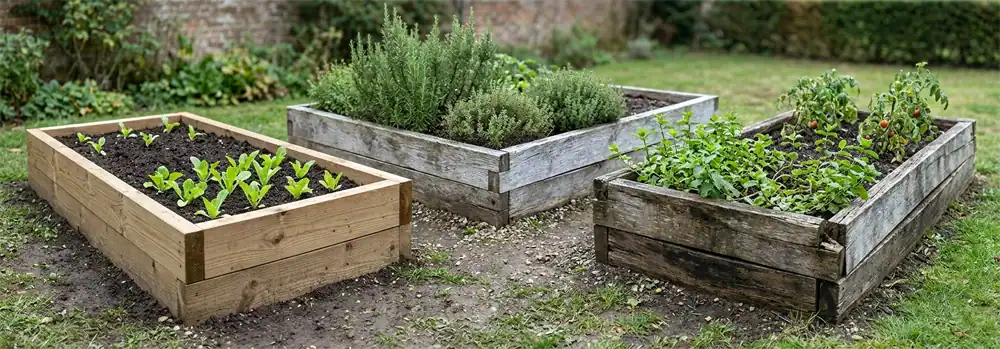
A raised bed can look older without being close to failure. Silvered timber, surface marks, small colour changes and light weathering are normal signs of outdoor exposure. They do not automatically mean the bed is rotten or unsafe.
Failure begins when ageing changes the bed’s structure. Soft timber at corners, sides bowing under soil pressure, fixings pulling loose, boards opening at joints, sinking, leaning or persistent damp at the lower edge all matter more than colour alone.
This distinction is important because replacing a bed too early wastes useful life, while ignoring structural warning signs can allow a small repair to become a rebuild. For a fuller diagnostic guide, our article on how to judge raised bed durability explains how to tell the difference between harmless weathering, early rot and genuine structural decline.
How long do raised beds last in real conditions?
In real conditions, most raised beds last somewhere between 5 and 20+ years. Untreated pine may sit near the lower end. Treated pine usually lasts longer. Cedar, larch and well-detailed timber systems can push higher, while metal, stone and brick may last longer again.
But the number is only the starting point. A raised bed’s real lifespan is shaped by material, drainage, construction, soil load, exposure and maintenance working together. The beds that last well are not simply the ones made from the longest-lived material. They are the ones where water can escape, soil pressure is supported, fixings remain sound and ageing stays visible before it becomes failure.