Why plants struggle in raised beds
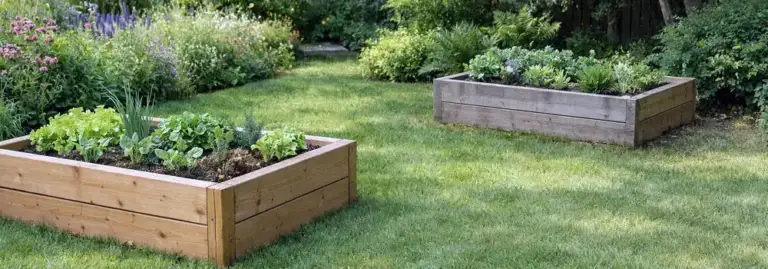
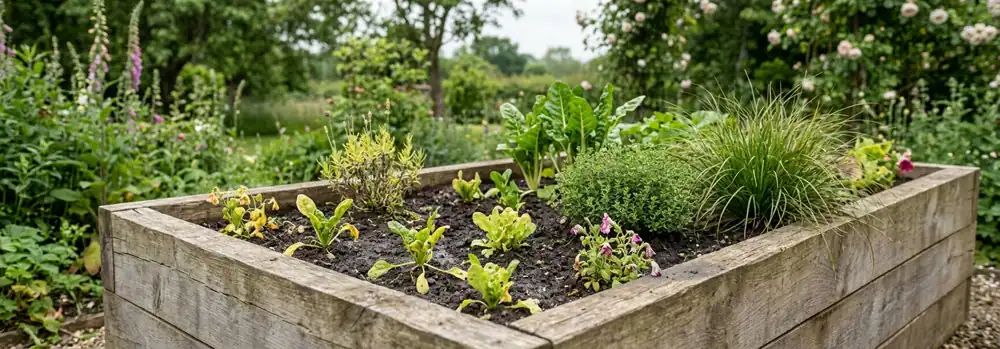
Plants not growing in raised beds can be frustrating because the bed itself may look perfectly sound. The timber is not bowing, the corners are not failing, and the structure may still be doing its job. But plants respond to the conditions inside the bed, not just the frame around them.
When plants struggle, the cause is often linked to one of seven things: light, moisture, soil mix, pH, drainage, drying speed, or root-zone space. A raised bed can be well-built and still create conditions that some plants dislike.
This article focuses on growing problems, not structural failure. If the bed is bowing, rotting, spreading, or coming apart, start with our guide to why raised beds fail: https://theraisedbedcompany.co.uk/why-raised-beds-fail/. If the frame looks sound but the plants are underperforming, the answer is more likely to be inside the growing environment.
Key takeaway: Plants usually struggle in raised beds because the plant does not match the bed’s real conditions, or because soil, drainage, moisture, pH, exposure, or root space is limiting growth. The raised bed may look fine while the growing conditions inside it are not working well enough.
Why are plants struggling in my raised bed?
Plants usually struggle in a raised bed when the growing conditions do not match what the plant needs. Start by checking light, moisture, soil mix, pH, drainage, drying speed and root-zone space before assuming the bed itself has failed.
7 reasons plants are not growing in raised beds
Use this table as a first check before adding feed, changing plants, or assuming the raised bed itself is failing.
| What to check | Why it can stop plants growing | What to look for first |
|---|---|---|
| Wrong light | Plants chosen for full sun may struggle in shade, while shade-tolerant plants can flag or scorch in a hot, exposed raised bed. | Check how many hours of direct sun the bed gets, and whether the plants suit full sun, partial shade, or shade. |
| Wrong moisture pattern | Some plants struggle when the bed dries between waterings. Others dislike sitting in damp, heavy, or airless soil around the roots. | Check whether the soil is consistently moist, dry below the surface, or wet low down while the top looks dry. |
| Soil mix problem | A mix can look dark and rich but still be too compost-heavy, too woody, too light, too dense, or too low in mineral structure. | Look for sharp settlement, shrinking soil, water running through quickly, or weak growth despite regular watering. |
| Soil pH problem | Nutrients may be present but harder for plants to use if the soil pH does not suit what they are trying to grow in. | Check whether the plant prefers acidic, neutral, or alkaline soil before adding more feed. |
| Drainage problem | Raised bed drainage problems are not always obvious. Water may run through too fast, sit low in the bed, or leave roots in uneven wet and dry layers. | Check whether water soaks evenly into the root zone, escapes down edges, or leaves the lower soil heavy and airless. |
| Drying speed | Raised beds can dry out too fast when they are exposed to sun, wind, shallow fill, light soil, thirsty planting, or hard-surface conditions. | Check moisture below the surface during warm weather, especially around the edges and in the centre of the bed. |
| Limited root-zone space | Shallow beds, small soil volumes, liners, paving, concrete, decking, or compacted bases can make a raised bed behave more like a large planter. | Check whether roots, water, and soil life can connect with open ground, or whether the bed is isolated and dependent on its own fill. |
The pattern matters more than one symptom. A single yellow leaf may mean very little. Several struggling plants, uneven moisture, poor recovery after watering, or growth that only fails in one part of the bed usually tells you more about the growing conditions inside the raised bed.
Why some plants struggle in raised beds
A raised bed does not create one universal growing condition. One bed may be hot, dry and exposed. Another may be shaded, damp and slow to dry. A third may be shallow, isolated from the ground, or too small to buffer larger plants. When the plant does not match those conditions, the bed can look as though it is failing even when the real problem is plant choice.
This is not a list of the best plants for raised beds. It is a starting point for diagnosis. Use the examples to check whether your plants match the bed’s real conditions: sun, shade, moisture, depth, exposure and soil volume.
| Raised bed condition | Plants likely to struggle | Better-suited examples to research |
|---|---|---|
| Hot, exposed, fast-drying bed | Moisture-loving annuals, leafy crops, large-leaved plants, and shallow-rooted bedding in small soil volumes. | Lavender, thyme, sage, rosemary, oregano, sedum, santolina, gaura, achillea, nepeta, stipa, eryngium. |
| Shaded raised bed | Tomatoes, peppers, courgettes, lavender, rosemary, sun-loving annuals, and many Mediterranean herbs. | Parsley, chard, lettuce, mint in control, heuchera, ferns, hosta, foxglove, hardy geranium, pulmonaria. |
| Damp or slow-draining bed | Lavender, rosemary, thyme, santolina, alpines, and many silver-leaved drought plants. | Astilbe, hosta, fern, primula, ligularia, persicaria, carex, hakonechloa, mint in control. |
| Shallow or isolated raised bed | Deep-rooted crops, large shrubs, tall thirsty perennials, and plants needing a cool, deep root run. | Lettuce, strawberries, compact herbs, violas, calendula, alpines, dwarf bulbs, low sedums, compact grasses. |
| Windy or exposed raised bed | Tall annuals, top-heavy perennials, large-leaved plants that flag quickly, and unsupported climbers. | Nepeta, salvia, stipa, achillea, eryngium, lavender, compact sedum, armeria, dianthus. |
| Small raised bed with limited soil volume | Hungry crops, vigorous perennials, large shrubs, and moisture-hungry planting. | Thyme, oregano, strawberries, dwarf bulbs, compact annuals, small alpines, low sedums, sempervivum. |
| Deep, open-bottom raised bed | Few plants struggle because of depth alone, but poor soil, shade, exposure or moisture can still limit performance. | Roses, compact shrubs, perennials, vegetables, grasses, herbs, bulbs and mixed planting, matched to light and moisture. |
Treat these examples as starting points, not fixed rules. A plant that suits sun can still struggle if the soil stays wet. A shade plant can still fail if the bed dries too sharply. The useful question is not “is this a raised bed plant?” but “does this plant match this raised bed?”
Raised bed soil problems that stop plants growing well
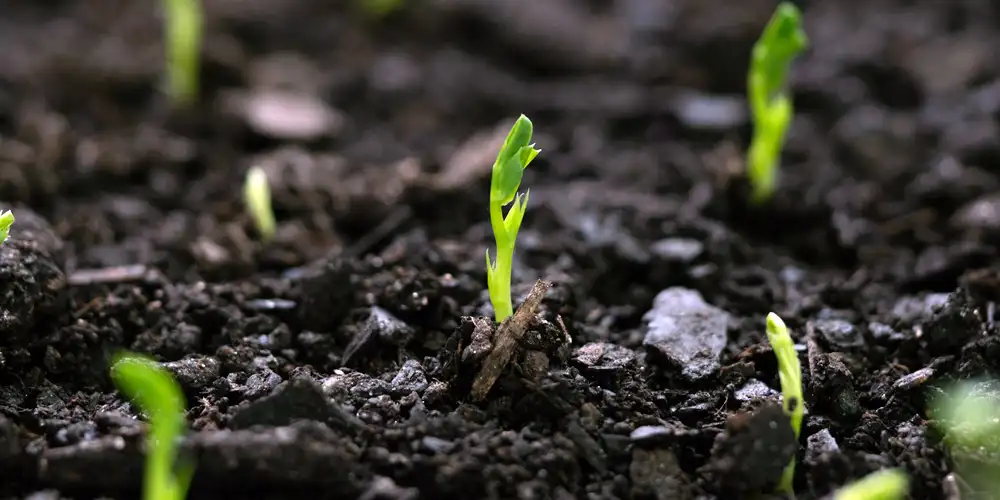
Raised bed soil problems often hide behind soil that looks rich from above. A dark, loose mix can still struggle if it settles too quickly, dries unevenly, holds too much water low down, or lacks enough mineral structure to stay stable around roots.
The most common signs are weak growth despite watering, yellowing plants, soil that shrinks away from the edges, water running through without soaking in, or a bed that needs constant topping up. These do not always mean the raised bed itself is failing. They may mean the fill is behaving more like a temporary compost mix than a stable growing medium.
Common soil-related causes include:
- too much compost or soft organic material, which can settle and lose structure
- woody material affecting nitrogen availability as it decomposes
- very light mixes that dry quickly and become difficult to re-wet
- soil pH that does not match what the plants need
- too little mineral structure, leaving the root zone less stable over time
For a fuller guide to building a more reliable fill, see our guide to the best soil mix for raised beds.
Raised bed drainage problems are not always obvious
Raised bed drainage problems do not always look like standing water. A bed can drain quickly and still grow badly if water does not move evenly through the root zone. The problem is often inconsistency: the top dries out, the lower layer stays heavy, or water escapes through gaps and channels before roots can use it.
That is why “good drainage” is not the same as rapid drying. Plants need excess water to leave, but they also need enough usable moisture to remain available between waterings. If the bed sheds water too quickly, roots are forced into repeated dry stress. If water sits low in the bed, roots can lose air even while the surface looks dry.
Common signs of uneven drainage include:
- water running down the inside edges instead of soaking through the soil
- a dry surface with heavy, wet soil lower down
- plants wilting soon after watering
- patchy growth in one part of the bed
- sour, dense, or airless soil near the bottom
When drainage is uneven, watering more often may not solve the problem. The better question is whether water is moving through the whole root zone in a balanced way. A raised bed should release excess water without becoming either a leaky container or a wet-bottomed box.
Why raised beds dry out too fast
Raised beds often dry out faster than open ground because the soil is lifted, exposed to air, and warmed from the sides. That is not always a problem. Many plants enjoy free-draining conditions. It becomes a problem when the bed loses usable moisture faster than roots can access it.
Drying is usually worse in hot, windy, shallow, or very exposed beds. It can also happen when the soil mix is too light, too compost-heavy, or difficult to re-wet after becoming dry. In those situations, watering may wet the surface while deeper roots remain short of moisture.
Fast drying is more likely when:
- the bed sits in full sun for most of the day
- wind moves freely across the soil surface
- the fill is shallow or very light
- the bed is narrow, small, or isolated from open ground
- thirsty plants are grown in a limited soil volume
- the surface is left bare in warm weather
The aim is not to make a raised bed hold water like heavy ground. It is to slow the loss of usable moisture enough that plants are not constantly cycling between wet and dry stress. For a deeper look at this specific issue, see our guide, do raised beds dry out faster?
When a raised bed behaves more like a planter
Not every raised bed is connected to the ground in the same way. A bed built over open soil can share some moisture movement, root space, drainage behaviour, and soil biology with the ground below. A bed built over paving, concrete, decking, a liner, or a compacted base is more isolated.
That isolation matters because the bed has to rely much more heavily on the fill inside it. Roots have less room to escape poor conditions, water has fewer natural pathways, and the soil volume has less buffering against heat, drying, and nutrient swings.
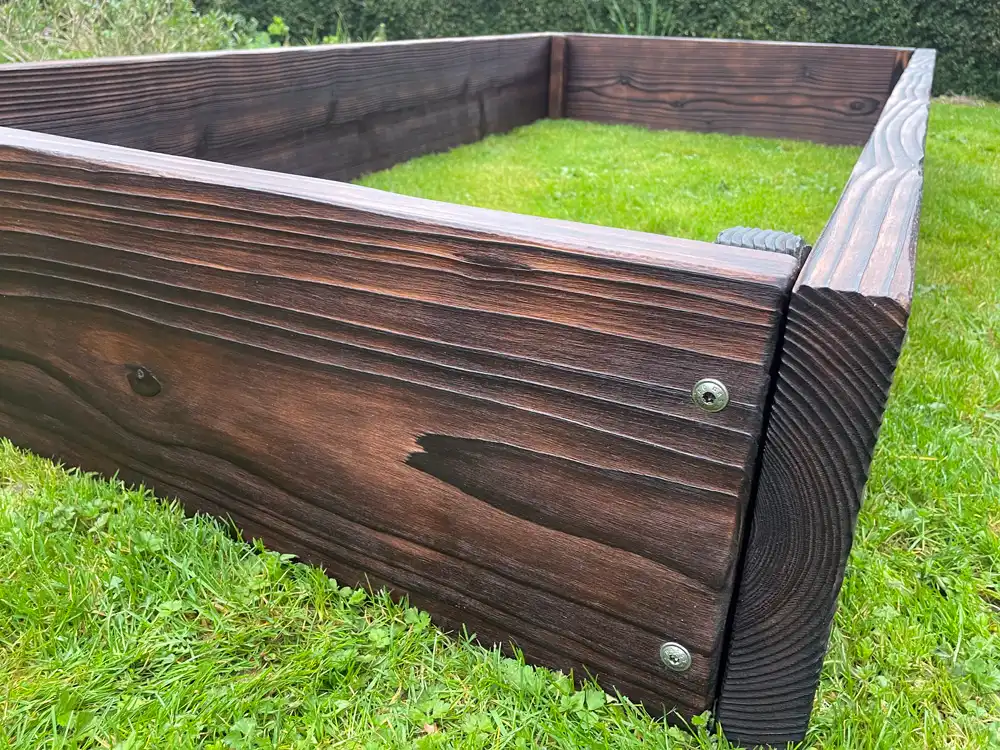
A raised bed may behave more like a planter when:
- it sits on paving, concrete, decking, or another hard surface
- a liner or membrane separates the fill from the ground
- the base is compacted and drains poorly
- the soil volume is shallow or limited
- roots cannot move into the ground below
- watering needs change quickly in warm or windy weather
This does not mean isolated raised beds cannot work. It means they need to be treated more like large containers: the soil mix, drainage route, plant choice, and watering pattern all have to be more carefully matched. For the deeper distinction, see our guide to why raised beds and planters are not the same.
Why a raised bed can look fine but still grow poorly
A raised bed can look solid while the growing conditions inside it are wrong. The frame may be doing its job, but the soil, water, light, pH, drainage, and root space still decide whether plants can grow well.
That distinction matters because gardeners often judge the bed from the outside. If the timber looks sound and the soil looks dark, it is easy to assume the problem must be the plant. Sometimes it is. But often the issue is the environment the plant is being asked to grow in.
A raised bed is doing two different jobs at once. The structure holds the soil in place. The growing system supports the roots. When plants are not growing in raised beds, it is usually the second job that needs checking first.
When struggling plants need a deeper answer
Sometimes the quickest answer is to follow the problem into a more specific guide. If one cause clearly dominates, use that as the next step rather than trying to solve every possible raised bed issue at once.
| If the main issue is | What it usually means | Read next |
|---|---|---|
| The bed dries out too fast | Exposure, light soil, shallow fill, wind, sun, or plant choice may be making moisture harder to hold. | Do raised beds dry out faster? |
| The soil mix seems wrong | The fill may be too compost-heavy, too woody, too light, poorly structured, or unsuitable for long-term growth. | Best soil mix for raised beds |
| The bed behaves like a container | The raised bed may be isolated from open ground by paving, concrete, decking, a liner, or limited soil volume. | Why raised beds and planters are not the same |
| The base or drainage route seems wrong | The issue may be what sits beneath the bed, especially if water cannot move away or the lower layer stays wet. | What to put at the bottom of a raised garden bed |
| The bed was good at first but declined later | The problem may be delayed soil settlement, changing moisture behaviour, or second-season decline. | Why raised garden beds struggle in year 2 |
| The timber, joints, sides, or corners are failing | The issue is no longer just plant performance. It may be structural failure, rot, bowing, spreading, or weak joints. | Why raised beds fail |
Use the guide that matches the strongest pattern you can see. Plants not growing in raised beds rarely comes down to one yellow leaf or one dry afternoon. The more useful question is whether the problem is plant choice, soil, drainage, drying, isolation, delayed decline, or structure.
How to fix plants not growing in raised beds
Plants not growing in raised beds are usually telling you that the growing conditions need checking, not that the bed itself has failed. Start with the seven practical causes: light, moisture, soil mix, pH, drainage, drying speed, and root-zone space.
If only one plant is struggling, the issue may be plant choice. If several plants are weak, yellowing, wilting, or growing unevenly, look at the bed as a whole. The soil may be unstable, water may be moving badly, the bed may be drying too fast, or the root zone may be too isolated from open ground.
A raised bed can be well built and still grow poorly if the plants do not match the conditions inside it. The better question is not whether the bed looks sound, but whether the roots have the light, moisture, soil structure, drainage, pH, and space they need to grow well.