Why raised beds fail and how to stop it happening
Why raised beds fail is rarely a mystery, although it can feel like one when a bed starts bowing, rotting or pulling apart. Most failures come from the same pressures building up over time: soil pushing outward, boards bending, corners loosening, fixings weakening, or timber staying damp for too long.
A raised bed may look like a simple timber box, but once it is filled, it has to hold back a heavy mass of soil. When that soil becomes wet, the load increases. If the boards are too thin, the sides too long, the corners too weak, or the base too damp, the structure can begin to move.
The good news is that most raised bed failure is predictable. Once you understand the warning signs and the forces behind them, you can choose better construction details, fix small problems earlier, and avoid repeating the same failure in a new bed.
Key takeaway: Raised beds fail when the structure cannot cope with the soil, moisture and movement acting on it. Bowing usually points to soil pressure or weak spans. Loose corners usually point to joint stress. Rot usually points to trapped damp. The fix depends on the cause, not just the visible symptom.
Why raised beds fail: causes you can see
Raised beds fail when the forces acting on them become greater than the structure can resist. The most common forces are sideways soil pressure, extra weight from wet soil, repeated timber movement, trapped moisture, and strain at corners and fixings.
Most failures are not caused by one bad part. They happen when several small weaknesses work together. A thin board may cope in a short, shallow bed but bow in a longer one. A decent timber may last well in a dry position but rot quickly if the lower boards sit in damp soil. A corner may look tight on day one but open once wet soil starts pushing the sides outward.
The fastest way to diagnose a failing raised bed is to start with the visible symptom.
| Failure sign | Likely cause | What it means | Best next step |
|---|---|---|---|
| Boards bowing outward | Soil pressure, long spans, thin boards or saturated soil. | The wall is bending under load. | Reduce unsupported span, add proper support or rebuild with stronger side construction. |
| Corners opening | Weak joints, poor fixing layout or soil pressure pulling the sides apart. | The corner is no longer holding the frame square. | Check the joint, fixings and corner post before the wall moves further. |
| Screws loosening | Timber swelling and shrinking, corrosion, weak fixing choice or repeated loading. | The connection is losing grip. | Do not just add more screws. Identify whether the joint or span is overloaded. |
| Lower boards softening | Trapped damp, poor drainage, soil contact or slow drying. | Moisture is staying against the timber for too long. | Improve drainage and airflow, then assess whether the timber needs replacing. |
| Bed leaning or twisting | Uneven ground, settling base, weak frame or overloaded sides. | The whole structure is losing alignment. | Check the base first. Bracing will not solve a bed that is failing from below. |
| Soil level dropping sharply | Organic matter breaking down, soil settling or material washing downwards. | The growing system is changing and may be putting uneven pressure on the bed. | Top up carefully, check drainage, and look for movement before assuming the frame is sound. |
The important point is that a visible fix is not always a real fix. A brace, extra screw or new stake may slow the symptom, but it will not solve saturated soil, weak corners, trapped damp or a failing base. Treat the cause first, then decide whether the bed can be repaired or needs rebuilding.
Why do raised garden beds bow or bulge outward?
Raised garden beds bow or bulge outward because the soil inside them pushes sideways against the boards. This pressure is not equal from top to bottom. It increases with depth, so the lower part of the wall often carries the greatest load.
When the soil becomes wet, the problem gets worse. Saturated soil is heavier, transfers pressure more effectively, and can expose weaknesses that were already present in the structure. If water is trapped behind the boards, it can add still more pressure. This is why a bed may look fine through dry weather, then begin to bow after repeated rain.
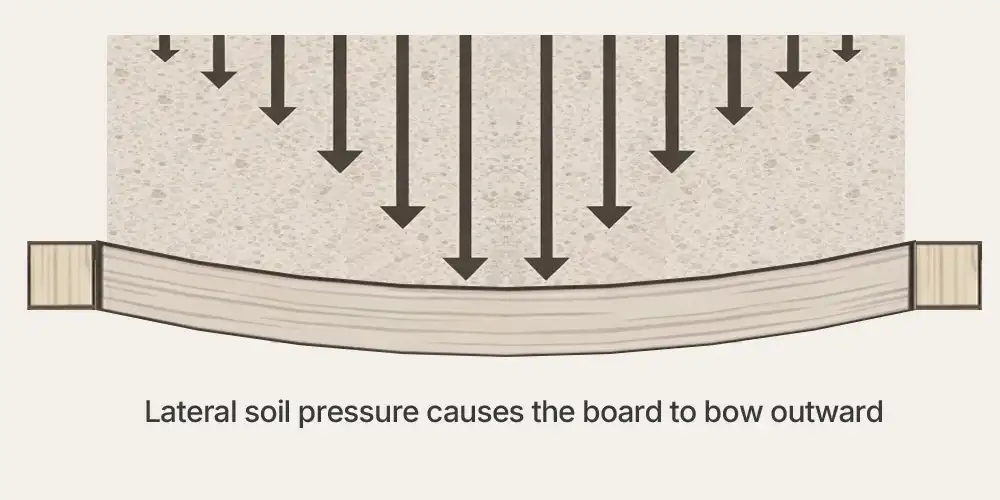
The biggest risks are long unsupported sides, thin boards, tall beds and weak corner support. There is no single safe span that works for every raised bed because height, soil load, timber thickness and support spacing all change the result. A short, low bed may tolerate lighter construction, but a taller or longer bed needs more stiffness because the wall has more soil pressure to resist.
For a slightly bowed bed, the answer may be reducing the unsupported span, adding proper structural support, or improving drainage so wet soil is not adding avoidable load. For a severely bowed bed, especially one with opening joints or strained fixings, the safer long-term answer is usually rebuilding the side with stronger boards, better support spacing or a shorter span.
Why do raised bed corners and joints come apart?
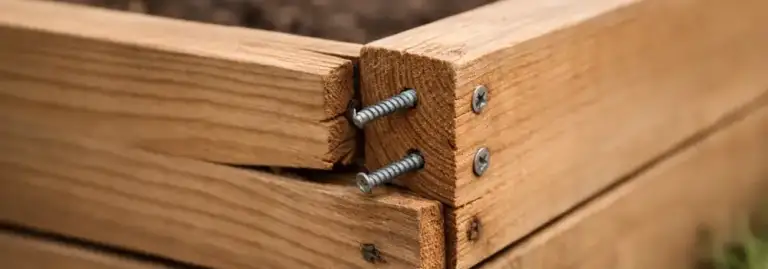
Raised bed corners and joints come apart because they are where the sideways pressure from each wall has to be resisted. As soil pushes the boards outward, the corner has to stop the frame spreading, twisting or pulling out of square.
This is not just a fixing problem. It is a design problem. Screws, bolts and brackets can only do their job if they have enough solid timber to bite into and enough structure around them to spread the load. When fixings are driven into weak end grain, thin corner pieces or poorly supported joints, the connection can slowly creep, loosen and pull apart as the bed moves through wet and dry cycles.

Once a corner begins to open, the bed loses stiffness quickly. The side walls can move further, the fixings come under more strain, and gaps that were once small can widen after wet weather or repeated filling and drying. If you can see daylight through a corner joint, the frame is no longer holding the bed as a single rigid structure.
A proper fix starts by asking why the corner moved. If the timber is sound and the movement is minor, stronger fixing into a proper post may help. If the joint has split, rotted, pulled out or distorted the frame, adding more screws into the same weak area is unlikely to solve the cause.
Why do raised beds rot or soften at the base?
Raised beds rot or soften at the base when timber stays damp for too long. Rain and watering are not the problem on their own. The problem is moisture that cannot escape, especially around the lower boards where timber is closest to wet soil, splashback and slow-drying ground.
This is why rot often appears first at the bottom edge, inside corners, fixing points, or anywhere damp soil is held tightly against the wood. If timber sits directly on wet ground or against saturated soil, it can also wick moisture upwards, keeping the lower board damp long after the visible surface has dried.

Drainage matters for structure as well as plants. Wet soil is heavier, and timber that stays damp loses strength over time. That combination can turn a moisture problem into a structural problem, especially if softened lower boards are also carrying sideways soil pressure.
The right fix depends on how far the timber has gone. Surface weathering is normal and does not always mean failure. Dark patches that stay wet after the rest of the bed has dried, soft fibres, crumbling timber, or boards that can no longer hold fixings are more serious signs. Avoid poking sound timber aggressively to “test” it, because that can create a new path for water to enter.
Improving drainage may stop the next bed failing, but damaged boards may still need replacing. For the base conditions that reduce trapped damp from the start, see how to prepare the ground for a raised bed properly.
What are the warning signs a raised bed is failing?
A raised bed usually gives warning signs before it collapses. Do not ignore the small things. A loose screw, a hairline corner gap or a bowed board is rarely just an accident. It is usually the first visible symptom of hidden soil pressure, trapped damp, weak support or structural movement.
This table keeps the diagnosis practical.
| Warning sign | What it usually means | How serious it is |
|---|---|---|
| Boards bowing outward | The side wall is bending under soil pressure, often because the span is too long, the boards are too thin, or the soil is saturated. | Moderate to serious, depending on movement. |
| Gaps opening at corners | The frame is losing stiffness and the corner joint is no longer holding the sides together properly. | Serious if gaps are widening. |
| Screws loosening or pulling out | The joint may be overloaded, the timber may be moving, or the fixing may no longer have enough sound timber to grip. | Moderate at first, serious if several fixings move together. |
| Soft or crumbling lower boards | Moisture has been held against the timber for too long and decay may be weakening the structure. | Serious if the board carries soil load. |
| Bed leaning, twisting or racking | The base may be uneven, settling, washing out or no longer supporting the frame evenly. Racking means the rectangle is being pulled out of square. | Serious if the movement continues. |
| Soil spilling over an edge | The wall has usually bowed, tilted or dropped far enough that the bed is no longer retaining the soil properly. | Advanced failure sign. |
If more than one warning sign appears at the same time, treat the bed as a system problem. A bowed wall with opening corners is different from a single loose screw. A damp lower board beside poor drainage is different from normal surface weathering. The pattern tells you whether the bed needs a small repair, added support or partial rebuilding.
How do you fix a failing raised bed?
You fix a failing raised bed by treating the cause, not just the visible movement. If a board is bowing because the span is too long, adding a few more screws will not change the load on the wall. If a corner has opened because the timber has split or rotted, forcing it back together may only hide the weakness for a short time.
The first decision is whether the bed is worth saving. Minor movement in sound timber may be repairable. By sound timber, we mean wood that is not visibly softened, crumbling, persistently waterlogged, badly split, or no longer able to hold fixings. If the boards are soft, the frame has racked out of square, or the corners have pulled away, you are no longer just repairing a bed. You are managing a structural failure.
This table separates quick support from a better long-term correction.
| Problem | Short-term support | Better long-term correction |
|---|---|---|
| Slight bowing | Reduce pressure where possible and add side support that actually shortens the unsupported span. | Rebuild or adjust the side so board thickness, bed height and support spacing work together. |
| Severe bowing | A temporary brace may slow movement, but it should not be treated as a permanent cure. | Rebuild the affected side with stronger boards, shorter spans, better corner support and improved drainage. |
| Opening corners | Tighten or replace fixings only if the timber and joint are still sound. | Rebuild the joint around a proper corner post or stronger structural connection. |
| Loose screws | Replace failed fixings only after checking whether the joint is overloaded or the timber has softened. | Use suitable outdoor structural fixings into sound timber, with joint design that spreads the load. |
| Rotten lower boards | Improve drainage and stop water sitting against the timber. | Replace softened boards and correct the base conditions that caused persistent damp. |
| Leaning or twisting frame | Emptying part of the bed may reduce pressure while you inspect the base and frame. | Re-level the base, rebuild distorted sections and make sure the frame is supported evenly before refilling. |
If a raised bed is full, badly bowed or starting to collapse, be careful before trying to force it back into shape. Wet soil is heavy, and a weakened wall can move suddenly when disturbed. In some cases, the safest first step is to remove some soil, reduce the load, and then decide whether repair or rebuilding makes more sense.
How do you stop raised beds failing again?
You stop raised beds failing again by designing the structure around the loads it will actually carry. That means thinking about soil pressure, saturated weight, board thickness, span length, corner strength, fixings, drainage and ground conditions before the bed is filled.
The common mistake is to improve one feature while leaving the rest unchanged. Thick boards still need proper support. Strong fixings still need sound timber and good joint design. Durable timber still needs to dry. Good drainage still matters even when the frame looks strong.
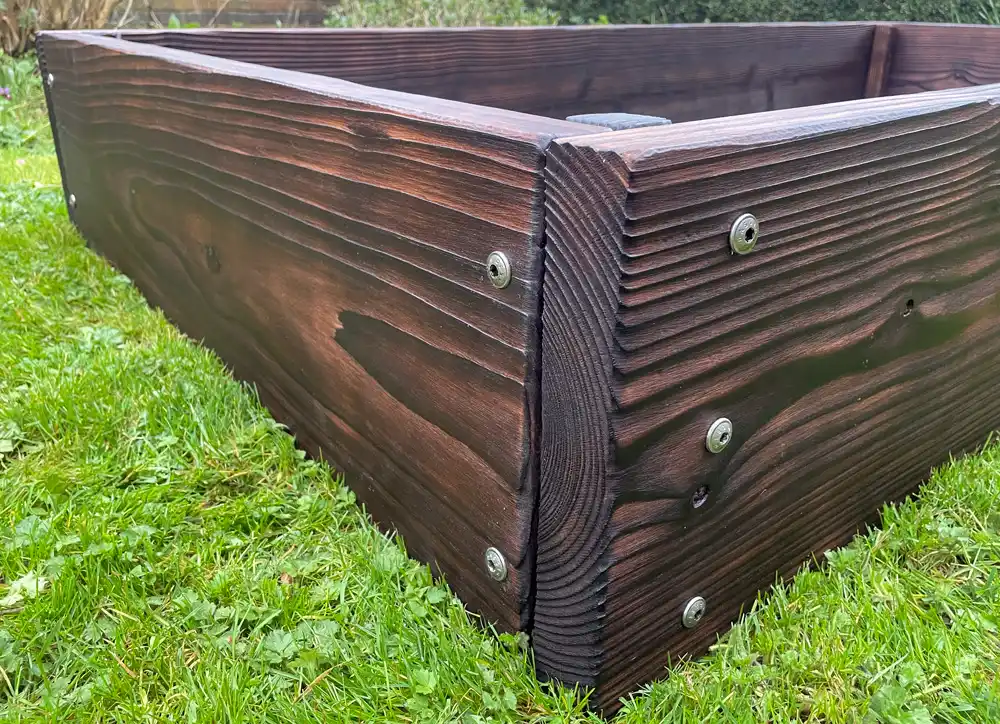
A more reliable raised bed starts with these decisions:
- Choose timber that suits long-term outdoor exposure.
- Match board thickness to the height and length of the bed.
- Avoid long unsupported side spans.
- Build corners as structural connections, not just meeting points.
- Use well-spaced outdoor fixings that suit the timber, moisture and load.
- Prepare the ground so water can drain away from the lower boards.
- Use a soil mix that holds moisture for plants without staying waterlogged against the frame.
- Design taller or accessible beds with extra load in mind.
The goal is not to make a raised bed massively overbuilt. It is to make each part of the system do its share. A successful raised bed is not about brute force. It is about balance: timber, supports, corners, fixings, base and soil all working together so the structure can hold its shape over time.