The six factors that make raised beds last longer
Most advice on raised bed durability starts with the wrong question. It asks which timber lasts longest, which treatment works best, or how thick the boards should be. Those details matter, but they do not decide the whole outcome on their own.
To make raised beds last longer, the main durability factors need to work together. Timber, thickness, joints, drainage, drying and ground preparation all affect how the bed behaves once it is filled with wet soil and left outside through repeated seasons. If you are choosing between different options, our premium raised beds show how those decisions can be designed as one system rather than treated as separate specifications.
A raised bed can use good timber and still fail early if water sits in the wrong place, if the corners carry too much stress, or if the ground beneath it creates uneven pressure.
Equally, a well-designed bed often lasts longer because no single weak point is left to do too much work.
Key takeaway: Raised beds last longer when six factors work together: timber, thickness, joints, drainage, drying and ground preparation. No single specification can protect a bed if the wider design traps moisture, concentrates load or prevents the structure from drying properly.
What makes a raised bed last longer?
A raised bed lasts longer when its materials, structure and site conditions support one another. Timber matters, but it is only one part of the durability picture. The bed also has to resist soil pressure, shed water, dry after rain, hold its joints together and sit on ground that does not make the structure work harder than it should.
The six factors below are the simplest way to judge whether a raised bed has been designed for long-term use.
| Factor | What it controls | Why it matters |
|---|---|---|
| Timber | Natural resistance to decay | Better timber helps, but it cannot overcome poor design on its own. |
| Thickness | Strength, stiffness and bowing | Thicker boards can resist soil pressure better, especially in taller or longer beds. |
| Joints | How load and movement are held | Many raised beds fail where stress concentrates at corners, boards and fixings. |
| Drainage | How quickly excess water leaves | Timber that stays wet for too long is more likely to rot, stain or soften. |
| Drying | Whether wet timber can recover | Protection can backfire if it traps moisture instead of allowing drying. |
| Ground preparation | Support, level and moisture below the bed | A poor base can concentrate stress, hold water and shorten the life of the whole structure. |
The important point is not that every raised bed needs the most expensive version of each factor. It is that none of the six should be ignored. A strong bed is usually the result of good alignment, not one impressive specification.
What is the best timber for raised beds?
The best timber for raised beds is the timber that suits the design, site and expected lifespan. Naturally durable woods such as cedar, oak, larch and Douglas fir can all help a raised bed last longer, but timber species is not the whole answer.
Good timber improves resistance to decay. It can tolerate outdoor exposure better than thin pressure-treated pine or fast-grown softwood used in many budget beds. But even durable timber will struggle if it stays wet, sits against saturated ground, or is used in a design where joints and lower edges cannot dry properly.
The mistake is treating timber as a guarantee. A better timber gives the design more resilience, but it does not remove the need for proper drainage, sensible proportions and well-resolved joints.
Timber is the starting point, not the finish line. Once the wood has been chosen, the next question is whether the boards are thick enough to cope with the load they will carry.
How thick should raised bed boards be?
Raised bed boards should be thick enough to resist the pressure of wet soil without bowing, twisting or transferring too much strain into the joints. For small, low beds, thinner boards may be acceptable. As the bed becomes taller, longer or more heavily filled, thickness starts to matter much more.
Board thickness is often treated as a rot-resistance issue, but its main job is structural. Wet soil is heavy, and that weight pushes outwards against the sides of the bed. If the boards are too thin for the span and height, the bed may start to bow even if the timber itself has not rotted. Many budget timber raised beds use boards around 19mm to 22mm thick, while more structural builds may use boards closer to 40mm or more, depending on height, span and intended use.
Thicker boards can help because they add stiffness and reduce deflection. But thickness still has to work with the rest of the design. A thick board fixed into a weak corner can simply move the problem from the face of the board to the joint.
Thickness helps the sides resist pressure, but that pressure still has to be held somewhere. That is why the next durability factor is the way corners, joints and fixings manage the load.
Why do raised beds fail at the corners and joints?
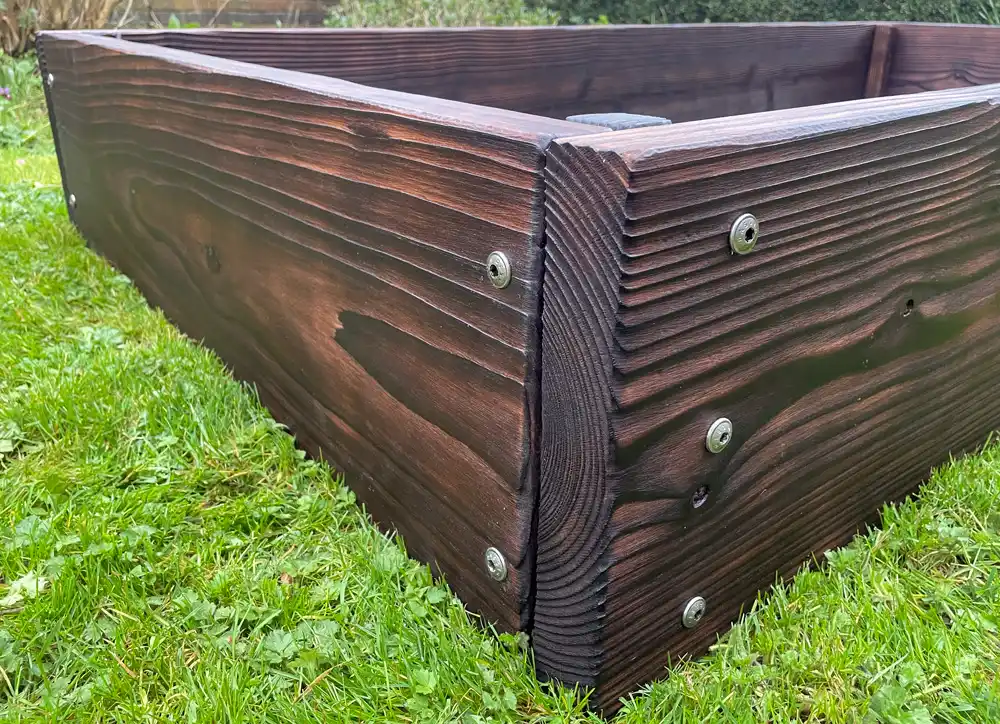
Raised beds often fail at the corners and joints because those are the places where load, movement and moisture meet. The boards may still look sound, but the structure can weaken if the fixings loosen, the corner opens, or stress concentrates in one small area.
Soil does not just sit inside a raised bed. Once wet, it pushes outwards against the sides. That pressure has to be transferred through the boards into the corners, posts and fixings. Fixings also need enough head diameter and bearing surface to hold the board securely rather than slowly pulling through the timber under repeated pressure and movement. If the joint design is weak, the bed may twist, bow or open up long before the timber itself has decayed.
Corners are also vulnerable because they interrupt drying. End grain, screw holes, overlapping boards and tight contact points can all hold moisture for longer than open faces. That makes the joint both a structural point and a moisture point.
A durable raised bed does not rely on strong boards alone. It needs corners and fixings that can carry load, tolerate movement and avoid becoming damp traps. But even well-built joints are put under more pressure when water is not managed properly, which is why drainage comes next.
How do you stop raised beds rotting?
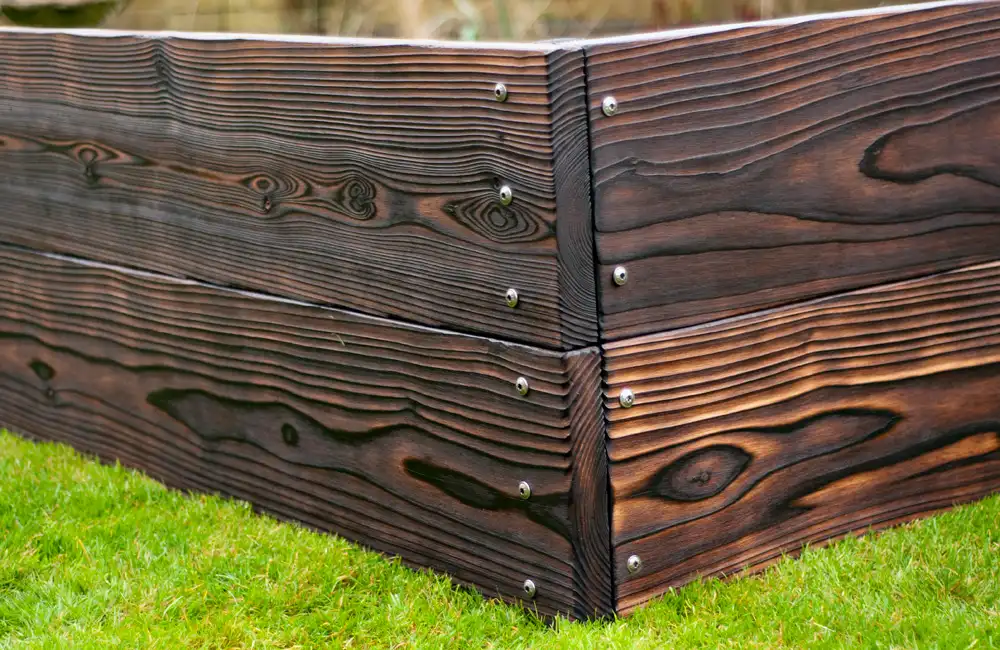
You stop raised beds rotting by reducing how long the timber stays wet. Timber can cope with getting wet. The bigger problem is repeated saturation, trapped moisture and poor drying.
Drainage matters because it controls how quickly excess water leaves the bed and the surrounding ground. If water collects along the lower boards, around corners or beneath the frame, the timber remains in a higher-risk condition for longer. That risk increases in shaded, compacted or poorly draining areas where the bed struggles to dry between wet periods.
This is why rot prevention is not just about choosing better timber or applying protection. Those choices help, but they cannot compensate for a design that keeps water in contact with vulnerable areas. A raised bed lasts longer when rainwater and irrigation can move through the growing area, leave the structure, and avoid sitting against the same timber surfaces again and again.
Drainage reduces the time timber spends wet. The next question is whether the bed can dry properly after that wetting has happened.

Should you line a raised bed to protect the wood?
You should not line a timber raised bed as a default way to protect the wood. It sounds sensible because it appears to separate damp soil from timber, but in many cases it can create a worse moisture problem by trapping water where the wood most needs to dry.
The problem is not simply that timber gets wet. Outdoor timber will always get wet. The durability issue is whether moisture can leave again. If a liner holds water against the boards, blocks evaporation, or pushes trapped moisture towards the base, corners and joints, it can increase the risk it was supposed to reduce.
This is why liners are often poor protection for wooden raised beds. They can make the inside look managed while the most vulnerable areas stay damp for longer. A bed that drains and dries properly is usually better protected than one wrapped in a material that hides moisture from view.
A liner can give the impression that the moisture problem has been solved. In reality, if water cannot drain and dry properly, the weakest point simply moves to the base, joints or ground contact area. That is why the condition of the ground beneath the bed matters next.
How should you prepare the ground for a raised bed?
The ground beneath a raised bed should be level, free-draining and firm enough to support the frame evenly. It does not need to be perfect, but it should not leave the bed twisted, rocking, sitting in a wet hollow or carrying load unevenly from the start.
Ground preparation matters because the bed and the site work together. If the ground is compacted, poorly drained or uneven, water can collect around the lower boards and stress can concentrate at corners and joints. That can shorten the life of the structure even when the timber and construction are good.
The ground beneath a raised bed is not just the place it sits. It is part of the durability system.
For most garden beds, the aim is simple: create a stable base, remove obvious high spots, avoid buried dips where water will sit, and make sure excess water can move away from the frame. On grass or soil, this may mean clearing vegetation, levelling the footprint and improving drainage where needed. On poor ground, it may mean doing more preparation before the bed is installed.
Ground preparation brings the six factors together. The timber, thickness, joints, drainage and drying all perform better when the bed sits on a site that supports them rather than works against them.
Why one strong raised bed specification is not enough
One strong specification is not enough because raised bed durability depends on how the whole structure behaves over time. Good timber helps. Thicker boards help. Strong fixings help. Better drainage helps. But none of those details can carry the design alone.
A raised bed lasts longer when its main risks are resolved together. Timber needs to resist decay, boards need to resist pressure, joints need to hold movement, water needs somewhere to go, and the structure needs a base that supports it evenly.
That is the real value of a system approach. It does not ignore specifications. It puts them in the right order. The best raised bed is not the one with one impressive feature. It is the one where no weak detail is left to undo the strength of everything around it.
What should you read next?
Each factor in this article connects to a deeper question. Use the table below to choose the next page based on what you need to understand or check.
| Question you still have | Best next page | Why it helps |
|---|---|---|
| How long should a raised bed actually last? | How Long Do Raised Beds Last? The 5–20+ Year Truth | Gives realistic lifespan ranges and explains why material, moisture and construction change the outcome. |
| What warning signs should I worry about? | Raised Bed Problems: What to Ignore, Fix or Worry About | Helps separate normal ageing from structural problems that need attention. |
| How much do size, thickness and soil weight matter? | Raised bed soil volume, weight and load calculator | Tests size, timber, thickness and saturated soil load together instead of treating them as separate choices. |
| How should the ground be prepared? | How to Prepare the Ground for a Raised Bed | Shows how levelling, drainage and base conditions affect the raised bed from below. |
| Which moisture advice should I ignore? | Raised bed myths: moisture and durability advice that sounds right but fails | Challenges common shortcuts around liners, treatments, rot and timber protection. |
| Why do corners, fixings and joints fail? | Raised bed myths: fixing advice that sounds right but fails | Explains why stronger screws alone do not solve load, movement and joint design problems. |