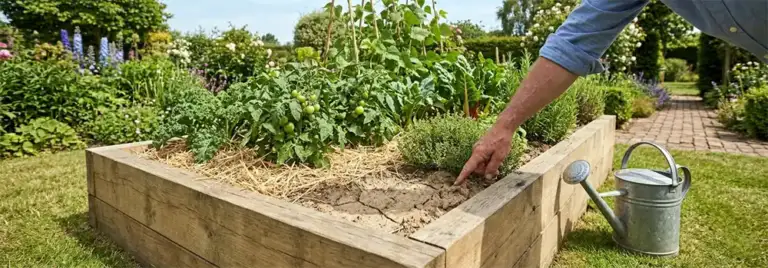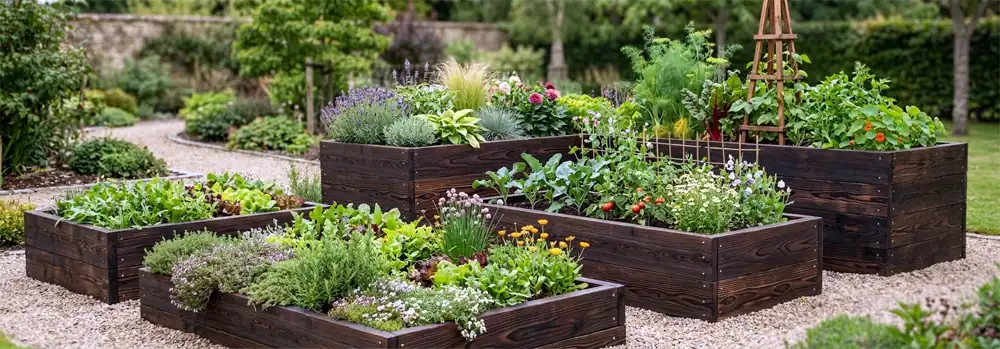
How high should a raised bed be?
How high should a raised bed be? For most gardens, a raised bed between 30cm and 45cm high gives the best balance of planting depth, comfort, soil volume and cost. A 15cm bed can work for shallow planting or improving existing soil, while 60cm beds are better for reduced bending and stronger visual structure. Beds around 90cm are usually best treated as accessible, standing-height or specialist garden structures, not simply taller versions of a standard raised bed.
The important point is that height changes more than convenience. As a raised bed gets taller, it holds more soil, more water and more weight. That affects how the bed should be filled, how strongly it needs to be built and how well it will perform over time.
This is why our premium raised beds are designed around the garden, the planting and the structure rather than treated as simple timber boxes.
A low bed may only need to define a growing area. A taller bed needs to behave like a small garden structure. That is why the right height depends on what you want to grow, how you want to garden and whether the bed has been built to cope with the load inside it.
Key takeaway: A raised bed does not become better simply because it is taller. For most gardens, 30cm to 45cm is the most practical height range. Go taller for comfort, accessibility or design impact, but only if the bed is filled carefully and built strongly enough to hold wet soil over the long term.
Raised bed heights compared
The table below gives a comparison of common raised bed heights and what each one is best suited to.
| Raised bed height | Best suited to | What to watch for |
|---|---|---|
| 15cm | Shallow planting, herbs, salads, bulbs, edging beds and improving existing soil. | Limited soil volume, limited root space and little help with bending or access. |
| 30cm | General garden use, seasonal planting, herbs, flowers and many everyday crops. | Still relatively low for access and may rely on the soil below for deeper rooting. |
| 45cm | Most home gardens where planting depth, comfort and soil volume all matter. | More fill means more settlement and compaction, so the soil profile needs planning. |
| 60cm | Reduced bending, stronger visual structure, deeper planting and premium garden layouts. | Can become a serious garden structure, especially when long or wide. Saturated soil weight, compaction and side pressure all matter. |
| 90cm | Accessible gardening, standing-height use and specialist designs for easier reach. | Should be treated as a serious retaining structure. Fill volume, long-term settlement, saturated weight and lateral pressure must all be considered. |
What can different raised bed heights be used for?
Raised bed height should start with use, not just measurement. Low beds mainly define a growing area, edge a border or lift herbs, salads, bulbs and shallow seasonal planting above poor ground. They are useful, but they do not change the physical experience of gardening very much.
Mid-height beds, usually around 30cm to 45cm, are more versatile. They give more controlled soil volume, more flexibility for mixed planting and a more comfortable working height without making the bed difficult to fill or unnecessarily complex to build.
Tall beds, usually 60cm and above, serve a more deliberate purpose. They may reduce bending, create stronger garden structure or make the bed easier to work from a standing or seated position. At that point, height is no longer just about what can grow inside the bed. It is about what the bed needs to do for the person using it.
Is 30cm high enough for a raised bed?
Yes, 30cm is high enough for many raised beds, especially where the soil beneath is open, healthy and able to support deeper rooting. It gives enough height for a wide range of herbs, salads, annual flowers, leafy crops and many everyday garden uses. If the bed is placed over an impermeable surface such as concrete, compacted rubble or very heavy clay, however, 30cm becomes the full usable growing depth, so deeper-rooted plants will have less room.
Even a lower, entry-level border can be highly useful. It can lift planting above compacted lawns, improve drainage, warm slightly faster in spring and prevent foot traffic across the growing area. For shallow-rooted salads, seasonal colour, bulbs and companion herbs, a low-profile frame may be all the height the bed needs.
The advantage of a 30cm raised bed is that it gives a meaningful improvement without creating unnecessary structural load. It needs less fill than a taller bed, places less pressure on the sides and is easier to manage in smaller gardens. Where access is not the main concern, 30cm can be a very sensible height.
Why 45cm is often the best raised bed height
A 45cm raised bed is often the best all-round height because it gives a noticeable improvement in soil volume, comfort and garden presence without moving too far into the complications of a very tall bed. It is high enough to feel deliberate, but not so high that filling, settlement and structural load dominate the design.
For many gardens, this is where a raised bed starts to become more than edging around a planting area. The extra height gives more room for mixed planting, deeper seasonal roots, bulbs, herbs, flowers and productive crops. It also reduces some of the low bending that comes with 20cm or 30cm beds, while still keeping the bed easy to reach, fill and maintain without straining your lower back.
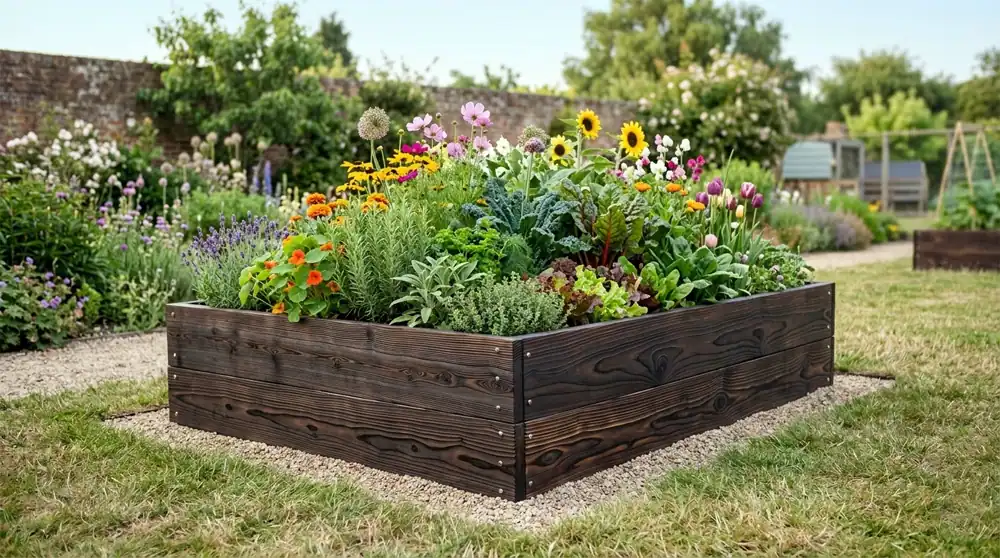
The caveat is that 45cm should still be treated with care. It holds more soil than people often expect, and that soil will settle, compact and become much heavier when wet. This does not make 45cm a problem, but it does mean the bed benefits from a planned soil profile, strong corners and substantial timber suitable for long-term garden use.
That is why 45cm is such a useful benchmark. It gives many of the advantages people want from a raised bed without automatically pushing the design into the cost, weight and structural demands of 60cm or 90cm heights.
What height should an accessible raised bed be?
An accessible raised bed should be high enough to reduce strain, but not so high that it becomes difficult to reach across or work comfortably. For many people, this means moving beyond standard low beds and thinking carefully about how the gardener will actually use the space.
For seated gardening or wheelchair access, the right height depends on chair height, reach, path width and whether the bed is approached from one side or several sides. A bed around 60cm can work well for reduced bending and seated access in some layouts, while taller beds closer to 90cm are more suited to standing-height gardening or designs where the user needs to work without stooping.
Height is only one part of accessibility. A raised bed can be the right height and still be awkward if the paths are too narrow, the bed is too wide or the planting area cannot be reached comfortably. For accessible gardens, width and approach often matter as much as height.
This is why our accessible raised beds are designed around the person using them, not copied from a standard measurement. The goal is not simply to make the bed taller. It is to make gardening easier, safer and more comfortable.
Is a taller raised bed always better?
A taller raised bed is not automatically better. Extra height can make a bed more comfortable to use, give it stronger presence in the garden and create more controlled soil volume, but it also increases the amount of material the bed has to hold.
This is where height becomes a design decision rather than a simple upgrade. A 60cm bed can be an excellent choice when the aim is reduced bending, deeper planting or a more substantial garden feature. But if the same bed is also long and wide, the soil volume rises quickly. Once that soil is wet, the bed is not just holding compost. It is holding a heavy, saturated mass that pushes downwards and outwards.
A taller raised bed is only an upgrade when the extra height does useful work.
That does not mean tall raised beds should be avoided. It means they should be chosen for a reason. If the extra height improves access, comfort, planting flexibility or garden design, it can be well worth it. If it is added simply because taller sounds better, the result is often just a massive soil-fill requirement, immense weight, and extreme structural demands without any practical gain.
Why tall raised beds need careful filling
Tall raised beds need careful filling because the material inside the bed affects more than plant growth. It affects cost, drainage, settlement, compaction, moisture behaviour and the load pressing against the timber. An 80cm high bed is not just a deeper version of a 30cm bed. It is holding a much larger mass of material that will change once it is watered, rained on and used over time.
The first issue is volume. A tall bed can take far more soil than people expect, especially if it is also long and wide. That makes it tempting to use cheap bulk material or hidden layers of logs and branches to reduce the amount of growing medium needed. The problem is that unstable material does not stay where it is put. It breaks down, settles and can leave the surface sinking unevenly later.
This is why we would not recommend using Hugelkultur as a shortcut inside a tall raised bed. Buried woody material may seem like a practical way to fill space, but in a timber bed it creates a changing internal layer where you want predictable support, drainage and soil behaviour. As the wood breaks down, it can also draw nitrogen from the surrounding soil, affecting the growing conditions for the plants above.
The better approach is to think of the fill as part of the bed’s structure. The lower depth should be stable, free-draining and chosen deliberately, with the best growing medium reserved for the active root zone where plants need it most. Some natural settlement is normal, but a tall raised bed should not be built around a hidden layer that is expected to collapse over time.
Why taller raised beds need stronger construction
The taller a raised bed becomes, the more important its construction becomes. This is not just because a taller bed uses more timber. It is because the soil inside the bed creates weight and pressure that the frame has to resist over time.
A shallow bed mainly holds soil in place. A tall bed starts to behave more like a small retaining structure. When the soil is dry, that may not look dramatic. After heavy rain, the same bed is holding a much heavier saturated mass, and that mass pushes downwards through the base and outwards against the sides.
Length and width matter as much as height. A 60cm high bed may be perfectly manageable at a modest size, but if it is also long and wide, the total soil volume rises quickly. That means more saturated weight, more pressure on the fixings and more stress through the corners and boards.
This is where timber thickness, engineered corners, proper fixings and board stiffness matter. Thin boards may look acceptable when the bed is empty, but they can bow once wet soil is pressing against them for months at a time. A properly specified taller bed should resist that pressure through the strength of the material and construction, not through awkward bracing that gets in the way of planting and maintenance.
A taller raised bed needs to be built for the load it will actually hold, not just the shape it has on day one.
That load is why soil volume is so important. Our raised bed calculator lets you test different bed sizes and see how much soil, weight and structural pressure a raised bed may need to handle before it is built.
A membrane or liner does not solve this. It may be suggested as a way to protect the inside face of the bed, but if it traps damp material against the timber or around fixings, it can become part of the moisture problem. Good construction should not depend on hiding vulnerable timber behind a liner. It should rely on substantial, naturally durable timber, breathable protection and robust detailing that can cope with real garden conditions.
What is the best raised bed height for your garden?
The best raised bed height is not always the tallest one. It is the height that gives the bed a clear purpose.
For many gardens, 30cm is already highly useful. Around 45cm is often the strongest all-round choice because it adds comfort, soil volume and garden presence without making the bed difficult to fill or unnecessarily demanding to build.
Choose 60cm or more when the extra height has a reason: better access, reduced bending, stronger design impact or a more permanent garden feature. At that point, height becomes part of the structure. Fill volume, settlement, saturated soil weight and construction quality all matter.
A raised bed should not just look right on the day it is installed. It should keep working, holding and growing well for years. The right height is the one that serves the garden, the planting and the person using it.