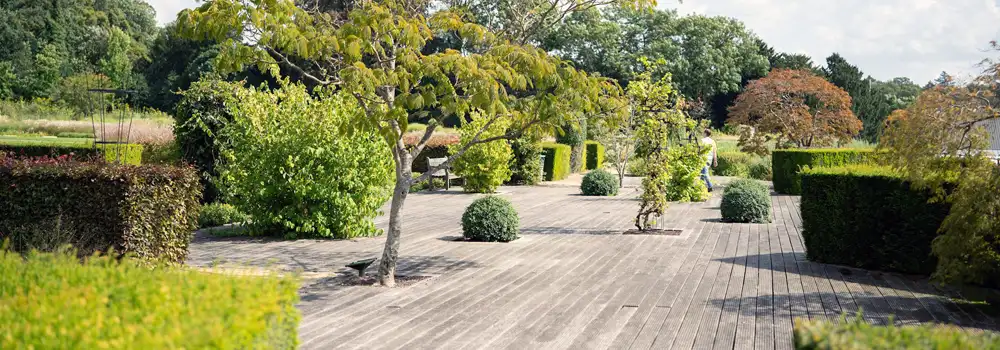
How to design a sensory garden for calm and wellbeing
Sensory garden design is not about adding one feature for every sense. A good sensory garden uses scent, sound, touch, sight, taste, planting, paths and structure so the space feels calm, clear and comfortable to use.
The mistake is thinking that more sensation always creates a better garden. Too many strong scents, bright colours, noisy features or competing textures can make a space feel restless rather than restorative. The best sensory garden ideas usually work because they are placed carefully, repeated gently and connected to how people actually move, pause and sit in the garden.
This is where design matters more than novelty. Sight still plays an important role, especially through colour, contrast, foliage and movement, but it should not carry the whole sensory garden layout alone. If you want to think more deeply about the visual side of planting, our guide to garden colour and texture explains why flowers are only one part of a successful scheme.
A sensory garden works best when each cue has a purpose. Fragrance belongs where people pass or pause, such as beside a gate, path or seating area. Texture needs to sit close enough to touch. Sound should support the background, not dominate it. Paths, seating, raised beds and edges should help the body understand the space, not simply decorate it.
Key takeaway: Sensory garden design works best when sight, scent, sound, touch, taste, planting and layout are organised into a calm, usable space. The aim is not to overload the senses, but to create repeated sensory cues that people can notice, enjoy and return to naturally.
Sensory garden design ideas for a calmer garden
Sensory garden design works best when each idea has a clear job. The aim is not to include every possible plant, feature or material, but to choose sensory cues that make the garden feel calmer, clearer and easier to enjoy.
| Sensory garden idea | What it adds | How to use it calmly |
|---|---|---|
| Use the five senses | A fuller garden experience than sight alone | Balance sight, scent, sound, touch and taste instead of treating each sense as a separate gimmick |
| Place scent carefully | Memory, atmosphere and seasonal recognition | Put fragrant plants near seating, paths, doors and daily routes rather than scattering scent everywhere |
| Add tactile surfaces | Physical connection with the garden | Use safe foliage, textured timber, stone, gravel and raised edges where people can actually reach them |
| Keep sound gentle | Movement, wildlife presence and background calm | Use ornamental grasses, leaves, birds and subtle water sounds instead of features that dominate the space |
| Limit the palette | Visual interest without visual noise | Repeat a smaller palette and let foliage, seed heads and movement carry interest beyond flowers |
| Use edible planting | Taste, interaction and usefulness | Keep culinary herbs, fruit and edible leaves easy to identify, easy to reach and separate from anything confusing |
| Shape repeated routes | Familiar movement and dependable sensory cues | Let paths pass close to scent, texture and movement so the same cues are encountered regularly |
| Raise the planting | Closer fragrance, clearer edges and stronger tactile contact | Use raised beds to lift sensory planting towards hand and eye level while helping the space feel structured |
| Create structure | A garden that feels coherent rather than busy | Use repetition, enclosure, clear routes and selective planting so the senses have space to settle |
What is sensory garden design?
Sensory garden design is the deliberate use of sight, scent, sound, touch, taste, planting, layout and structure to shape how a garden feels, not just how it looks.
A sensory garden is not simply a garden with scented plants, bright flowers or a water feature. Those elements can help, but only when they are placed where people actually experience them. Fragrance matters most where someone passes, pauses or sits. Texture matters when it is close enough to touch. Sound works best when it supports the background rather than competing for attention.

Good sensory garden design also depends on clarity. The garden should feel legible and easy to understand, with paths, seating, planting and edges working together. When the sensory cues are too strong, too scattered or too disconnected, the result can feel busy rather than calming. When they are repeated carefully, the garden becomes more comfortable to use over time.
How to design a sensory garden around the five senses
A strong sensory garden does not treat the five senses as separate boxes to tick. Sight, scent, sound, touch and taste should work together, with each sense adding something useful to the garden’s mood, movement and daily use.
| Sense | What it contributes | Good design choice | Common mistake |
|---|---|---|---|
| Sight | Orientation, mood, rhythm and seasonal change | Use repeated colour, foliage shape, contrast and movement so the garden feels coherent | Relying on bright flowers alone, which can make the space feel busy once colours clash or flowering passes |
| Scent | Memory, atmosphere and a sense of arrival | Place fragrant plants near paths, gates, doors and seating where people naturally slow down | Mixing several strong scents in one place, so none of them feels clear or restful |
| Touch | Physical connection, comfort and a stronger sense of presence | Use tactile planting, textured timber, stone, gravel and raised edges within comfortable reach | Keeping texture too far away, where it can only be seen rather than felt |
| Sound | Background movement, wildlife presence and soft enclosure | Use ornamental grasses, leaves, birds and subtle water sounds to support calm | Adding constant or sharp sound, such as too many wind chimes, that the garden cannot escape |
| Taste | Interaction, usefulness and seasonal reward | Use clearly identifiable culinary herbs, fruit or edible leaves close to paths and seating | Mixing edible and non-edible planting too casually, especially where children or visitors may be unsure |
The most effective sensory garden design usually feels calm because the senses are organised rather than intensified. A single repeated scent, a consistent tactile edge or a quiet movement pattern can do more than several disconnected features competing for attention.
When the five senses support the same layout, the space becomes easier to understand. Sight helps guide movement, scent marks important places, touch gives the body contact with the garden, sound softens the background, and taste adds moments of interaction where they genuinely belong.
Best plants and features for a sensory garden
The best plants and features for a sensory garden are not always the strongest or most obvious choices. They are the ones that people can experience safely, repeatedly and in the right place. A fragrant plant has more value beside a seat than at the far end of the garden. A textured surface matters more when it sits where hands, feet or movement naturally meet it.
| Element | Sensory value | Good examples | Use carefully when |
|---|---|---|---|
| Fragrant perennials | Add scent, memory and seasonal identity | Lavender, rosemary, thyme, nepeta and scented geraniums near paths or seating | Several strong scents are grouped together and begin to compete |
| Textured foliage | Creates touch, contrast and close-up interest | Soft leaves, fine grasses, ridged foliage, evergreen herbs and plants with clear leaf shapes | Plants are sharp, irritating, fragile or placed too far away to reach |
| Grasses and seed heads | Bring movement, sound and seasonal structure | Ornamental grasses, seed heads and airy planting that moves in light wind | The movement becomes messy, blocks routes or overwhelms a small space |
| Culinary herbs | Add taste, scent and everyday usefulness | Parsley, chives, thyme, rosemary, mint in containers, and other clearly edible herbs | Edible plants are mixed too casually with plants that visitors may not recognise |
| Water | Adds sound, reflection and cooling atmosphere | A small rill, bowl, bubble fountain or still water feature used with restraint | The sound is constant, loud or placed too close to quiet seating |
| Seating | Gives scent, sound and movement time to register | A bench or chair placed near fragrance, shade, texture or gentle enclosure | It is added as an afterthought where the garden feels exposed or disconnected |
| Shade and enclosure | Create comfort, shelter and a calmer sense of space | Trees, hedging, pergolas, tall planting or partial screening around a pause point | The enclosure becomes too dense, dark or visually heavy |
| Paths and edges | Guide flow and create repeated sensory contact | Gravel paths, timber edges, stone, clay pavers and raised bed sides | Routes become too narrow, cluttered or disconnected from the sensory planting |
A sensory garden plant earns its place when it supports the way the garden is used. Lavender beside a path, thyme close to a seat or grasses where they can move gently in the background will usually do more than a larger collection of plants scattered without purpose. The same applies to features. Water, seating, shade and paths work best when they help people slow down, orient themselves and experience the garden without effort.
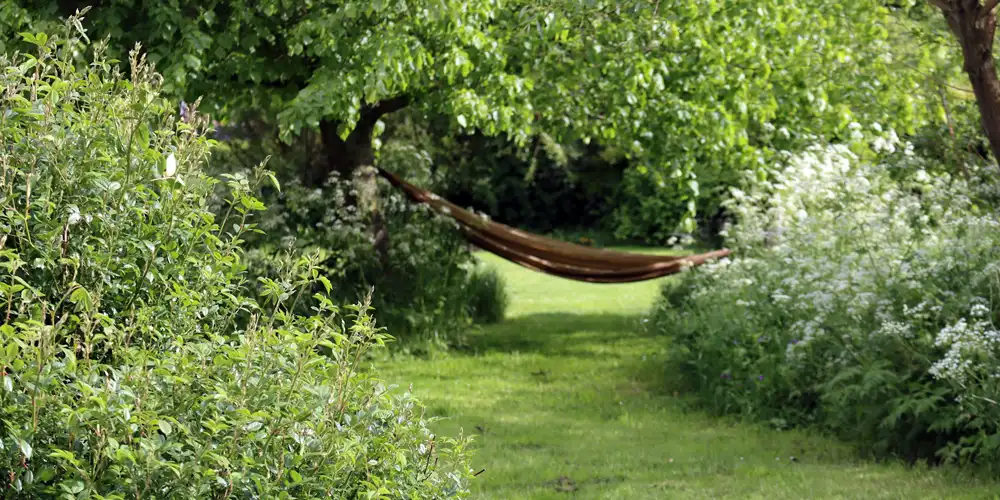
Tactile landscaping: using touch beyond plants
Touch is often treated as something plants provide, but tactile landscaping goes further than foliage. In a sensory garden, paths, edges, seating, timber, gravel, stone, gates and handrails all influence how the body experiences the space.
Useful tactile elements include:
- brushed or textured timber
- gravel, stone, clay pavers or setts
- raised bed edges
- seating arms and backrests
- foliage close to paths
- gates, handles and handrails
This matters because touch depends on proximity. A soft leaf, warm timber edge or textured path only becomes part of the sensory garden when it sits close enough to be reached, brushed past, held or walked across. Texture that is kept at a distance becomes visual detail rather than physical experience.
Raised beds can play a strong role here because they lift scent, foliage and planting detail closer to hand and eye level. They also create clear edges that help the garden feel more structured. In our case, our tactile Yakisugi raised beds make the structure itself part of the sensory experience, because the charred, brushed and oiled timber grain remains physically present rather than flat and inert.

A sensory garden feels richer when the materials around the planting are chosen with the same care as the plants themselves. Natural textures and sustainable, oiled timber give the garden more than a visual finish. They shape how the space is touched, crossed, leaned on and lived with.
Small sensory garden ideas for raised beds, patios and courtyards
Small spaces often make sensory garden design more effective, not less. In a patio, courtyard, balcony or terrace, people are naturally closer to planting, surfaces and edges, so scent, texture and sound can register without needing lots of features.
For a small sensory garden, the aim is concentration rather than quantity. A few well-placed cues will usually feel calmer than a crowded mix of plants, pots, furniture and ornaments.
Useful small sensory garden ideas include:
- place fragrant herbs or perennials near doors, seating and daily routes
- use raised beds to lift texture, scent and foliage closer to hand and eye level
- repeat fewer plants rather than filling every gap with something different
- choose one strong tactile material, such as timber, stone or gravel, and let it repeat
- keep seating where planting slightly encloses the body without making the space feel cramped
- use vertical planting carefully on balconies and terraces, so it softens the space without blocking light or movement
- leave some quiet space between sensory cues, especially in very small gardens
Bespoke raised beds are especially useful in small sensory gardens because they give structure without needing much ground area. They create clear edges, bring plants closer, and can make a patio or courtyard feel more like a designed garden than a collection of containers.
The main mistake is trying to shrink a large sensory garden into a small area. A small space needs fewer ideas, used more deliberately. One fragrant route, one tactile edge and one calm place to sit can create a stronger sensory experience than a crowded garden full of disconnected features.
How to create a calming sensory garden without sensory overload
A calming sensory garden needs selectivity. Too many strong cues can make the space feel busy, even when each individual feature is attractive. The best sensory garden design uses fewer elements with more purpose, then repeats them clearly.
| Instead of… | Do this… | Why it works |
|---|---|---|
| Using too many wind chimes | Let leaves, grasses, birds or gentle water carry sound | Background sound supports calm without demanding attention |
| Mixing several strong scents | Use one clear scent near a path, gate or seat | Fragrance becomes recognisable rather than confused |
| Relying only on bright flowers | Balance flowers with foliage, texture and movement | The garden still has interest when flowering passes |
| Adding every sensory feature | Choose the cues that fit how the space is used, such as a textured edge or single fragrant route | The garden feels designed rather than crowded |
| Filling every edge | Leave quiet gaps between plants and features | Space helps the strongest sensory cues register |
Calm does not mean empty. It means the garden gives the senses enough order to settle.
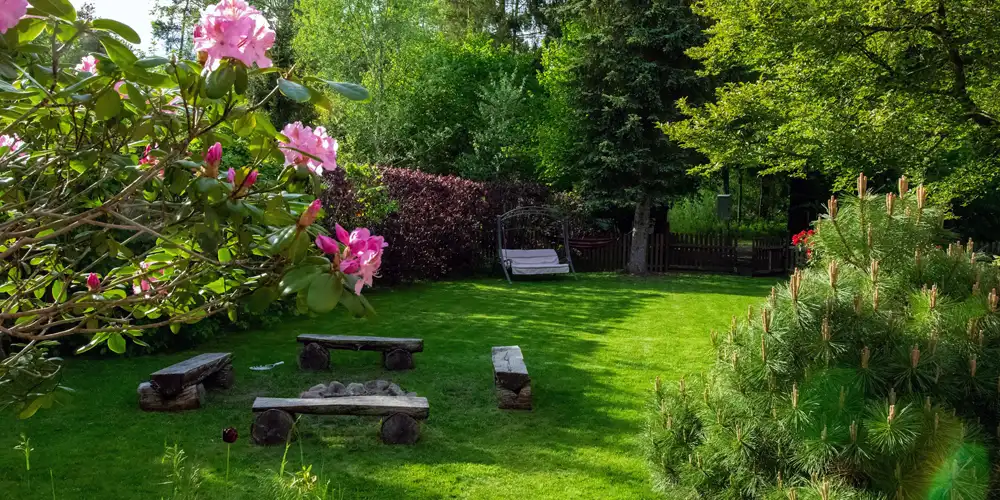
Sensory garden layout: where paths, seating and planting should go
Sensory garden layout should be planned around movement and pause. The strongest cues need to sit where people naturally pass, slow down or stop, not where they only look attractive from a distance.
Useful layout choices include:
- place fragrant plants beside paths, gates, doors and seating
- keep tactile plants and textured edges within comfortable reach
- put seating where planting gives slight enclosure without feeling closed in
- use paths to create repeated sensory contact, not just access
- keep louder elements away from quiet seating areas
- leave clear space so the garden has flow and does not feel crowded
Good sensory garden design guides the body as much as the eye. A path can make scent familiar through repetition. A seat can give sound and movement time to register. A raised edge can make touch part of daily use. When layout, planting and structure work together, the garden becomes easier to understand and calmer to spend time in.
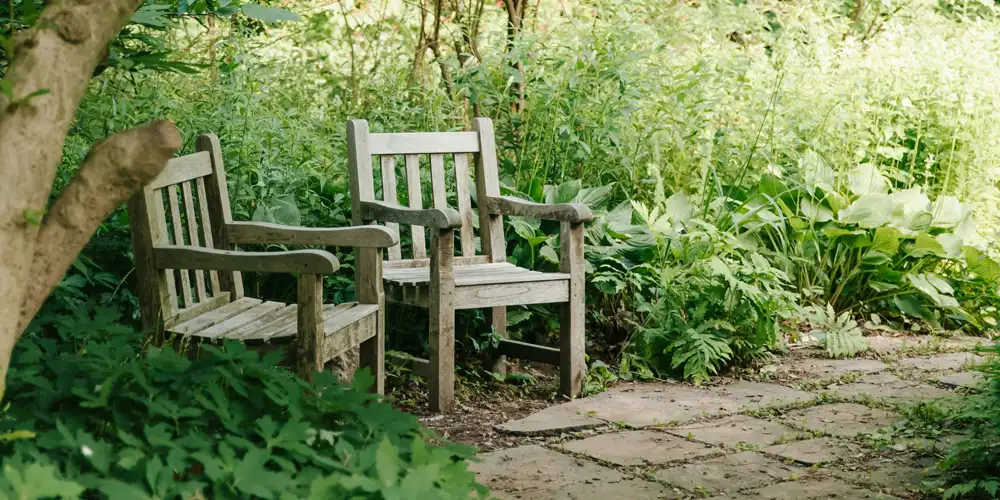
The best sensory gardens are designed to be used, not just viewed
The best sensory garden design does not shout for attention. It creates a garden people can move through, touch, sit in and return to without effort.
Sight, scent, sound, touch and taste all matter, but they work best when the garden has structure. Paths, seating, planting, edges and materials should help the senses feel ordered rather than overloaded. That is what turns a collection of sensory features into a garden that feels calm, usable and genuinely restorative.