Raised Bed Durability: What Actually Makes a Bed Last?
Raised bed durability is not decided by one material, one treatment or one board thickness. Two beds can look similar on day one but age very differently. The difference usually comes from how timber, joints, fixings, moisture, ground conditions and soil load work together over time.
Key takeaway: Raised bed durability is a system, not a single specification. The strongest beds are not simply the thickest or most expensive. They are the ones where timber, joints, fixings, drainage, ground conditions, and soil load have all been considered together.
The 7 factors that decide raised bed durability
A durable raised bed does not rely on one impressive feature. It depends on several practical decisions working together. These are the seven factors that most often decide whether a raised bed lasts, fails early, or needs repair sooner than expected.
| Durability factor | What it controls | What can go wrong | What to look for |
|---|---|---|---|
| Timber choice | Natural resistance to decay, movement and wet conditions. | The bed may rot, soften, split or age faster than expected. | Naturally durable timber, stable boards and clear protection against prolonged damp. |
| Board thickness and span | How well the sides resist bending under soil pressure. | Long unsupported boards can bow even when the timber itself is good. | Sensible board thickness, shorter unsupported runs and support where pressure builds. |
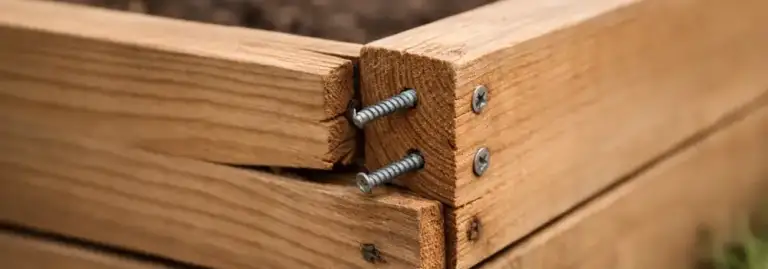
| Corners and joints | How load, movement and pressure are transferred through the frame. | Corners may open, twist, split or become the first visible failure point. | Tight, well-supported corners that do not rely on screws alone. |
| Fixing strategy | How boards are held while still coping with timber movement. | Screws can loosen, corrode, split timber or concentrate stress. | Fixings that hold firmly without splitting timber or trapping movement. |
| Moisture escape | How quickly timber can dry after rain, watering or damp soil contact. | Trapped moisture can accelerate rot and make small weaknesses worse. | Surface details, joints and finishes that allow timber to dry after wet conditions. |
| Ground contact and drainage | How wet the lower boards stay and how stable the base remains. | The bed may sit in persistent damp, settle unevenly or drain poorly. | A prepared base that does not leave lower boards sitting in trapped moisture. |
| Soil load | How much weight and sideways pressure the bed must resist. | The sides may bow, fixings may strain and the structure may distort. | Side panels and corners supported for the height, length and weight of the filled bed. |
The table gives the quick framework. The sections below explain each factor in plain terms and, where a subject needs more depth, point to the full guide that covers it properly.
What is the best timber for raised bed durability?
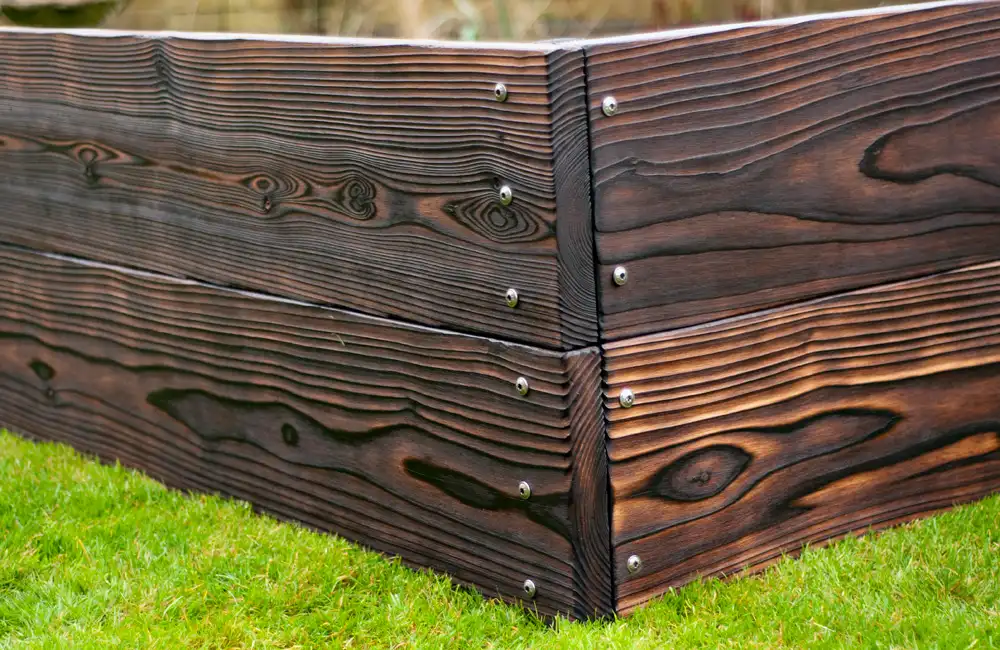
Timber choice matters because some species cope with moisture, decay and movement better than others. Western Red Cedar, oak, larch and Douglas fir will not behave in the same way outdoors, and a naturally durable timber gives a raised bed a stronger starting point. Western Red Cedar and oak are usually stronger durability choices than untreated softwood, but even good timber still needs the right design around it.
But timber choice does not decide raised bed durability on its own. A good species can still fail early if the bed holds water against the boards, leaves long sides unsupported, or relies on weak corners. A cheaper timber may also last longer than expected if it is kept well drained, well supported and able to dry after wet weather.
This is why timber should be seen as the starting point, not the whole answer. For realistic year ranges by material, exposure and build quality, see how long raised beds last.
Do thicker boards make raised beds last longer?
Thicker boards can improve raised bed durability, but only when the span and support are right. A thick board is harder to bend than a thin one, so it usually copes better with soil pressure, especially on longer sides or taller beds.
The mistake is treating thickness as a guarantee. A long side with no intermediate support can still bow, even if the timber is relatively substantial. Board thickness, bed height, timber stiffness, fixing layout and side length all work together. Change one, and the load on the others changes too.
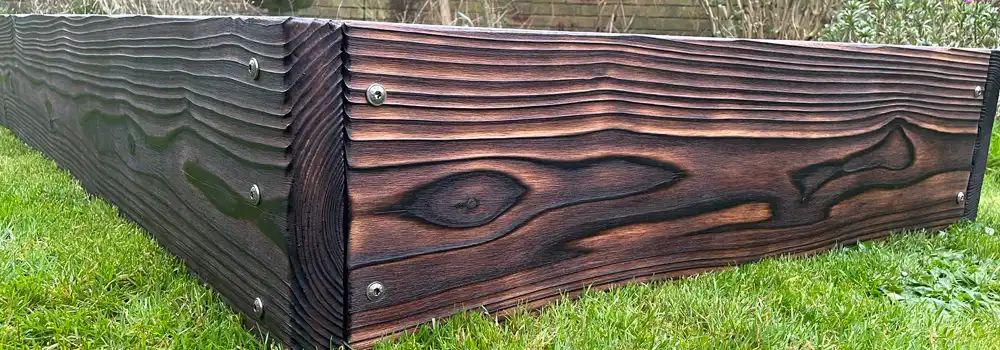
A durable raised bed does not simply use the thickest boards possible. It uses boards that are proportionate to the height and length of the bed, with support placed where pressure is likely to build. For a fuller explanation of why thicker timber alone is not always the answer, see raised bed myths: structural advice that sounds right but fails.
Why do raised bed corners and joints fail first?
Corners and joints often fail first because they carry several pressures at once. They hold the sides together, resist outward soil pressure, deal with timber movement, and absorb strain from fixings. When a raised bed begins to move, the corner is often where that movement becomes visible.
A strong corner is not just a neat corner. It needs enough bearing surface, sensible fixing placement, and a structure that spreads load rather than concentrating it at one point.
| Risk condition | What it does to the corner | What to look for |
|---|---|---|
| Long side spans | Increase outward pressure before that movement reaches the corner. | Support points, shorter unsupported runs, and corners that are not taking all the strain. |
| Heavy or saturated soil | Adds weight and sideways pressure against the boards and fixings. | Firm joints, supported side panels, and no early gaps opening at the corner. |
| Repeated wet and dry cycles | Make timber move, shrink, swell, and test the fixing points over time. | Fixings that have not loosened, split timber, or created stress around the joint. |
If the sides are long, the soil is heavy, or the timber is repeatedly wet and dry, a weak joint can begin to open, twist, or split. This is why corner design is central to raised bed durability. For a fuller explanation of bowing, splitting, loosening and collapse patterns, see why raised beds fail.
How do fixings affect raised bed durability?
Fixings affect raised bed durability because they decide how firmly the boards are held and how stress moves through the frame. Screws, bolts, brackets, and internal supports are not just there to keep the bed together on day one. They shape how the structure copes with soil pressure, timber movement, moisture, and repeated seasonal change.
The wrong fixing strategy can create problems even when the timber is good. Too few fixings can allow boards to move and joints to open. Poorly placed fixings can split timber or concentrate stress near the edge of a board. The wrong metal can also corrode prematurely in wet soil or high-moisture conditions, so outdoor fixings need to be suited to the environment as well as the load.
A durable raised bed uses fixings as part of the structure, not as an afterthought. They should hold the boards securely, support the corners, and work with the timber rather than fighting its natural movement. For a fuller explanation of why more screws, bigger brackets or visible reinforcement do not automatically create a stronger bed, see raised bed myths: fixing advice that sounds right but fails.
How do you stop raised beds rotting too quickly?
Raised beds rot too quickly when timber stays wet for too long. Treatment, charring or naturally durable timber can all help, but none of them removes the need for drying. A raised bed that traps water against the boards, sits in permanent damp, or holds wet soil against vulnerable details will age faster than one that can shed moisture and dry between wet periods.
Rot prevention is therefore less about one protective layer and more about moisture management. The key questions are simple: can rain run off, can the timber dry, can water escape at the base, and are the most exposed areas protected from constant damp?
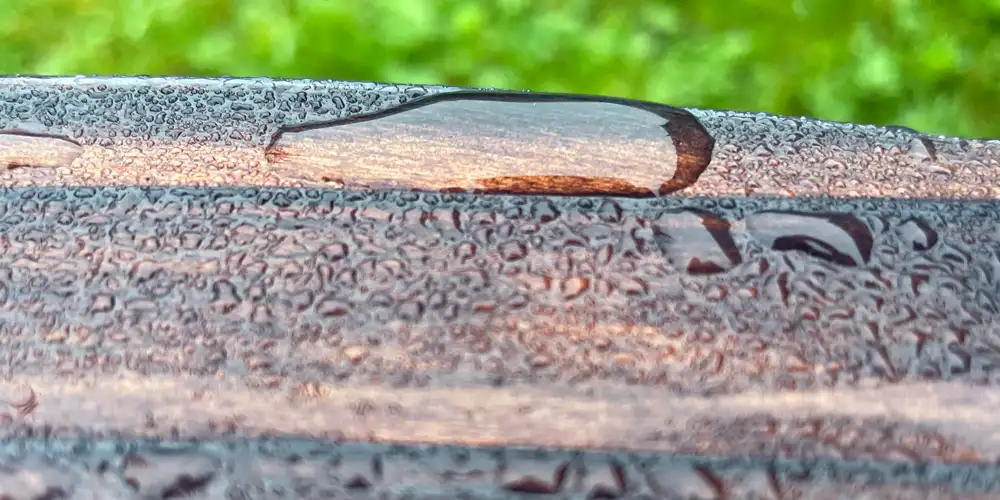
A long-lasting raised bed does not need to stay dry all the time. It needs to avoid staying wet all the time. For the base conditions that help water escape instead of keeping the lower boards in persistent damp, see how to prepare the ground for a raised bed properly.
Why does drainage matter for long-lasting raised beds?
Drainage matters because raised bed durability depends on the wetting and drying cycle. A bed can cope with rain, watering and damp soil far better if excess water has somewhere to go. Problems begin when water sits around the lower boards, collects inside the bed, or keeps the structure damp for long periods.
Poor drainage affects more than plant roots. It can soften soil unevenly, increase moisture against the timber, slow drying, and add extra weight inside the bed after heavy rain. Over time, that combination can make rot, movement and structural strain more likely.
A long-lasting raised bed needs drainage that supports both the growing system and the timber structure. To understand how soil choice affects water movement, plant health and the load inside the bed, see soil mix for raised beds: how to choose the right one.
Why do raised beds bow under soil pressure?
Raised beds bow because filled soil pushes outwards as well as downwards. Once the bed is full, the sides are not just holding soil in place. They are resisting weight, sideways pressure, water held in the soil, and repeated movement as conditions change.
This pressure is greatest in taller beds, longer beds, and beds filled with heavy or saturated soil. If the boards, corners and fixings are not proportionate to that load, the sides can begin to bow, the fixings can strain, and the frame can slowly lose its shape.
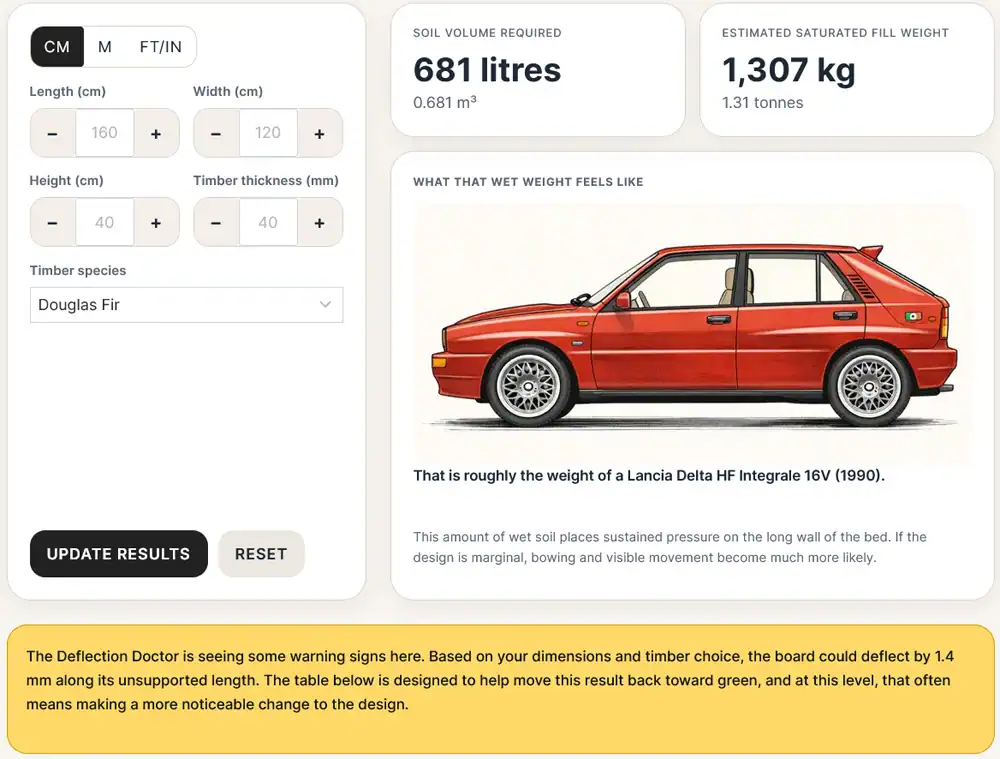
A durable raised bed is designed around the weight it will actually carry, not just how it looks when empty. To estimate soil volume, saturated weight and structural load before building, use the raised bed soil volume, weight and load calculator.
How do you make a wooden raised bed last longer?
To make a wooden raised bed last longer, do not rely on one upgraded feature. Choose durable timber, match your board thickness to the length of the bed, support the corners properly, use outdoor fixings, manage moisture, prepare the base, and design for the soil load the bed will actually carry.
Those factors work together. Thick boards still need support. Good timber still needs to dry. Strong fixings still need sound joint design. Drainage still matters even when the timber is naturally durable. A raised bed lasts longer when each part of the structure helps the others, rather than forcing one feature to compensate for the rest.
That is the real test of raised bed durability. The most durable bed is not the one with the single strongest specification. It is the one where timber, construction, drainage, fixings, ground conditions and soil load have been designed as one working system.