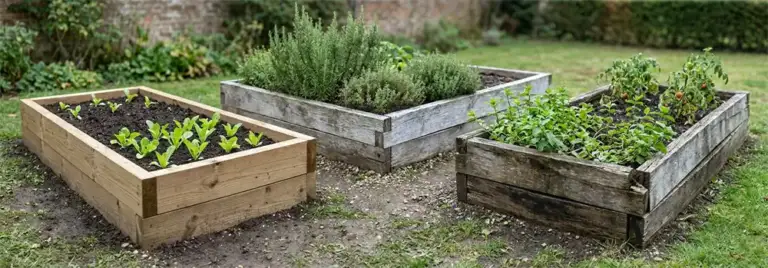
Best herbs for raised beds: how to choose, arrange and grow them
Growing herbs in raised beds works extremely well, but the best results come from choosing herbs that suit the space rather than simply planting the ones you use most. Some herbs stay tidy, productive, and easy to manage for years. Others spread fast, crowd their neighbours, or need regular replacement. The difference between a raised bed herb garden that settles and one that becomes awkward usually comes down to choice, layout, and light ongoing care.
Raised beds are especially good for herbs that like sharper drainage, easy picking access, and clearly defined space. They also make problems easier to spot. A herb that spreads too aggressively, grows woody and leggy, or overwhelms slower neighbours will show its habits much sooner in a contained bed than in open ground. If you are still deciding where the bed itself should go, it helps to first think about how position affects growth, access, and long-term success.
This guide identifies the best herbs for raised beds, explains how to arrange them for long-term health, and highlights the combinations that cause the most trouble.
Key takeaway: The best herbs for raised beds are the ones whose growth habit matches the space. Choose tidy long-term herbs for structure, productive soft herbs for regular picking, and keep aggressive spreaders like mint in their own contained zone.
Which herbs grow best in raised beds?
Choosing the best herbs for raised beds depends less on taste and more on how each plant behaves in a defined space. The strongest choices usually fall into one of three groups: herbs that enjoy the sharper drainage of a raised bed, herbs that stay compact enough to share space well, and herbs that reward frequent picking without quickly becoming unruly.
| Herb | Why it suits a raised bed | Growth habit | Watch-out |
|---|---|---|---|
| Rosemary | Likes drainage, warmth, and permanent space | Woody, upright, long-lived | Can become leggy if not lightly pruned |
| Thyme | Thrives in a sunny, free-draining position | Low, spreading, tidy | Can get swamped by stronger neighbours |
| Sage | Handles dry conditions well and gives structure | Bushy, woody, semi-permanent | Can get woody and sparse without regular harvesting |
| Oregano | Productive, hardy, and well suited to defined edges | Spreading, vigorous perennial | Can overrun slower herbs |
| Chives | Compact, reliable, and easy to pick from repeatedly | Clump-forming perennial | Needs dividing occasionally as clumps thicken |
| Parsley | Very useful in a picking zone and easy to manage | Soft, leafy, short-lived | Usually needs regular replanting |
| Basil | Highly productive in warm, sheltered summer beds | Soft, leafy annual | Not a long-term structural herb |
| Coriander | Fast and useful for quick harvests | Short-lived, quick to bolt | Often better treated as a repeat sowing crop |
| Mint | Very productive and easy to harvest | Aggressive spreader | Best kept in its own contained zone |
The pattern is more useful than any single favourite. Mediterranean herbs such as rosemary, thyme, and sage are often among the best herbs for raised beds because they benefit from sun, airflow, and drainage. Soft leafy herbs such as parsley and basil are also excellent, but they work best as productive fillers rather than as the long-term backbone of the bed.

Mint is the main exception that proves the rule. It grows well in a raised bed, but that does not mean it should share open soil with everything else. A herb can be one of the best choices in isolation and still be a poor companion in a mixed planting.
How to arrange herbs in a raised bed
A good layout is what turns a collection of useful herbs into a raised bed that stays practical. When arranging herbs in a raised bed, the aim is not to fill every gap straight away. It is to give each herb enough light, airflow, and picking access to suit the way it will grow over time.
| Herb or herb type | Best position in the bed | Why it goes there | Spacing note |
|---|---|---|---|
| Tall woody herbs | Back or centre of the bed | They give structure without shading everything in front | Leave room for mature width, not first-year size |
| Low edging herbs | Front edge | Easy to reach, tidy in habit, and useful for softening the front | Avoid letting stronger herbs lean over them |
| Soft leafy herbs for regular picking | Middle or most accessible side | They are easiest to manage where they can be harvested often | Leave enough room to cut without bruising neighbours |
| Spreading herbs | Separate contained zone | They need control more than companionship | Use a sunk pot or clearly isolated section |
| Seasonal fillers | Small gaps between longer-term herbs | They add quick harvests without dictating the whole layout | Do not rely on them as permanent structure |
The simplest raised bed herb garden layouts usually start with one or two anchors, not a long shopping list. A rosemary or sage plant can hold the back or centre. Lower herbs such as thyme or chives can sit toward the front edge. Parsley, basil, and coriander usually make more sense in the middle or front-middle, where they are easy to reach for regular picking without leaning over the edging herbs.
This is also where restraint matters. Many herb beds look successful in year one because everything is planted too tightly and grows lushly for a while. Later, the same bed becomes awkward to pick from, harder to keep airy, and more prone to one herb swallowing another. A little empty space at the start often produces a better bed in the long run.
Which herbs should not be planted together in raised beds?
Most herb combinations fail for practical reasons, not mystical ones. Herbs struggle together when one grows faster, spreads harder, shades more heavily, or wants very different conditions from its neighbour. In a raised bed, those conflicts show up quickly because the space is limited and the planting is easier to read.
| Combination | Why it causes problems | Better approach |
|---|---|---|
| Mint with mixed herbs | Mint spreads aggressively and quickly takes shared soil away from slower herbs | Keep it in a separate pot, a sunk container, or a clearly isolated zone |
| Oregano with slower neighbours | It can spread and thicken faster than softer, less vigorous herbs can cope with | Give it its own space or pair it only with herbs that can hold their ground |
| Woody Mediterranean herbs with thirstier soft herbs | One side wants sharper drainage and less lush growth, while the other often needs more regular moisture | Group herbs by similar behaviour and watering needs rather than by kitchen use, for example keeping rosemary away from thirstier coriander |
| Tall herbs directly in front of low growers | They block light, crowd picking access, and make the bed harder to manage | Keep taller herbs to the back or centre and lower herbs toward the front |
| Annual herbs fixed into long-term positions | They leave awkward gaps once they fade or bolt, weakening the whole layout | Use them as seasonal fillers around the permanent structure of the bed |
The main lesson is that the herbs should not be planted together in raised beds when their habits fight each other. Mint is the obvious example, but it is not the only one. Any pairing that mixes aggressive spread, different moisture preferences, or very different vigour can create the same kind of friction.

This is why grouping herbs by behaviour usually works better than grouping them by recipe. A raised bed stays easier to harvest and easier to keep balanced when the herbs share similar expectations of space, light, and upkeep.
Perennial vs annual herbs in a raised bed
One of the easiest ways to improve a raised bed herb garden is to separate herbs that hold the structure from herbs that come and go. Perennial herbs earn permanent space because they return, thicken, and settle into the layout over time. Annual or short-lived herbs are still useful, but they usually work best as productive fillers rather than as the backbone of the bed.
Perennial herbs often worth building around:
- rosemary
- thyme
- sage
- oregano
- chives
- mint, but only in a separate pot or submerged container

Annual or short-lived herbs are better treated as flexible planting:
- basil
- coriander
- dill
- parsley, which is often used this way even though it is technically biennial
This distinction matters because permanent herbs shape the bed long after the first season has passed. Annual herbs do the opposite. They give quick harvests, then fade, bolt, or need replacing. If the layout depends too heavily on them, the bed can look strong at first and then feel patchy later.
A better approach is to let the perennial herbs provide the structure and use annual herbs to fill the easy-to-reach spaces around them. That keeps the bed more stable, makes replacement simpler, and avoids redesigning the whole thing every season.
Common mistakes when growing herbs in raised beds
Most problems with herbs in raised beds come from treating all herbs as if they behave the same way. They do not. Some want to settle for years, some need frequent cutting to stay useful, and some are only passing through. Once those differences are ignored, the bed usually becomes harder to manage than it needs to be.
Common mistakes when growing herbs in raised beds:
- planting too tightly for an instant full look
- letting mint grow into shared soil
- mixing very vigorous herbs with slower, softer ones
- placing frequently harvested herbs where they are awkward to reach
- treating basil, coriander, or dill as if they are long-term structure
- letting woody herbs become leggy and sparse before cutting them back
- assuming a lush first year means the layout works long term
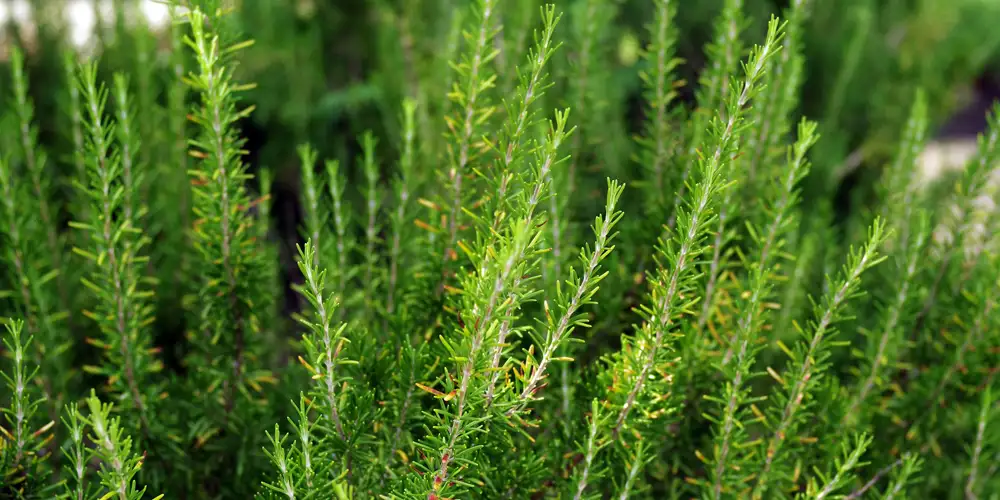
Woody herbs are where this often shows up most clearly. Rosemary and sage can be among the best herbs for raised beds, but only if they are kept within shape. Left uncut for too long, they become coarse, leggy, and bare in parts, making them harder to manage around neighbouring plants. Light, regular harvesting or pruning usually works better than waiting for a major correction.
The other recurring mistake is overestimating how much a small bed can comfortably hold. A raised bed herb garden is easier to pick from, easier to keep airy, and easier to keep balanced when each herb has room to behave as expected. Restraint at the planting stage usually saves far more work later.
A simple raised bed herb garden plan that works
A good raised bed herb garden does not need to be complicated. The easiest plans usually combine one or two long-term herbs for structure, a few softer herbs for regular picking, and one clearly contained spreader if you want it. That gives the bed shape, usefulness, and enough flexibility to cope with seasonal change.
| Area of the bed | What to plant | Why it works |
|---|---|---|
| Back or centre anchor | Rosemary or sage | Provides long-term structure and gives the bed a clear backbone |
| Front edge | Thyme or chives | Keeps lower herbs easy to reach and stops the front from feeling bulky |
| Middle or front-middle | Parsley, basil, or coriander | Places regular harvest herbs where they are easy to pick and easy to replace |
| Contained zone | Mint in a separate pot or submerged container | Allows heavy harvesting without letting it invade shared soil |
| Small pockets or gaps between long-term herbs | Dill or another short-lived herb | Adds quick harvests without forcing the whole layout to depend on temporary plants |
This kind of plan works because each part of the bed has a role. The woody herb holds the structure. The lower front herbs stay accessible. The softer middle herbs do most of the day-to-day work in the kitchen. Mint, if included, is enjoyed without becoming a problem. Seasonal herbs fill space without deciding the whole design.

You do not need every herb listed here, and a smaller bed may only hold three or four of these roles comfortably. The important thing is the logic: permanent herbs first, easy-picking herbs second, aggressive spreaders contained, and short-lived herbs treated as replaceable rather than structural.
Final thoughts on choosing the best herbs for raised beds
The best herbs for raised beds are not simply the ones you use most in the kitchen. They are the ones whose growth habit suits a defined space and the way you actually want to manage it. A bed built around that logic stays easier to pick from, easier to keep balanced, and easier to refresh without starting again.
For most gardeners, that means choosing one or two perennial herbs for structure, keeping soft leafy herbs in easy reach, and containing anything that spreads too aggressively. Once those roles are clear, the raised bed stops feeling like a small space to cram and starts working as a simple, productive system.
If you want the bed itself to support that kind of long-term planting, it also helps to think about what makes a raised bed worth building to last.