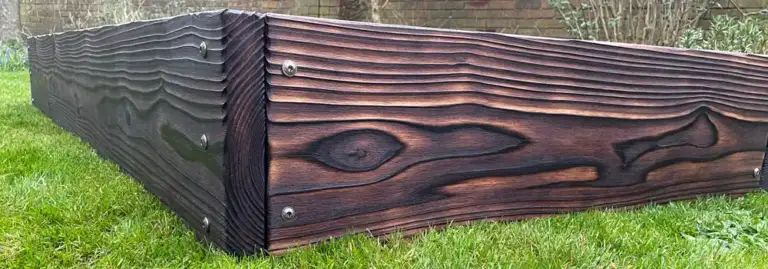
Raised bed myths: structural advice that sounds right but fails
Raised bed myths often begin as sensible shortcuts. A standard width sounds practical. Thicker timber sounds stronger. Extra bracing sounds safer. The problem is that structural advice becomes unreliable when a partial truth is repeated as a universal rule.
This article focuses on the structural myths behind raised bed design. Instead of repeating common rules, it tests them against what actually governs performance: span, height, soil pressure, support, joint behaviour, and intended use. The aim is not just to dismiss bad advice, but to replace it with better judgement and show why that judgement holds up.
Key takeaway: Many raised bed myths survive because they begin with something that is true in one situation, then get copied far beyond it. Width is not fixed. Thickness is not a universal mark of quality. Longer beds do not behave like short ones at a bigger scale. More bracing does not help unless it works with the real force path. Strong corners do not depend on screw strength alone. A structurally sound raised bed comes from matching dimensions, support, joint design, and material choice to the actual demands placed on the bed.
Why raised bed myths spread so easily
Most raised bed myths do not begin as nonsense. They begin as observations that are partly true in a specific context. A width may work well for one access pattern. A thicker board may be useful at one height. A brace may help in one layout. The trouble starts when those context-bound ideas are repeated as if they were universal rules.
That is why structural myths spread so easily. They sound practical because they usually contain a fragment of real experience, but they strip away the conditions that made that experience valid in the first place. Once span, retained soil load, height, support, corner design, and intended use are removed from the conversation, advice becomes much easier to repeat and much less reliable to build from.
The table below shows each myth, why people repeat it, where it breaks down, and what better structural judgement should replace it.
| Myth | Why it sounds plausible | Why it fails | Better judgement | Why the better answer works |
|---|---|---|---|---|
| A raised bed should always be 1.2 m wide | 1.2 m is a familiar rule based on reach from both sides. | Width depends on access, approach, and how the bed will actually be used. | Choose width around real reach and access, not a copied number. | A width matched to the user and site is easier to work and less likely to create awkward compromises. |
| Longer raised beds are just more of the same structure | A longer bed looks like a short bed repeated. | Longer spans change bending behaviour, restraint needs, and support demands. | Treat added length as a structural change. | Support strategy matters more as unsupported run increases. |
| Tall raised beds are just standard beds made higher | Height is often treated as a simple extension. | Greater retained height increases pressure and leverage. | Treat taller beds as a different structural problem. | Higher loads demand different support and detailing. |
| Thicker timber automatically makes a better raised bed | More material feels stronger and more substantial. | Thickness alone says little without height, span, species, and detailing. | Choose thickness as part of the structural design. | The right section performs better than mass alone. |
| More bracing automatically makes a bed stronger | Extra parts suggest extra reinforcement. | Bracing only helps when it works with the real force path. | Brace for the actual load path, not by habit. | Real reinforcement controls movement where pressure acts. |
| Strong raised-bed corners are mostly about using stronger screws | Fixings are visible and easy to compare. | Corner strength depends on load path, section, layout, and force transfer. | Treat screws as one part of joint design. | Good corners work because the joint handles force coherently. |
| A raised bed is too small to need real structural thinking | It looks simple compared with a wall or larger build. | Once it retains soil, load, moisture, span, and restraint still matter. | Treat it as a soil-retaining structure, not just a box. | Better structure improves stability, performance, and durability. |
| If it looks sturdy, it is structurally sound | Visual heft is easy to read as strength. | Appearance can hide poor support, bad proportions, or weak joint logic. | Judge structure by force handling, not appearance. | Soundness comes from geometry, support, joints, and material behaviour. |
Myths about raised bed width, length and height
Some of the most repeated raised bed advice is really advice about dimensions. That is partly why it spreads so easily. A number is easy to remember, easy to repeat, and easy to mistake for a rule. But dimensions are never neutral. Width affects reach and access. Length changes unsupported span and support demands. Height increases retained load and changes how the whole structure behaves.
That is why copied sizing rules cause so many problems. They sound practical because they are simple, but they usually detach the dimension from the conditions that made it sensible in the first place.
Myth: A raised bed should always be 1.2 m wide
This is one of the most familiar raised bed rules. It sounds sensible because it usually comes from a real observation: if a bed can be reached comfortably from both sides, most people can work the middle without stepping into it. In that limited sense, 1.2 m can be a useful reference point.
The problem is that this gets repeated as if width were a fixed rule rather than a response to use. A bed approached from both sides does not behave the same way as one approached from only one side. A bed used for quick seasonal planting does not place the same demands on reach as one intended for deeper maintenance, careful harvesting, or accessibility-led design. Once path layout, surrounding obstacles, user reach, and intended planting style change, the copied number can stop being helpful very quickly.
That is why the myth fails. Width is not a universal property of a good raised bed. It is a design decision tied to access. A bed that is too wide for the actual approach becomes awkward to work and encourages stretching, leaning, and inconsistent maintenance. A bed that is made narrower than necessary because of a copied rule may also sacrifice useful growing area for no real benefit.
Better judgement starts with asking how the bed will actually be reached and used. Is it accessible from both long sides, from one side only, or from one side and the ends? Is it intended for a private garden, a tighter urban space, or an accessible setting where reach and comfort matter much more precisely? These questions do more useful work than repeating a standard number.
The reason this better judgement holds up is simple. Reach is a human constraint, not a universal dimension. The right width comes from matching the bed to real access conditions, not from inheriting a rule that only made sense in one layout. This is also one reason [bespoke raised bed design] works so differently from copied standard sizing. The structure begins with use, then fixes dimensions around it, rather than forcing use to adapt to a number.
Myth: Longer raised beds are just more of the same structure
This myth sounds reasonable because a longer raised bed often looks like a shorter one simply stretched out. If the same boards, the same corners, and the same general shape are used, it is easy to assume that length only changes capacity, not structural behaviour.
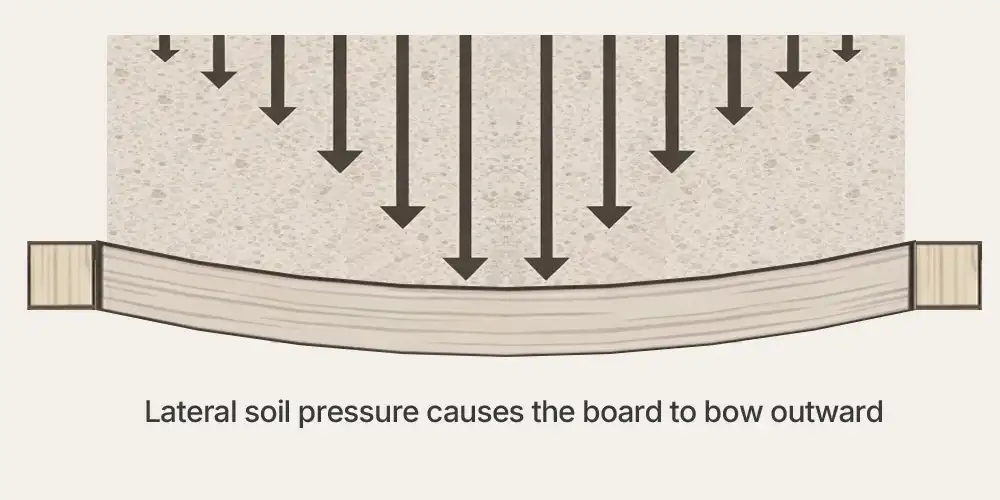
That assumption is where the myth fails. Length does not just add growing space. It increases unsupported run. And as unsupported run increases, the structure has more opportunity to deflect, bow, or move under retained soil load. A short bed and a long bed may use similar components, but they do not ask the structure to do the same job over the same distance.
This becomes especially important once soil is wet. Raised beds do not retain a neat, static load. They retain a material whose weight changes with moisture and whose pressure acts across the wall over time. On a longer run, that pressure has more distance over which to express movement. What looks like a simple extension in plan can become a different bending and restraint problem in use.
That is why copied dimensions can be misleading here. A design that feels stable at a shorter length may not remain equally stable when the span is extended without changing support strategy, board section, corner logic, or the relationship between long runs and restraint points. The longer bed is not just more of the same. It is structurally more demanding.
Better judgement starts by treating added length as a structural change, not just a sizing change. Once a bed becomes longer, the real question is no longer only how much planting space it provides. The question becomes how the extended run will resist retained soil pressure, how movement will be limited, and where support needs to come from.
The reason this better judgement holds up is straightforward. Span matters. The farther a member runs without meaningful restraint, the more important stiffness, support, and load path become. Length changes how forces act on the bed, so it has to change the way the bed is designed in response. Not sure how much difference your proposed length makes in practice? Try our raised bed calculator to test the span, saturated load, and structural risk before you build.
Myth: Tall raised beds are just standard beds made higher
This myth spreads for the same reason many dimensional myths do. Height is easy to see, easy to measure, and easy to treat as a simple extension of what is already there. If a lower bed works, it can seem reasonable to assume that a taller one is just the same structure with more boards added on top.
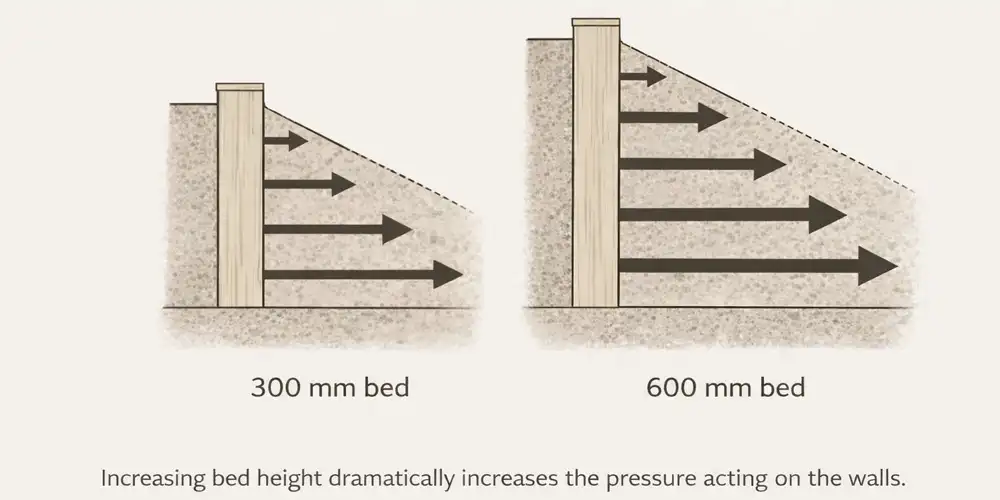
That is only true at a very superficial level. Structurally, added height changes the problem. A taller raised bed retains more soil and increases the depth over which lateral pressure can act. It also changes leverage. The wall is not just holding back more material. It is resisting that material over a greater retained height, which increases the structural demand placed on the long faces, the corners, and the way the whole bed is restrained.
That is why tall beds cannot be treated as ordinary beds enlarged without consequence. The same general construction logic may still apply, but the demands placed on it do not remain constant. A bed that feels adequate at a lower height may become much more vulnerable to movement, bowing, fixing stress, or corner strain when the retained height increases. What looked like a simple dimensional adjustment becomes a different load problem.
This is especially important because taller beds are often chosen for reasons that make poor performance more serious. Accessibility, reduced bending, and easier working height are all valid reasons to raise a bed, but those benefits only hold if the structure is designed around the extra demand rather than assuming the original build can simply be stacked upward.
Better judgement begins by treating taller raised beds as a different structural category, not as standard beds with extra height added. Once retained height increases, board section, support strategy, corner behaviour, and overall restraint all deserve to be reconsidered in light of the new load. If you want to sense-check a taller design before you build it, our raised bed calculator estimates saturated fill weight, structural risk, and the kinds of changes most likely to improve the result.
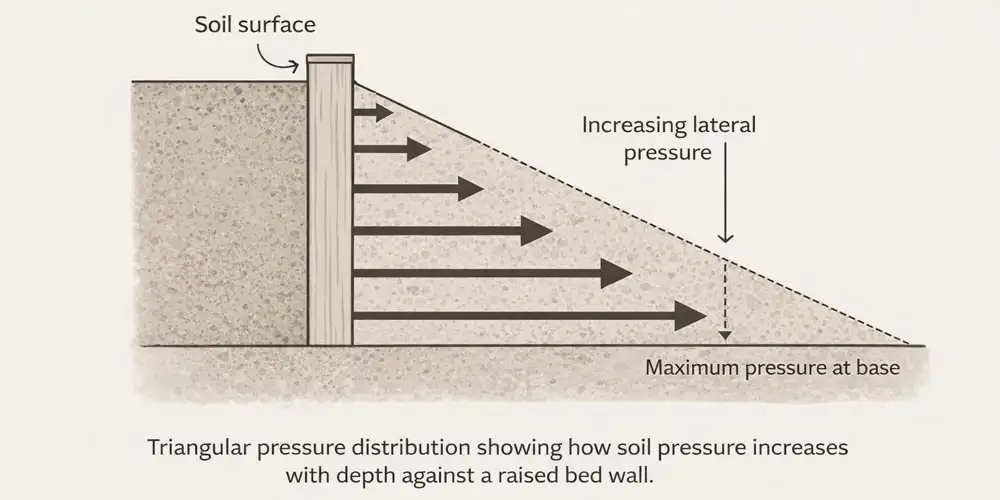
The reason this better judgement holds up is simple. Greater height changes both pressure and leverage. That means the structure is not being asked to do the same job at a larger size. It is being asked to do a more demanding job altogether, so the design has to respond accordingly.
Myths about raised bed strength and support
Once raised bed advice moves beyond dimensions, it usually shifts into the language of strength. Thicker boards, extra bracing, and stronger fixings all sound reassuring because they appear to add substance or reinforcement. That is why these myths are so persistent. They treat strength as something that can be added in obvious, visible ways.
The problem is that structural strength does not come from visible heft alone. It comes from how a bed handles force. A thicker board can be useful, but only in relation to span, height, species, and detailing. Bracing can help, but only if it actually works with the load path. Stronger screws may matter, but they do not create a coherent corner on their own. These myths survive because they mistake individual components for structural solutions.
Myth: Thicker timber automatically makes a better raised bed
This myth sounds plausible because thickness is one of the easiest things to compare. A thicker board feels more substantial in the hand, looks more robust in a photograph, and is often treated as an obvious upgrade over thinner material. In many situations, more section does bring structural advantages, so it is not surprising that people start to treat thickness as a universal marker of quality.
That is where the myth goes wrong. Thickness matters, but not in isolation. A thicker board does not automatically create a better raised bed unless it is being considered in relation to height, span, retained soil load, species stiffness, support strategy, and joint behaviour. A thicker board used in the wrong context can still be poorly supported, badly proportioned, or structurally mismatched to the job it is being asked to do.
This is the weakness in the “thicker is better” logic. It treats material size as if it carries meaning on its own. But structure does not work that way. A bed built from thicker timber may still perform badly if the long runs are too lightly restrained, the corner design is weak, or the retained height places demands that the overall design has not properly addressed. More material can improve potential, but it does not guarantee good structural behaviour.
Thicker timber can improve potential, but it does not prove quality. A raised bed performs well when the board section matches the structural job it is being asked to do.
Better judgement starts by treating timber thickness as one design choice among several, not as a shortcut to quality. The real question is whether the board section is appropriate for the retained height, the unsupported run, the timber species, and the way the bed is assembled. Thickness should be chosen because it suits the structural role, not because it sounds inherently superior.
That is why the better answer holds up. Good performance comes from the right section in the right role. Thickness can absolutely matter, but only as part of a coherent structural response. It is one variable in a system, not a stand-alone proof of quality.
Myth: More bracing automatically makes a bed stronger
This myth sounds sensible because bracing is visually easy to interpret. If movement is a risk, adding more timber seems like a logical way to make the structure stronger. In many areas of construction, additional reinforcement can improve performance, so it is understandable that people carry that instinct across to raised beds.
The trouble is that bracing only helps when it works with the actual force path and the real failure mode. If the retained soil pressure is acting along a long run, a brace that does not meaningfully interrupt that movement may add visible complexity without delivering much structural benefit. In other words, more bracing is not the same thing as better support.
This is why copied bracing details so often disappoint. A visible crosspiece, cap, or strap can look reassuring while doing very little to address where pressure is actually acting or how the wall is trying to move. In some cases, the brace is responding to a symptom rather than the structural cause. In others, it is positioned too high, too far from the real movement, or too disconnected from the main load path to make the difference people imagine.
Better judgement starts with asking what is actually moving, where the pressure is acting, and what kind of restraint would change that behaviour. Bracing should be used where it meaningfully supports the load path, not where it merely signals reinforcement. The aim is not to add parts. It is to control force and movement coherently.
That is why the better answer works. Real reinforcement is effective when it intercepts movement where pressure acts and ties into the structure in a way that changes the bed’s behaviour. Structural support is not about how much extra timber has been added. It is about whether the added element is doing a real job.
Myth: Strong raised-bed corners are mostly about using stronger screws
This myth sounds plausible because fixings are easy to see, easy to compare, and easy to market. A stronger screw sounds like a stronger joint, especially when the corner is one of the most obvious places people expect structural weakness to appear. Because screws are visible and measurable, it is natural for attention to settle on them as the main explanation for corner strength.
That is only part of the story. Strong corners do not come mainly from choosing a more impressive fixing. They come from how force is transferred through the whole joint. Timber section, corner geometry, fixing placement, bearing area, restraint, and load path all influence whether a corner remains stable under pressure. A stronger screw inside a poorly conceived joint does not solve the deeper problem.
That is where the myth fails. It assumes the fixing creates the strength, when in reality the fixing only works within the joint it is part of. If the layout encourages splitting, weak bearing, poor force transfer, or movement concentrated in the wrong place, better screws alone will not make the corner coherent. They may improve one element of the connection, but they do not replace structural design.
Better judgement starts by treating screws as one part of joint design, not the whole answer. A good corner depends on how the materials meet, how the loads move through the joint, and how the fixing strategy supports that arrangement. Screw choice matters, but only inside a joint that already makes structural sense.

That is why the better answer holds up. Good corners work because the joint handles force coherently. The fixing contributes to that performance, but it does not create it on its own. This is also why fixings deserve their own deeper discussion later. Once corner performance is examined properly, screw strength quickly turns out to be only one variable in a much larger structural question.
Myths about how to judge whether a raised bed is structurally sound
Some structural myths are really mistakes in judgement. They are not about one dimension or one component, but about how people decide that a raised bed is sound in the first place. That is why they can be harder to spot. They often feel like common sense rather than advice.
The problem is that structural judgement becomes unreliable when it is based on impression alone. A raised bed can look modest and still face meaningful retained load. It can look heavy and still be poorly resolved. Once people judge structure by size, appearance, or familiarity instead of by force, support, and restraint, bad conclusions start to feel obvious.
Myth: A raised bed is too small to need real structural thinking
This myth sounds plausible because raised beds are domestic objects. They sit in gardens, not on building sites. Compared with walls, decks, or larger outdoor structures, they can seem too small and too ordinary to deserve serious structural thought. That is why people so often reduce them to “just timber boxes”.
That is exactly where the mistake begins. A raised bed may be small in scale, but it is still a soil-retaining structure. Once it holds back soil, the same basic realities still apply: load acts on the walls, moisture changes the weight of that load, long runs can move, corners have to transfer force, and support has to come from somewhere. The scale may be domestic, but the behaviour is still structural.
This is why the myth fails. It confuses familiarity with simplicity. A raised bed is easy to recognise, easy to buy, and easy to describe, so it is also easy to underestimate. But retained soil does not become structurally irrelevant because the object containing it is sold for gardens rather than construction. If anything, the casual way raised beds are discussed is one reason poor structural advice spreads so easily.
Better judgement starts by treating a raised bed according to what it does, not how ordinary it looks. It retains a changing load outdoors over time. That means dimensions, support, restraint, joint behaviour, and material choice still matter, even if the structure is smaller than people instinctively associate with “engineering”.
That is why the better answer works. Structural thinking is not reserved for large or dramatic builds. It is simply the habit of matching a structure to the forces it has to handle. Raised beds benefit from that discipline just as much as any other load-bearing outdoor build.
Myth: If it looks sturdy, it is structurally sound
This myth sounds plausible because visual judgement is quick and intuitive. Thick boards, broad corners, dark finishes, visible weight, and a generally solid appearance all encourage the same conclusion: this looks robust, so it must be strong. In everyday life, appearance often acts as a shortcut for judgement, so it is understandable that people carry the same habit into raised beds.
The problem is that appearance can only show surface qualities. It cannot reliably show how force is moving through the structure, whether support is sufficient, whether the proportions suit the retained load, or whether the joint logic is coherent. A bed may look substantial while still being poorly restrained over a long run, badly resolved at the corners, or structurally mismatched to its height.
That is where the myth fails. Visual heft and structural soundness are not the same thing. Some features that make a bed appear strong are genuinely useful, but they only matter if they are part of a design that handles load properly. Without that, sturdiness becomes more of a visual impression than a structural fact.
Visual heft is not structural proof. A raised bed should be judged by how it handles load, not by how robust it looks.
Better judgement starts by asking different questions. How far does the wall run without meaningful restraint? What happens at the corners? How is retained height being handled? Where is pressure likely to act most strongly? What in the design actually changes the bed’s behaviour under load? These questions reveal much more than appearance alone ever can.
That is why the better answer holds up. Real soundness comes from geometry, support, joints, restraint, and material behaviour working together. A bed should not be trusted because it looks robust. It should be trusted because its structural logic makes sense.
What better structural judgement looks like in a raised bed
Better structural judgement does not begin with fixed numbers, thicker parts, or visually reassuring add-ons. It begins with understanding what the bed is actually being asked to do. A raised bed has to retain soil, cope with changing moisture, resist movement over its unsupported runs, and transfer force coherently through its corners and supports. Once those demands are clear, dimensions and details can be chosen around them.
That is the common thread behind every myth in this article. Width only makes sense in relation to reach and access. Length changes span and restraint demands. Height changes retained load and leverage. Thickness matters in relation to structural role, not as a stand-alone virtue. Bracing only works when it engages the real force path. Corners depend on joint behaviour, not on fixings alone. And visual solidity means very little unless the structure actually handles force well.
This is also why good raised bed design is rarely the result of copying rules in isolation. Reliable structure comes from matching the bed to its intended use, its dimensions, its site conditions, and the loads it will face over time. That is a more demanding way to think, but it is also the reason some beds remain stable and coherent while others begin to move, strain, or disappoint.
If you want to understand that broader logic in more depth, our page on premium raised beds shows how material choice, detailing, and structural judgement come together in a finished bed, while why raised beds fail explores what happens when those decisions are made badly or copied without enough context.
Related reading
- Raised bed myths: ground preparation that sounds right but fails
- Raised bed myths: soil advice that sounds right but fails
- Raised bed myths: moisture and durability advice that sounds right but fails
- Raised bed myths: planting advice that sounds right but fails
- Raised bed myths: joint and assembly advice that sounds right but fails
- Raised bed myths: fixing advice that sounds right but fails