Thank you for visiting us at The Oak Fair, 2026
A huge thank you to everyone who stopped to see us at The Oak Fair, especially those who braved Saturday’s rain.
Despite the weather, we had two days of great conversations with people who were genuinely interested in timber, gardens, longevity and how things are made. Many of you stopped to touch the wood, ask about the finish, look at the process board and talk through your own ideas.
We also owe a huge thank you to Paul Courage at Hazelbury Timber Supplies for inviting us to join their stand in the Machinery & Timber Yard. Hazelbury supplies the Western Red Cedar we use, so exhibiting alongside the people who supply our timber felt particularly appropriate.
Having a good supplier close to home matters enormously to us. It keeps timber miles low, gives us the opportunity to discuss exactly what we need rather than simply ordering from a catalogue, and means there is a relationship behind the material before it ever arrives in our workshop.

After two days of conversations, the same questions came up again and again so we will cover some below.
“What timber is that? I’ve never seen timber look like this.”
It is Western Red Cedar, but the appearance comes from our Yakisugi process.
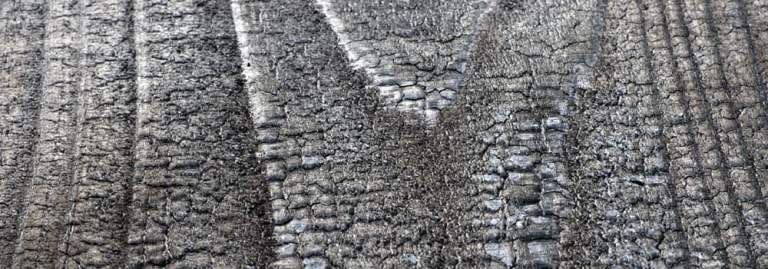
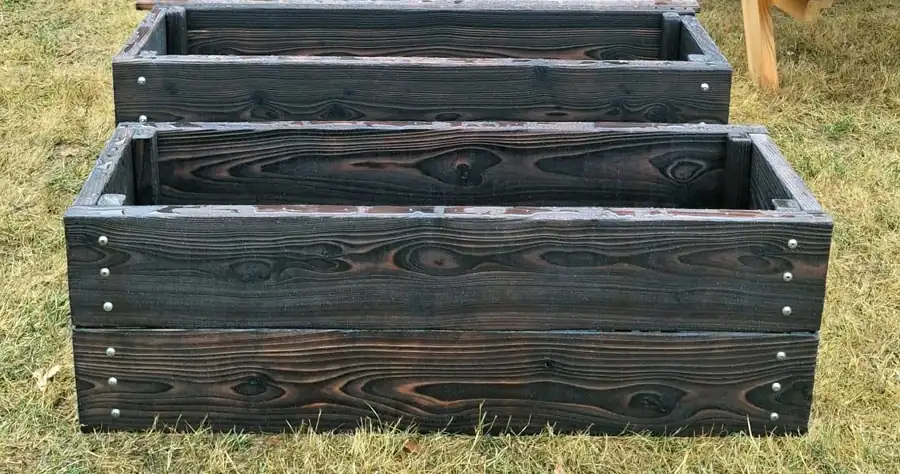
We burn the timber as part of the preservation process, then brush it back to reveal the natural grain before applying our protective finish. The deep texture and unusual appearance are a side benefit of a process designed first and foremost around longevity.
Why do you burn the timber?
Yakisugi is a traditional method of preserving timber by charring its surface.
For us, the burn is not decorative. It is an integral part of how we build for longevity. The distinctive grain and texture come from brushing the charred surface back afterwards. We cover all the benefits of burning in our article, how Yakisugi protects timber.
Do you deliver outside Dorset?
Yes, depending on the project.
Dorset is our home area, but at the show we were asked about delivery to London, Essex, Swansea and further afield. Larger or multiple orders can make longer-distance delivery practical, so it is always worth asking.
How much do your raised beds cost?
Every bed is made to order, so price depends on dimensions, height, timber thickness and delivery requirements.
Once we know what you need, we can provide a clear quote.
What sizes can you make?
Our beds are bespoke rather than limited to a small set of catalogue sizes.
Width, height and length can all be adapted to suit the space, planting and accessibility requirements, with structural support added where longer beds need it.
Do raised beds need a liner?
We do not use liners.
Our approach is to build the bed itself to cope with outdoor conditions rather than rely on a plastic barrier between the soil and timber. We cover this answer an a few others in our myths article, moisture and durability advice that sounds right but fails.
How long will they last?
There is no honest single lifespan figure for every raised bed because timber, drainage, exposure, construction, position, climate, shade and maintenance all matter.
What we can say is that every material and construction choice we make is aimed at extending service life, from Western Red Cedar and Yakisugi preservation to stainless steel fixings and our finishing system. We cover this question in more depth in our article, how long do raised beds last?
What can you plant in them?
Almost anything.
A raised bed built for longevity gives you the freedom to think beyond the first growing season. Vegetables and salads are obvious choices, but so are herbs, soft fruit, lavender, perennials, shrubs and planting schemes that need time to mature.
The bed becomes part of the garden rather than something temporary around the planting.
Do you make anything other than raised beds?
Raised beds remain our main focus, but the process has already prompted other ideas.
At the show we were asked about everything from mantels to exterior timber work. We are happy to explore unusual projects where the same principles of good timber, longevity and thoughtful construction make sense.

What we learned from showing the beds in person
One thing became very clear: photographs do not fully explain the finish.
People wanted to touch the timber. The process board was one of the most useful things we took with us, and the deep grain and texture started many of the best conversations of the weekend.
The rain helped too. It was not ideal show weather, but it gave people the chance to see water beading on the finished timber in real conditions.
What happens next
We are now following up conversations and enquiries from the weekend and continuing to develop what we do.
To everyone who stopped, asked questions, touched the timber, took a card or stood talking to us in the rain, thank you. It made the weekend worthwhile.
If you have a project in mind, please get in touch.
Related reading
If your visit to us has sparked ideas about how our raised beds could work in your garden, the following may be useful: