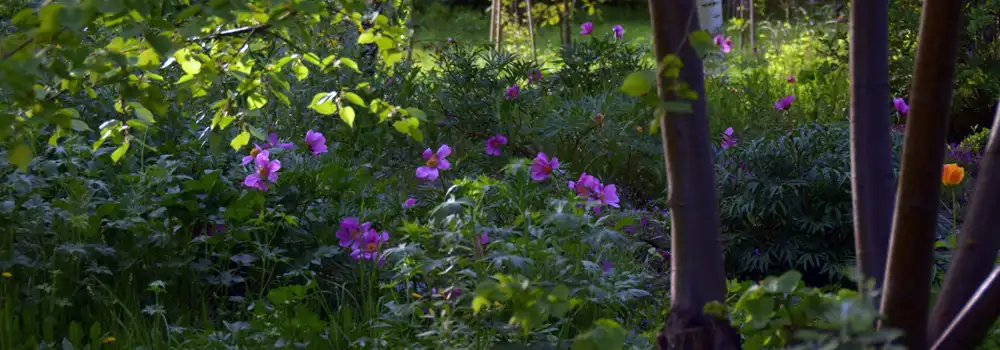
Shade-tolerant planting for raised beds
Many gardeners approach shade as a limitation. A place where colour struggles, growth slows, and options feel reduced. But shade is not a mistake in garden design. It is a growing condition with its own rhythms, its own advantages, and its own long-term rewards when approached with patience and understanding.
This article explores shade-tolerant planting for raised beds not as a workaround, but as a deliberate design choice. Shade changes throughout the day and across the seasons. It deepens in winter, softens in summer, and often behaves very differently at ground level than it does just thirty centimetres higher. Raised beds matter here, not just structurally, but horticulturally. They lift plants into better air movement, improve soil conditions, and in many gardens, shift planting into noticeably brighter light.
If this feels familiar, you are not alone. Many readers arrive here after reading Where to Position a Raised Bed for Best Growth, only to realise their garden does not fit the ideal of full sun. Others have sunny gardens with one persistent shady corner they never quite know what to do with. This article is written for both. Shade is not a problem to overcome quickly, but a condition to design for carefully, with results that often improve year after year.
Sensory experience in gardens develops slowly
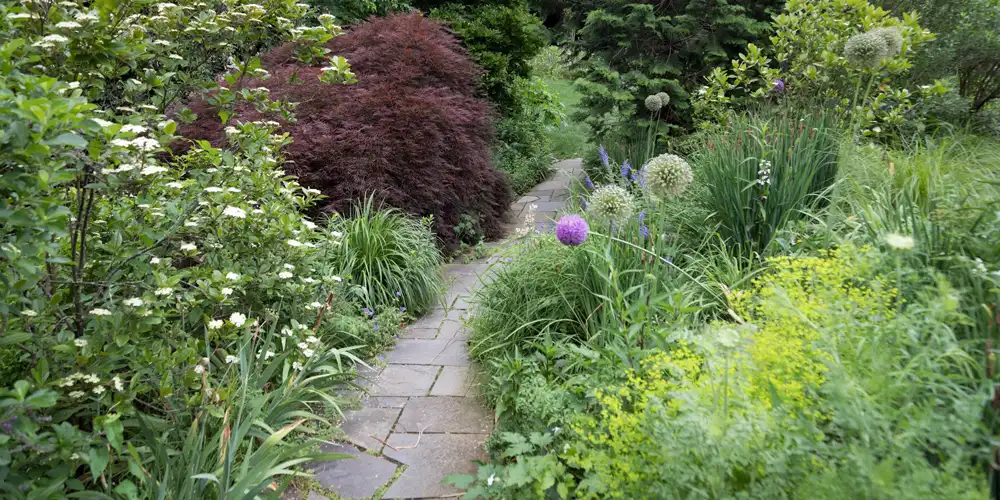
Sensory experience in a garden is not delivered all at once. It accumulates through repetition, familiarity, and the gradual softening of space as plants settle into their roles. In shaded gardens, this process is more pronounced because change happens quietly and over longer periods.
Slow establishment creates long-term reliability
In reduced light, plants often invest below ground before making visible progress. To a novice gardener, this can feel like stagnation. The bed looks unchanged, growth seems hesitant, and there is little reassurance that anything is working.
A plant such as a hellebore illustrates this clearly. In its early years, it may appear static for long periods, holding a small number of leaves close to the soil. Over time, however, it builds a dense root system that supports consistent leaf cover and dependable flowering year after year. The value of the plant becomes apparent only once patience has been exercised.
This behaviour explains why early judgement in shaded planting is often misleading. What appears inactive is often consolidating.
Familiarity sharpens sensory awareness
As gardens mature, the senses begin to register subtler cues. Texture, movement, and even scent become easier to notice because the background has stabilised. In shade, where visual drama is muted, this effect is amplified.
Ferns provide a useful example. When newly planted, their presence can feel understated. Once established, their repeating frond structure creates a consistent tactile and visual rhythm that becomes part of the garden’s baseline experience. The sensation is not one of novelty, but of quiet continuity.
For a novice gardener, this illustrates an important shift. Sensory richness does not arrive through constant change, but through repetition that becomes familiar enough to be felt rather than noticed.
Calm emerges through accumulation, not design gestures
Sensory calm is often mistaken for a stylistic choice. In reality, it is the result of layers building over time. Shaded gardens, by progressing more slowly, allow these layers to form without being overwritten.
Evergreen shrubs in shade demonstrate this principle well. Their contribution is rarely dramatic, yet year after year they provide structure, enclosure, and visual rest. As surrounding planting changes, their steady presence becomes the framework against which other sensations are perceived.
For someone new to gardening, this helps reframe expectations. Calm is not installed. It develops as plants are allowed to remain in place long enough for their behaviour to define the space.
Shade is a range of conditions, not a fixed state
Many gardeners think of shade as a single quality, something a space either has or does not have. In practice, shade behaves very differently depending on how long it lasts, how it moves, and what surrounds it. Understanding this range is essential, particularly for novice gardeners who may otherwise assume inconsistent performance means something is wrong.
Shade varies by duration, not just position
A garden area that receives two hours of direct light each day behaves very differently from one that receives none at all. Duration matters more than labels. This is often missed because gardeners tend to observe their spaces at the same time each day, reinforcing a fixed impression.
A plant such as Japanese forest grass helps clarify this distinction. In full shade, it grows slowly and maintains a restrained, arching form. In partial shade, where light reaches it briefly, the same plant develops more fullness and movement over time. The difference is not dramatic in the short term, but it becomes clear across seasons.
For a novice reader, this example shows that light does not need to be constant to be influential. Small, repeated exposures accumulate into meaningful change..
Dappled, partial, and persistent shade behave differently
Dappled shade often causes confusion because it looks bright, yet plants behave cautiously within it. Light arrives in fragments, filtered through leaves or structures, creating conditions that fluctuate hour by hour.
Woodland plants illustrate this well. A plant such as a fern growing beneath deciduous trees experiences high light in early spring, reduced light through summer, and renewed exposure in autumn. Its growth cycle aligns with this pattern. Fronds emerge early, harden as shade deepens, and persist as light fades again.
This behaviour explains why dappled shade should not be treated as weak sun. It is a distinct condition with its own rhythm, one that rewards planting choices aligned with seasonal timing rather than constant exposure.
Structures and surfaces modify how shade behaves
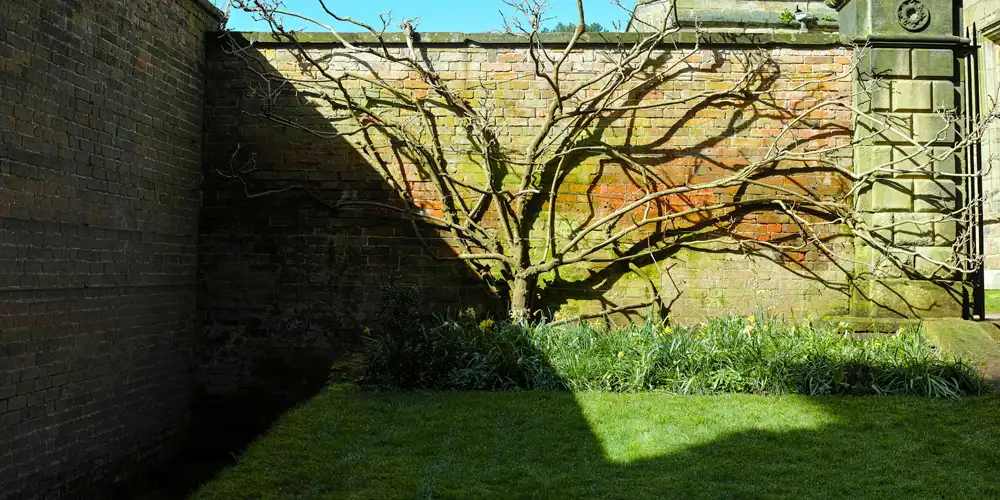
Shade created by buildings, walls, or fences behaves differently from shade created by trees. Hard surfaces absorb and release heat, reflect light, and reduce wind exposure. These factors subtly alter the growing environment even when direct sunlight is limited.
Climbing plants grown near walls often demonstrate this effect. Although their roots may sit in shade, the surrounding warmth and reflected light support steady growth and reliable leaf quality. The plant is not receiving more sun, but it is experiencing a more stable microclimate.
For a novice gardener, this helps explain why two shaded areas can behave very differently despite appearing similar at first glance.
Seasonal shade changes how gardens perform through the year
Shade shifts with the seasons. In winter, low sun casts long shadows and reduces exposure across much of the garden. In summer, higher sun angles and leaf cover change where light reaches the soil.
Plants that cope well with this variation often reveal their strengths gradually. A shrub that appears unremarkable in winter may come into balance as light returns in spring, holding its form consistently through the year. Over time, these patterns become predictable, allowing expectations to align with reality.
This understanding encourages patience. Shade is not static, and planting success cannot be judged from a single season or viewpoint.
What reduced and variable light changes over time
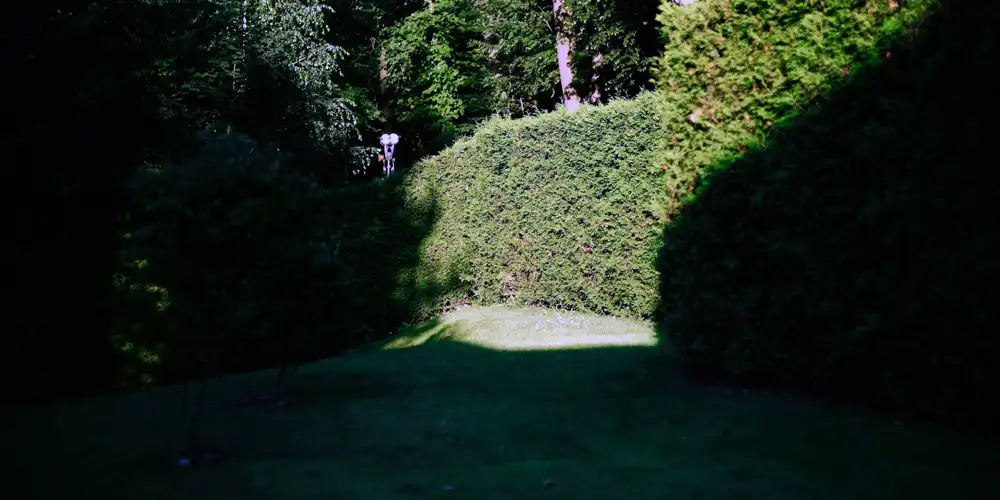
Reduced and variable light does not prevent a garden from developing, but it does change how progress becomes visible. In shaded conditions, growth patterns favour consolidation over display. For novice gardeners, this can feel counterintuitive, particularly when progress is measured by how quickly something appears to happen.
Root development takes precedence over visible growth
In lower light, plants often invest energy below ground before committing to leaf or stem expansion. This prioritisation supports long-term stability, but it delays visible confirmation that planting is working.
A plant such as a hosta illustrates this well. In its early seasons, it may produce only a modest clump of leaves, giving the impression that little is happening. Beneath the surface, however, the plant is establishing a substantial root system. Once this is in place, above-ground growth becomes more consistent and less vulnerable to stress.
For a novice reader, this example helps explain why early restraint is valuable. Visible growth is not always the first indicator of success.
Leaf quality becomes more important than quantity
In shaded environments, plants tend to produce fewer leaves, but those leaves are often thicker, more resilient, and longer-lived. Rather than cycling rapidly through growth and decline, foliage persists and maintains its form.
Evergreen perennials in shade demonstrate this clearly. Their leaves change little across the season, creating a stable visual and tactile presence even when flowering is minimal or absent. Over time, this consistency becomes one of the defining qualities of the space.
This shift in emphasis helps novice gardeners recalibrate expectations. Success is measured by durability and presence rather than by abundance.
Growth patterns become predictable with time
Although progress in shade may feel slow initially, it often becomes more reliable as patterns establish. Plants respond consistently to seasonal cues, expanding and resting at roughly the same times each year.
Shrubs adapted to lower light show this behaviour particularly well. Once settled, they tend to leaf out, hold form, and retreat on a stable schedule, reducing the need for correction or replacement. This predictability allows the garden to be read as a system rather than a collection of individual performances.
For those new to gardening, recognising these repeating patterns reduces uncertainty and builds confidence in leaving planting undisturbed.
Why mixed light conditions reward patience over intervention
Mixed light conditions are often where gardeners feel least confident. The presence of both shade and light creates uncertainty about what should thrive and how quickly results should appear. For novice gardeners, this uncertainty can lead to frequent adjustment. Over time, however, it is usually restraint that allows planting to settle.
Early hesitation is often mistaken for failure
In areas where light shifts across the day, plants may appear slow to commit. Growth can feel uneven, with some seasons producing little visible change. This often prompts intervention before the plant has had time to establish fully.
A plant such as a hydrangea illustrates this response. When repeatedly moved or adjusted in its early years, it may struggle to build a stable root system. When left in place, even under imperfect conditions, it gradually adapts to its light pattern and begins to grow more confidently year after year.
For novice gardeners, this demonstrates that initial hesitation is not always a sign of incompatibility. It is often part of the adjustment process.
Disturbance resets progress rather than improving it
Each time a plant is moved or replaced, the system resets. Roots are disrupted, soil structure changes, and the plant must begin consolidating again. In mixed light conditions, where adjustment already takes time, repeated disturbance can prevent long-term settlement entirely.
Plants with fleshy or fibrous root systems are particularly sensitive to this. When left undisturbed, they gradually extend into available space and stabilise. When disturbed repeatedly, they remain in a state of recovery, never quite reaching equilibrium.
This behaviour helps explain why gardens with mixed light often improve most when intervention decreases rather than increases.
Observation allows proportionate response
Mixed light conditions reward careful observation. Over time, patterns emerge. Certain areas recover quickly after stress, others remain unchanged. Some plants hold form consistently, while others fluctuate.
A shade-tolerant ground cover provides a useful example. When observed over several seasons, its ability to fill gaps steadily without overwhelming neighbouring plants becomes apparent. This slow, predictable expansion is easily missed in the short term but becomes reliable over time.
For novice gardeners, learning to observe rather than react builds confidence. Decisions become based on repeated behaviour rather than on momentary impressions.
How shade-tolerant plants behave over time
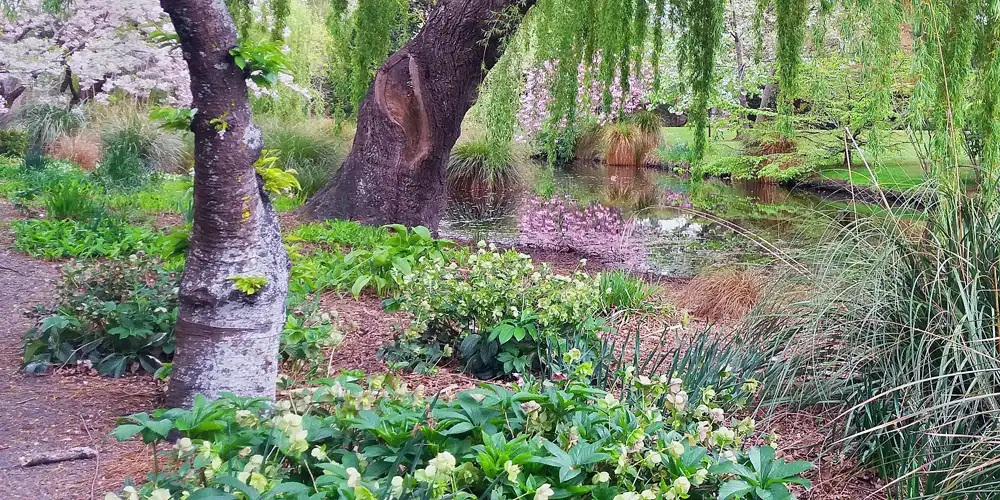
Shade-tolerant planting for raised beds is often misunderstood because tolerance is assumed to mean endurance rather than suitability. In reality, plants that cope well in shade are not merely surviving. They are behaving in ways that align with reduced and variable light, prioritising consistency over performance
Shade-tolerant plants prioritise persistence over speed
Plants that perform well in shade tend to grow steadily rather than quickly. Energy is directed toward maintaining healthy foliage and stable root systems rather than producing rapid bursts of growth. For novice gardeners, this can feel underwhelming at first.
A plant such as a fern demonstrates this clearly. In its early years, growth may appear minimal, with only slight increases in size each season. Over time, however, the plant forms a dense, repeating structure that remains intact through much of the year. The value lies not in speed, but in reliability.
This behaviour helps explain why shade-tolerant planting often improves quietly rather than dramatically.
Stability replaces spectacle as the primary quality
In shade, flowering is often less prominent, and visual interest comes instead from form, texture, and continuity. Leaves persist longer, shapes repeat, and the planting reads as a coherent mass rather than a series of events.
Evergreen shrubs adapted to shade illustrate this shift well. Their contribution is not defined by seasonal highlights, but by their ability to hold space consistently. Over time, they create a visual baseline against which other changes become more noticeable.
For a novice reader, this reframes expectations. Success in shade is measured by how well the planting holds together, not by how much attention it demands.
Shade-tolerant plants accommodate fluctuation without collapse
One of the most valuable characteristics of shade-tolerant plants is their ability to absorb change. Dappled light, brief periods of sun, reflected warmth from nearby surfaces, and seasonal variation are all accommodated without dramatic stress responses.
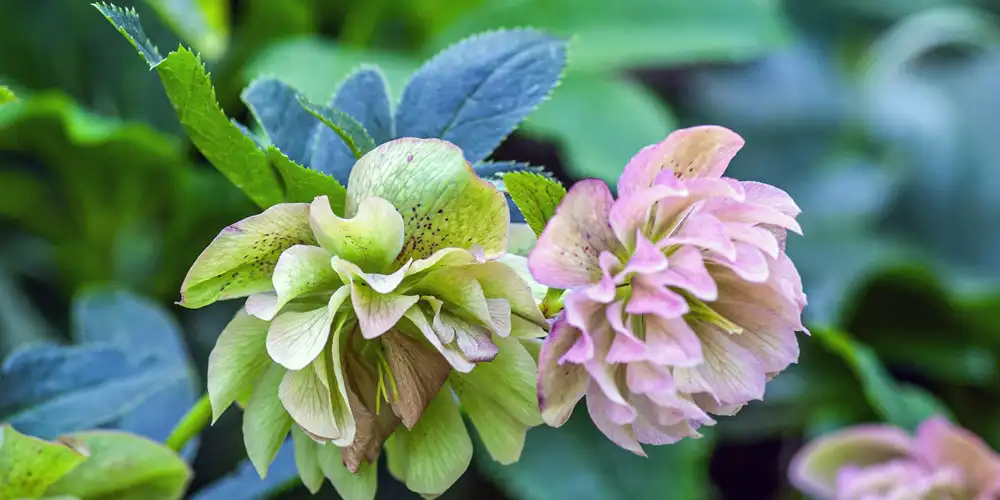
Plants such as hellebores are useful examples here. They tolerate shifts in exposure without significant decline, maintaining leaf quality and form even as conditions change. This resilience becomes increasingly apparent over time, particularly in raised beds where soil conditions remain consistent.
For novice gardeners, this illustrates why tolerance is about flexibility rather than toughness. These plants are not resisting conditions. They are adapting to them.
Designing shaded and semi-shaded beds as part of the whole garden
Shaded areas are often treated as exceptions, planned separately and judged by different standards. This separation usually leads to disappointment. Most gardens contain a mixture of light conditions, and long-term success comes from allowing those conditions to coexist rather than compete.
Raised beds help here because they introduce consistency where light does not. Soil quality, depth, and structure remain stable even as exposure changes. This allows planting to respond to behaviour over time rather than to isolated moments.
Shaded beds often become the most stable elements
In many gardens, shaded beds mature more slowly but change less once established. While sunnier areas fluctuate with weather and season, shaded planting often holds its form.
Evergreen perennials illustrate this role clearly. Once settled, they provide year-round presence, maintaining structure when surrounding planting dies back or surges forward. Over time, this reliability gives shaded beds a quiet authority within the wider garden.
For novice gardeners, this helps reframe expectations. Shade is not where progress stops. It is often where stability begins.
Different areas mature at different tempos
A common frustration for beginners is expecting uniform progress across the garden. Shade makes this expectation impossible to meet.
Shrubs growing in reduced light often take longer to reach their full size, but once they do, they remain consistent for many years. In contrast, sun-loving planting may reach maturity quickly but require more frequent adjustment. Recognising these different tempos allows the garden to be read as a series of overlapping timelines rather than a single deadline.
This perspective reduces intervention and encourages confidence in leaving planting to settle.
Raised beds subtly alter how shade is experienced
Even modest elevation can change how plants interact with light. Lifting foliage into brighter air, improving airflow, and increasing reflected light from surrounding surfaces all soften the effects of shade without removing it.
Plants growing near walls often reveal this difference. Although rooted in shade, they benefit from retained warmth and reflected light, developing steadily over time. Raised beds can create similar conditions, particularly in gardens where shade is caused by buildings rather than dense canopy.
For novice gardeners, this demonstrates that shade is not fixed at ground level. Small structural decisions can influence how planting experiences the day.
Shade as a long-term opportunity, not a limitation
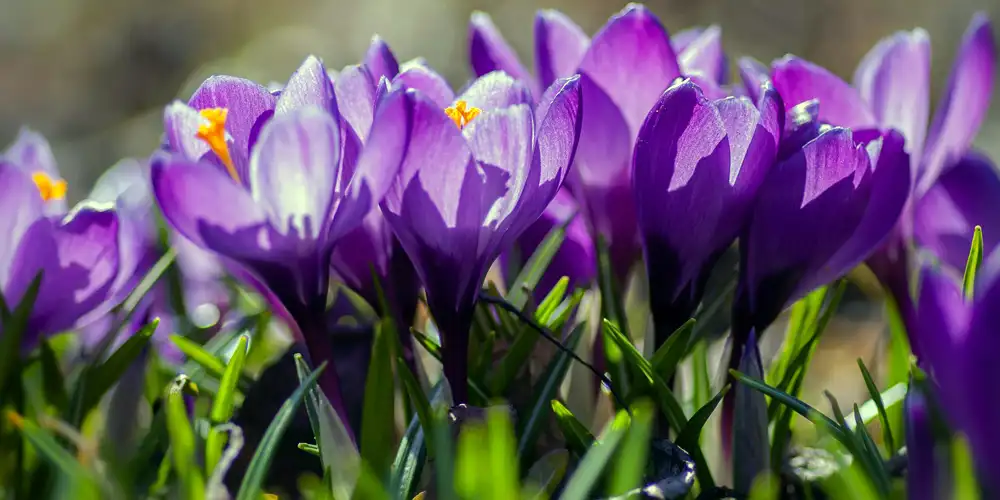
Shade becomes a problem only when it is measured against the wrong criteria. When speed and immediate impact are prioritised, shaded planting will always appear to fall short. When stability, persistence, and calm are valued, shade often performs exceptionally well.
Shade-tolerant planting for raised beds benefits most from long-term thinking. Reduced light slows visible change, but it supports steady establishment, durable structure, and resilience across seasons. Over time, these qualities become increasingly apparent.
A shaded garden does not ask for correction. It asks to be understood. When planting is allowed to settle into its natural rhythm, shade reveals itself not as a constraint, but as a condition that rewards patience with longevity and quiet confidence.